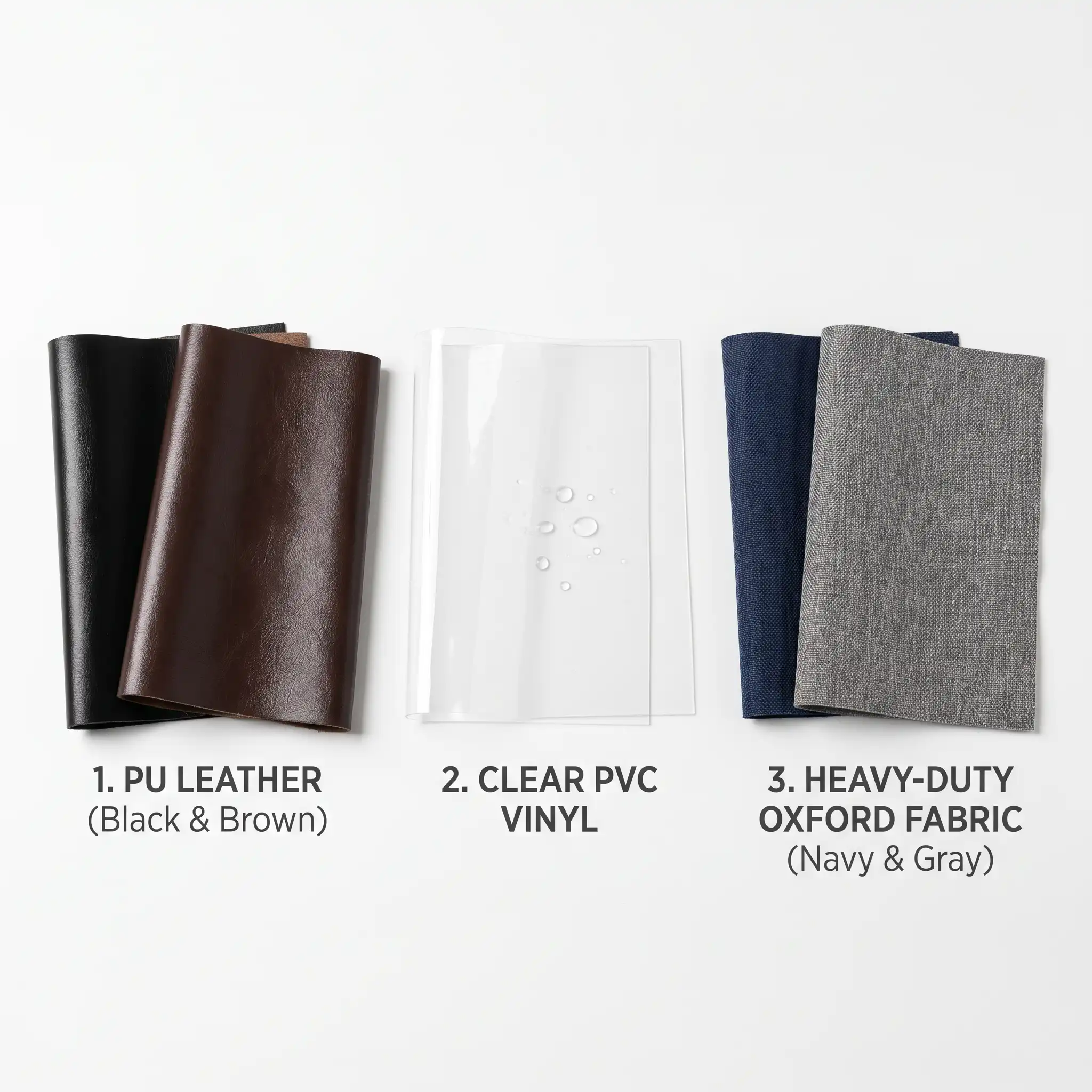
How to compare makeup bag materials
A material label alone is not a performance guarantee. Two products described as “PU” or “Oxford” may use different base fabrics, coatings, thicknesses and reinforcement methods. Ask the supplier to identify the selected material construction and confirm it on the approved sample.These are selection characteristics, not universal test results. If a numerical requirement matters, agree on the test method and pass/fail threshold, then verify the selected production material.
How buyers should verify material performance
Do not approve a material from a generic ranking or supplier description alone. Performance changes with the exact formulation and finished construction.
- Use the intended product: test the material after it has been cut, stitched, folded and attached to the final bag structure.
- Define the real exposure: tell the supplier whether the bag will face frequent travel, salon spills, cold storage, sunlight or repeated cleaning.
- Agree on evidence: where a numerical requirement matters, identify the test standard, sample condition and pass/fail value before ordering.
- Keep an approved sample: record the material name, color, backing, thickness or denier, coating and visible finish in the approved sample file.
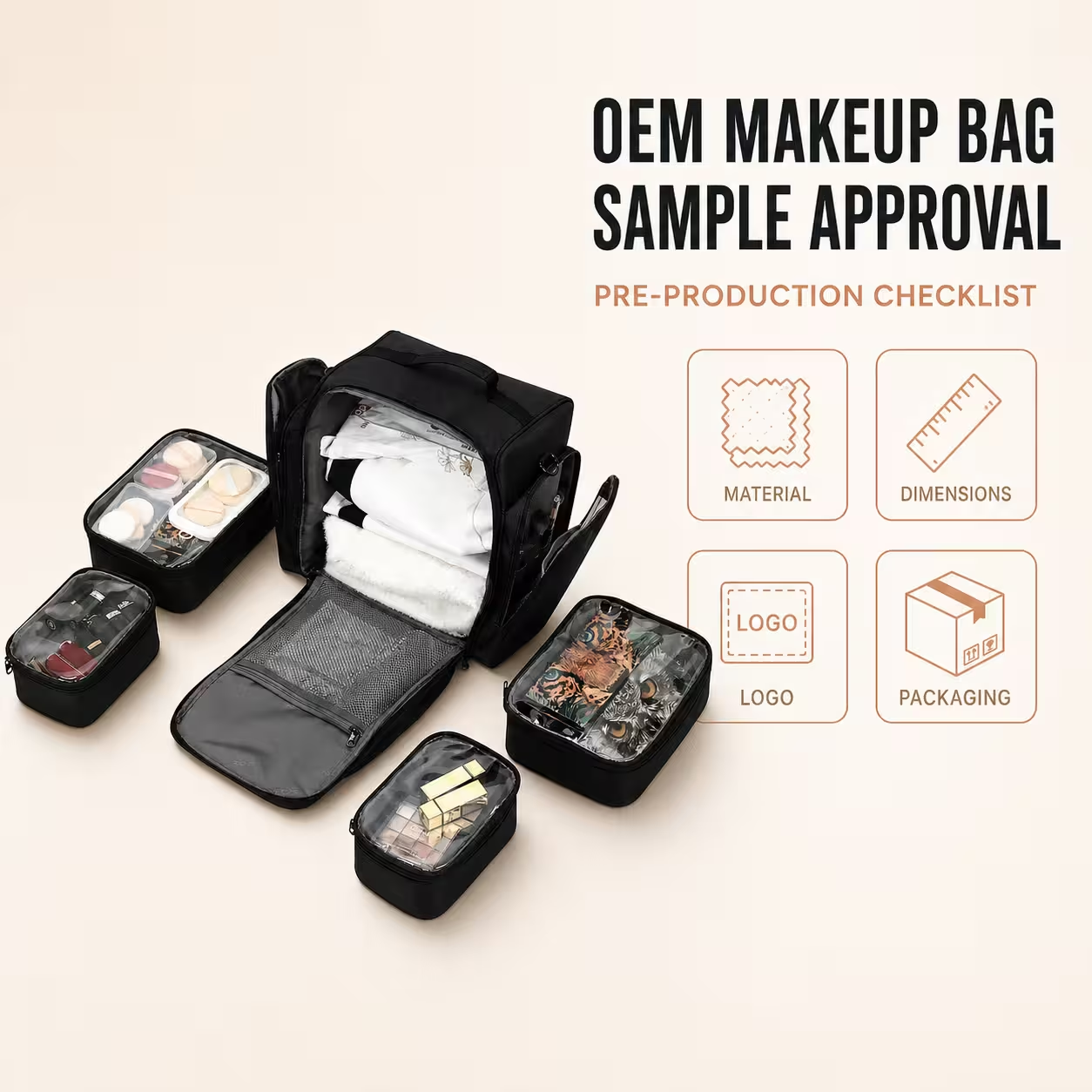
Material approval should also be recorded together with dimensions, hardware, branding and packaging. Our OEM sample approval checklist explains how to document these details before bulk production.
Reference product architectures
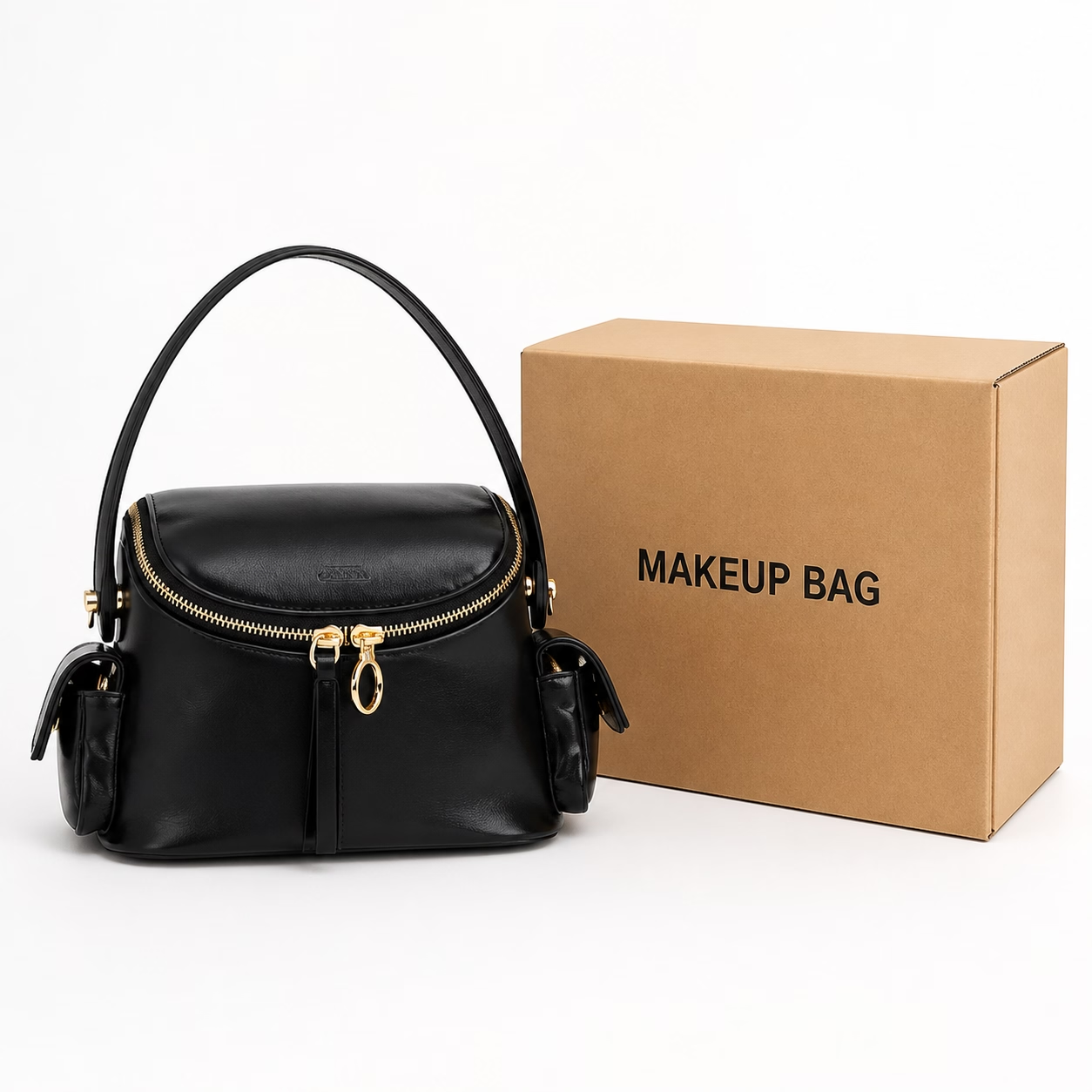
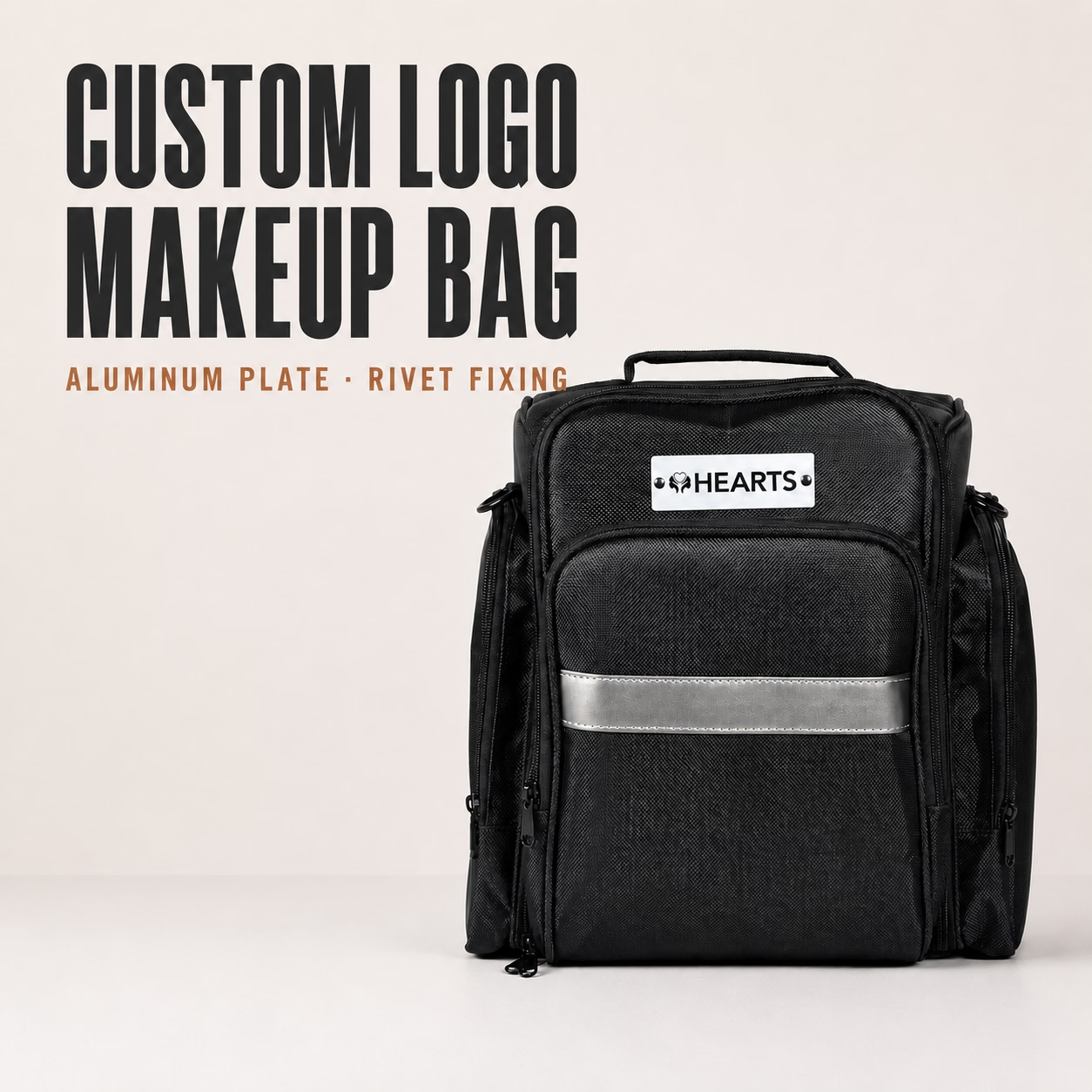
The following models illustrate different material and construction directions. They should be treated as reference configurations; final materials, dimensions, components and packaging must be confirmed on the quotation and approved sample.
Customization, sampling and production timing
Customization cost and MOQ depend on the selected model, material, dimensions, logo method, hardware, packaging and structural changes. These items should be quoted from one written specification rather than a generic surcharge list.Lead times are reference estimates rather than guarantees. Confirm them for the specific order and production schedule.
Final recommendation
PU is usually the strongest direction when retail appearance and hand feel lead the brief. Clear or coated PVC is useful when visibility and wipe-clean handling matter. Oxford fabric is often a practical choice for lightweight, flexible transport. None of these labels is sufficient on its own: approve the finished sample and record the exact construction before bulk production. If you need a material recommendation for a wholesale or private-label project, send the target user, product format, expected use environment and customization list. Our team can match suitable reference configurations for sample evaluation.Frequently asked questions
Can makeup bag materials withstand acetone, alcohol or hair dye?
There is no universal answer for every PU, PVC or Oxford material. Test the selected production material with the intended chemical, concentration, contact time and cleaning method. The finished seams, coatings, print and hardware should be included in the evaluation.
Does a PVC panel make the finished bag waterproof?
Not by itself. A PVC panel may resist water, but the finished bag also depends on seams, zippers and openings. Use “water-resistant” unless the complete product has been tested to a defined waterproof requirement.
Can compliant materials be supplied for different markets?
Buyers should identify the destination market and the restricted-substance or documentation requirements that apply to the order. The supplier can then confirm whether the selected material and configuration can be supported by the relevant test report, declaration or certificate.
What should be kept after material approval?
Retain the signed sample or material swatch together with the written specification, including color, finish, backing, thickness or denier, coating, components and approved packaging