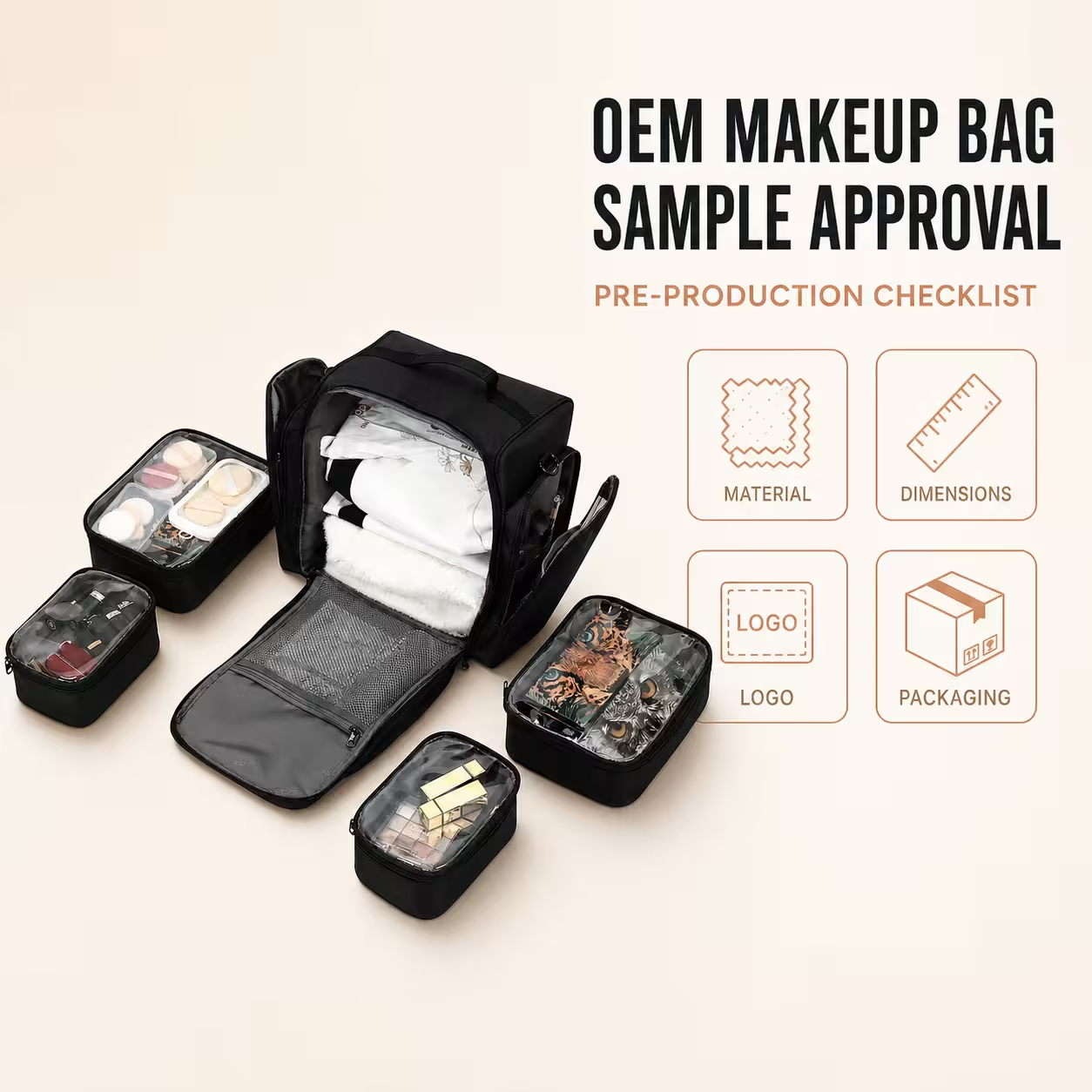
An attractive sample is not automatically a production-ready sample. Before approving an OEM makeup bag for bulk manufacturing, the buyer needs to confirm that its materials, dimensions, storage layout, branding, hardware and packaging match the quotation and specification sheet.
This matters because the approved sample becomes the practical reference for production and inspection. If a pouch size, zipper finish or logo position is left unclear at this stage, the same ambiguity can be repeated across an entire order.
Quick answer: Approve an OEM makeup bag only after the physical sample, written specification and artwork files agree with one another. Record every accepted detail, photograph the sample, identify any approved deviations and require written confirmation before later changes are introduced.
This checklist is used to approve a pre-production sample before bulk manufacturing. It does not replace finished-goods or pre-shipment inspection after production.
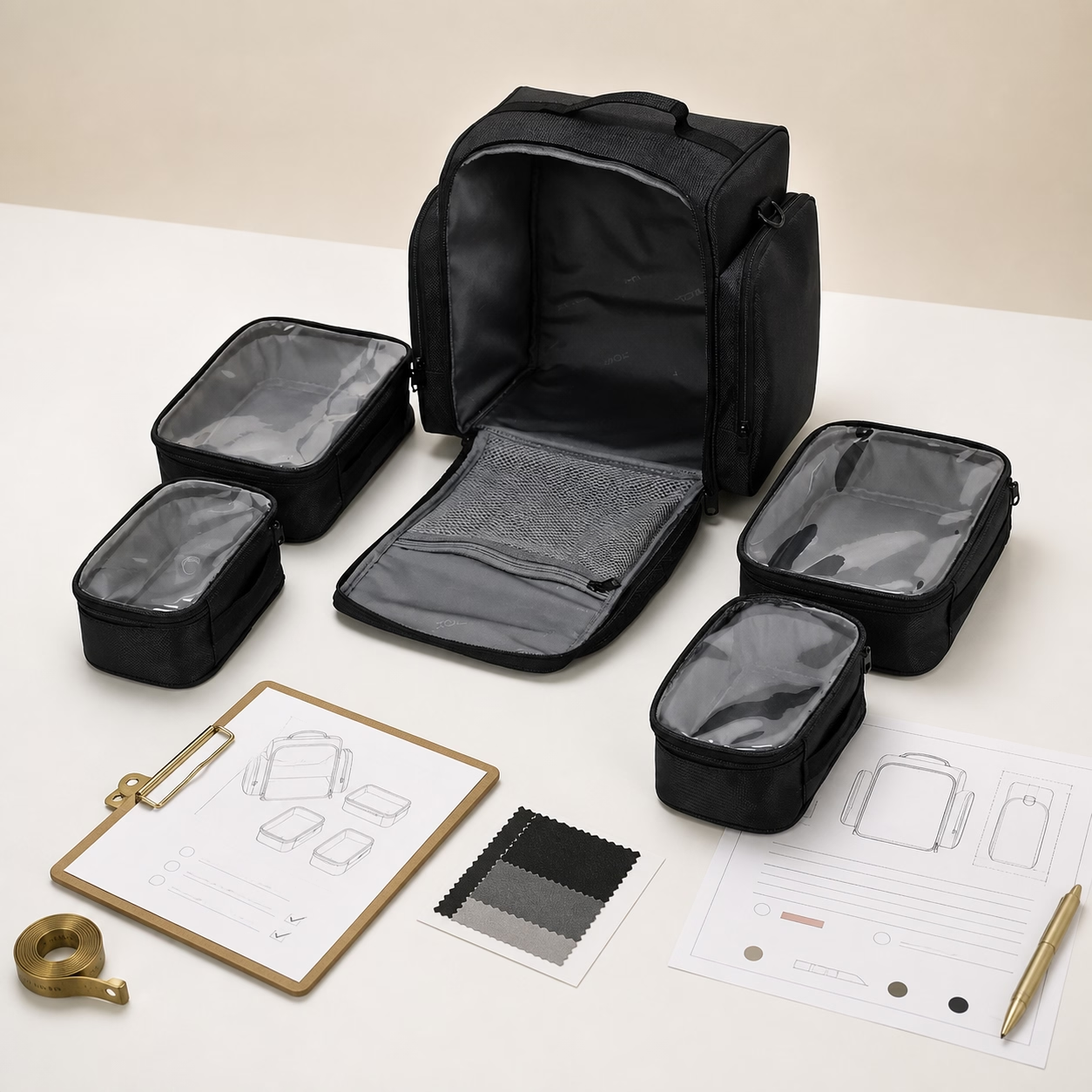
What an approved sample should establish
A practical makeup bag quality checklist turns the buyer’s expectations into checkpoints that can be repeated during manufacturing. It also separates confirmed requirements from preferences that are still open for discussion.
The purpose of sample approval is not to prove that one hand-finished unit looks good. It is to create a repeatable standard that the factory, buyer and any third-party inspector can use during production and before shipment.
A complete approval record should establish:
– the model and revision being approved;
– external and usable internal dimensions;
– empty weight, when relevant to the quotation or shipping plan;
– outer material, lining, reinforcement and transparent components;
– compartment, divider and removable-pouch configuration;
– zipper, webbing, handle and hardware specifications;
– logo method, size, color and position;
– workmanship and functional acceptance criteria;
– individual packaging, carton construction and carton marks;
– the documents and photographs that identify the approved version.
Do not rely on a product photograph or chat history as the only approval record. Images can show appearance, but they rarely define material grade, tolerances, hardware finish or packaging requirements precisely enough for production control.
Documents to prepare before checking the physical sample
The physical sample should be checked against a controlled set of documents. At minimum, the project file should include a specification sheet, quotation, artwork file and packing requirement.
Product specification sheet
The specification sheet should identify the information that affects manufacturing, including:
– model number and revision date;
– external dimensions and the method used to measure them;
– compartment or removable-pouch dimensions;
– material names and confirmed grades;
– fabric color, lining color and approved color reference;
– reinforcement, foam or board construction where applicable;
– zipper, puller, buckle, webbing and handle requirements;
– logo process and artwork version;
– packaging configuration and carton requirements.
If an exact tolerance matters, write it into the approved specification. Terms such as “approximately,” “large capacity” or “similar to the photo” are not suitable acceptance criteria by themselves.
Artwork and color references
Use the final vector artwork wherever possible. Record the logo width, position, orientation, print or embossing method and approved color reference. A screen preview is not a reliable color standard, so important colors should be confirmed using an agreed physical swatch or another documented reference.
Sample change list
When a first sample requires correction, issue a numbered change list rather than sending isolated comments across several messages. Each item should state:
1. what is currently shown on the sample;
2. what needs to change;
3. how acceptance will be checked on the revised sample.
This makes the second sample easier to evaluate and prevents an approved detail from being changed accidentally while another issue is corrected.
Makeup bag sample approval checklist
Use the following checks in sequence. The exact tolerances and test conditions should be agreed for the product, market and order rather than copied from an unrelated model.
1. Confirm sample identity and revision
Label the sample with the buyer, model, color, project number and revision date. Confirm that the quotation, specification sheet and artwork refer to the same revision.
If two samples look similar but use different foam, lining or zipper specifications, a model name alone may not distinguish them. A revision code prevents the wrong unit from becoming the production reference.
2. Measure the bag and storage components
Measure the bag in its normal closed condition without forcing the sides outward. Check the measurement points used by the supplier because soft bags can change shape depending on how they are filled or positioned.
Record:
– overall length, width and height;
– main opening dimensions;
– usable internal dimensions where they affect the buyer’s products;
– removable-pouch or divider dimensions;
– pocket position and opening size;
– empty sample weight if it is a controlled specification.
External dimensions should not be presented as net storage capacity. Foam, seams, panels, pockets and structural reinforcement reduce usable internal space.
3. Verify materials and construction
Compare the physical sample with the approved material specification. For a fabric organizer bag, check the outer fabric, backing, lining, transparent windows, padding and reinforcement separately.
Material approval should cover more than a generic name. “Oxford fabric,” “PVC” and “PU” describe material families, not a complete production specification. Confirm the agreed fabric grade, finish, color and construction for the quoted model.
For a practical comparison of common options, see our makeup bag materials guide.
Do not describe a completed bag as waterproof unless the construction and test method support that claim. A water-resistant outer fabric does not make seams, zipper paths and openings waterproof.
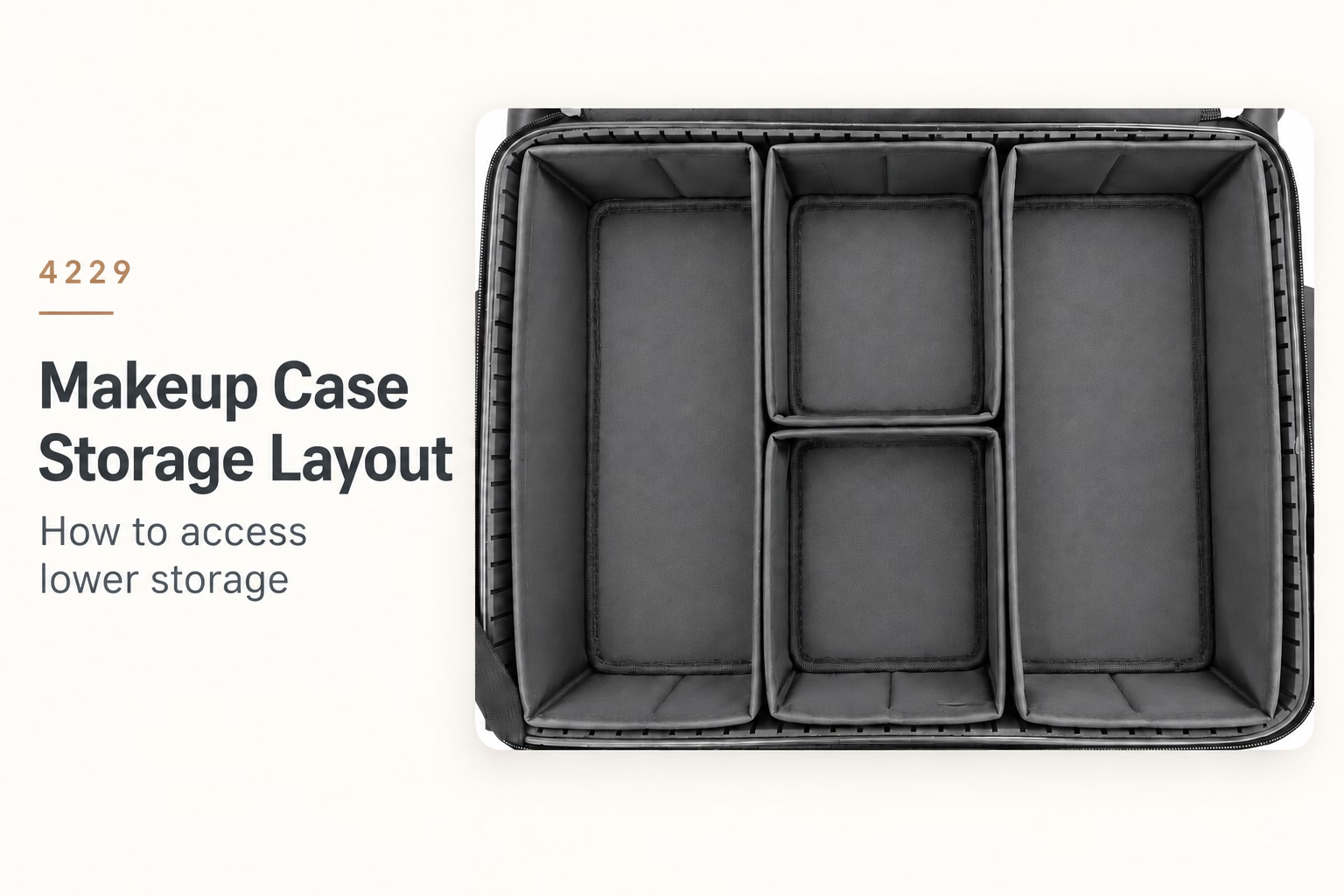
4. Check compartments, dividers and removable pouches
Load the sample with products similar in size and weight to the buyer’s intended assortment. This reveals problems that an empty-bag inspection may miss.
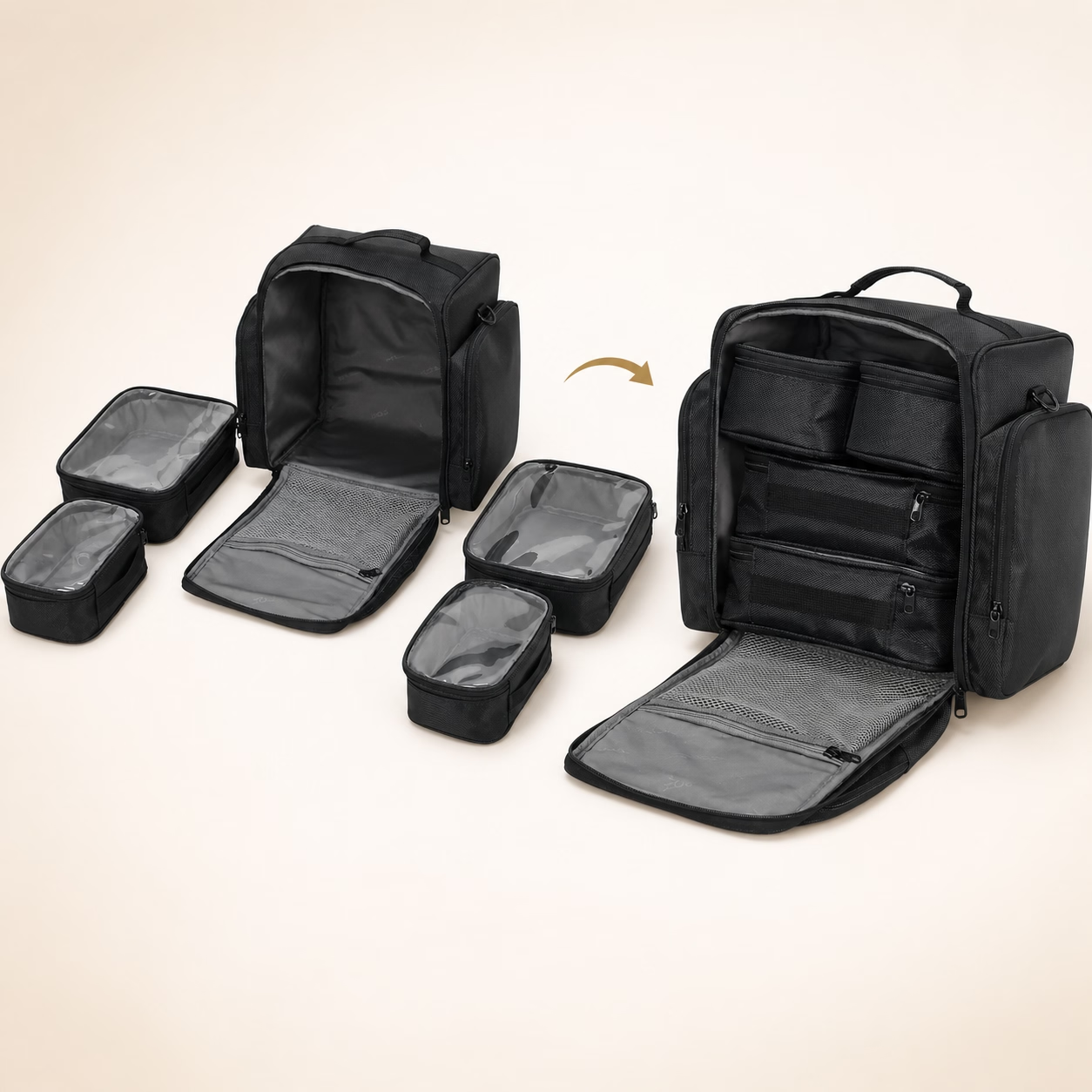
Check whether:
– removable pouches fit without distorting the main body;
– transparent tops close without excessive tension;
– pouches can be removed and reinserted conveniently;
– dividers remain upright under the intended load;
– frequently used products can be reached without emptying the bag;
– the closed bag keeps the contents reasonably stable during handling.
The number of pouches and dividers should match the approved specification. If the layout is customizable, record the exact approved quantities and dimensions rather than approving only the general appearance.
5. Inspect zippers, webbing, handles and hardware
Open and close every zipper along its full path. Check for fabric caught in the zipper, uneven teeth, sharp turns, loose pullers and stress around the zipper ends.
Inspect handles, shoulder-strap points, webbing, buckles and metal fittings for secure attachment and consistent finish. Any functional test—such as a repeated zipper cycle, handle load or hanging period—should use a written load, duration and acceptance rule agreed for the project.
Avoid statements such as “heavy duty” or “strong enough” without a test condition. A measurable requirement is easier to reproduce and inspect.
6. Confirm logo and cosmetic appearance
Compare the physical branding with the approved artwork and placement diagram. Verify:
– logo method;
– size and position;
– orientation;
– color and surface finish;
– edge quality and adhesion;
– absence of stains, scratches and unwanted impressions.
Inspect the bag under consistent lighting. Slight differences can appear between fabric batches, PVC components and printed surfaces, so the acceptance boundary should be agreed before bulk production.
7. Check workmanship inside and outside
Review the sample systematically rather than only inspecting the front face. Turn pockets inside out where practical and examine concealed seams and reinforcement points.
Look for:
– skipped, loose or broken stitches;
– inconsistent seam allowance;
– untrimmed thread ends;
– puckering or distorted panels;
– exposed sharp edges;
– glue marks, oil marks or surface contamination;
– misaligned pockets, labels or hardware;
– weak attachment at handles and shoulder-strap points.
The buyer and supplier should agree which defects are unacceptable and which minor visual variations may be tolerated. If an AQL or another sampling plan will be used for the bulk order, define it in the inspection agreement rather than adding it after production is complete.
8. Test lighting and electrical functions when applicable
This section applies only to makeup bags or cases with lighting, charging or battery functions.
Confirm the supplied configuration, connector type, control switch, light modes and charging method. Run each function and check for intermittent connections, abnormal heat, loose wiring or inconsistent light output.
Battery transport documentation and electrical requirements depend on the selected configuration and destination. They should be confirmed for the actual battery and shipping plan; do not assume that documentation from another model covers the approved sample. For additional context, see our LED makeup bag battery safety guide.
9. Approve the packaging together with the product
The product sample and packing sample solve different problems. A suitable makeup bag can still be damaged or deformed if the individual packaging and export carton are not confirmed.
Depending on the product, Obeautycase may use bubble bags, foam, protective corners and five- or seven-layer cartons. The exact method varies with the size, construction and shipping requirement. Customer carton marks, model information, quantities and box numbers are produced according to the confirmed order requirement rather than assumed automatically.
Check:
– the way the bag is folded or supported;
– protection for mirrors, rigid panels and hardware;
– individual bag or box dimensions;
– quantity per carton;
– carton construction and closure;
– gross and net weight fields;
– shipping marks, barcodes and labels;
– whether a transport-handling test is required.
For projects that need it, the buyer can participate in a handling or logistics-abuse test and agree the test conditions with the factory before production packaging is finalized.
Real configuration example: 3329 organizer bag
The following data shows how a model-specific reference can be converted into an approval checklist. It does not replace measurements from the approved physical sample.
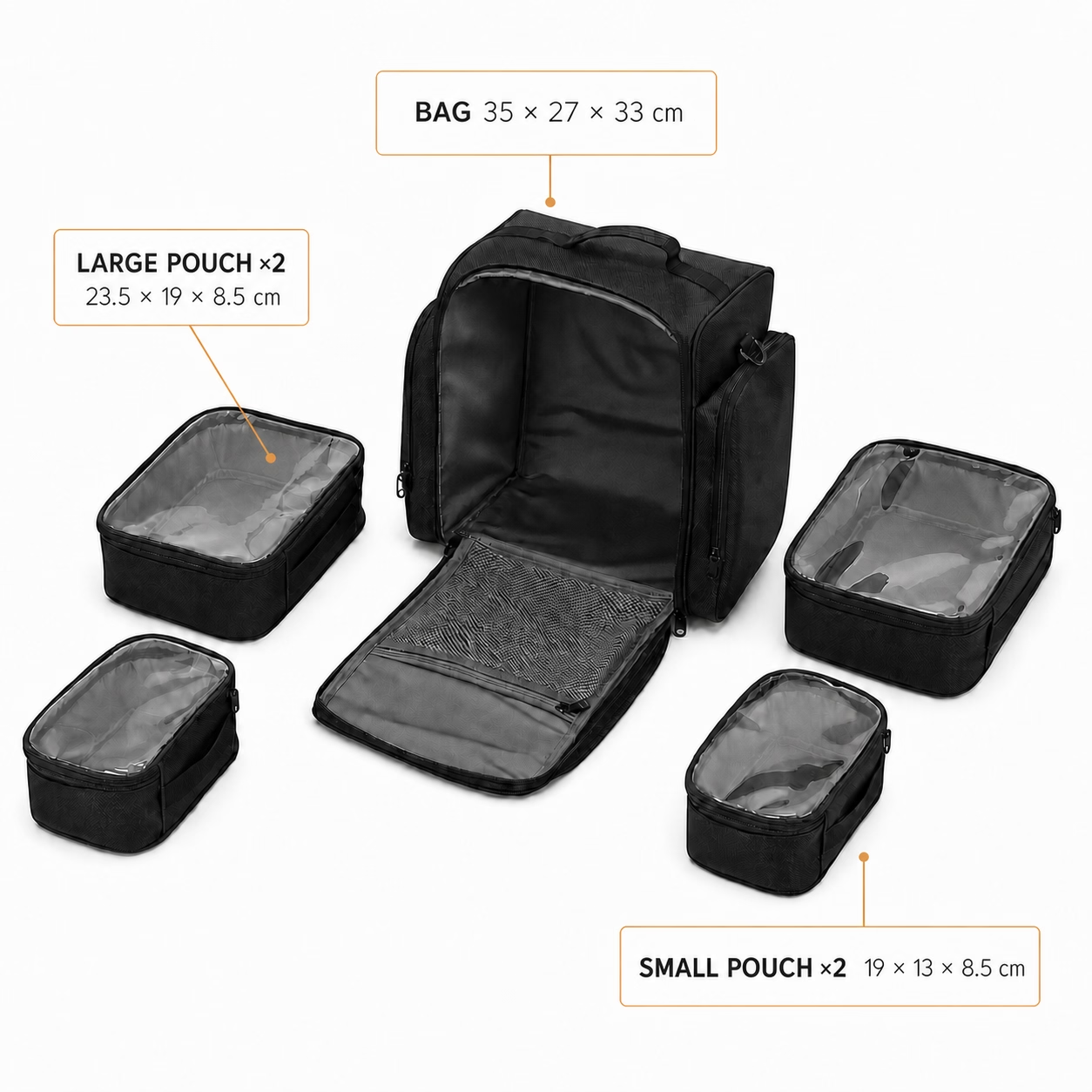
The 3329 configuration supports customization of the logo, outer color, lining color and pattern, removable-pouch sizes and quantities, transparent PVC components, zippers, webbing, hardware, packaging and carton marks. Each selected option should appear in the approval record.
For the product-specific construction and pouch layout, see the OEM makeup organizer bag guide and the 3329 product page.
Blank sample approval record
The following custom makeup bag inspection checklist is a worksheet for the buyer and supplier to complete. Blank fields are intentional; they should contain the values agreed for the specific order.
Attach dated photographs of the front, back, sides, interior, pouches, logo, hardware, labels and packaging. A physical reference sample may also be sealed and retained by both parties when the order and inspection plan require it.
Plan MOQ and lead time before requesting a sample
MOQ and lead time should be confirmed before the sample is made. Ask whether the MOQ is counted per style, color, size, logo method or total order, because customization can change the production plan.
For initial quotation planning, a working reference is an MOQ of around 100–200 units, a sample lead time of approximately 15 days, and a bulk lead time of approximately 25–35 days. These are reference ranges only; confirm the actual figures for the selected model, customization scope and production schedule.
Before approving the sample, confirm:
- whether the MOQ applies to each SKU or the total order;
- when the sample lead-time clock starts;
- when the bulk lead-time clock starts;
- whether logo artwork, revisions and packaging approval are included;
- whether any specification change will affect the quotation or delivery date.
Once the specification is frozen and the sample is approved, the confirmed MOQ and production schedule should be recorded together with the final quotation.
From sample approval to bulk production
Approval should close the sample stage, not start another round of informal changes. The approved OEM makeup bag sample should remain connected to the final specification during pre-production sample approval and the subsequent manufacturing handoff.
Before bulk production, use the makeup bag export packaging guide to confirm the packed unit, carton and shipping-mark details.
Once the reference is accepted:
1. issue the final specification and artwork revision;
2. record approved deviations from the original quotation;
3. confirm the packaging and carton-mark files;
4. define the production and inspection plan;
5. require written approval for subsequent material or construction changes;
6. use the approved records during in-process and pre-shipment inspection.
At Obeautycase, production personnel check products during manufacturing, while the internal inspection department also performs scheduled checks. The current internal routine includes five randomly selected product batches from each production line per month. This internal activity does not replace a buyer-specific inspection agreement: projects can follow mutually confirmed standards, and buyers may arrange or request third-party inspection.
The benefit of a manufacturer-and-trading integrated operation is that specification questions, sourcing decisions, production feedback and export coordination can be handled within one project workflow. For custom requirements, the buyer should still confirm details with the assigned team before manufacturing begins.
Common sample approval mistakes
Approving appearance but not construction
A sample may look correct while using the wrong lining, padding or zipper specification. Approve the material and construction record together with the appearance.
Treating approximate measurements as tolerances
An approximate catalog dimension is useful for selection, but it is not a production tolerance. If fit is important, agree the measurement method and acceptable range.
Making changes without updating the revision
If the logo, pouch size or material changes after approval, issue a new revision. Otherwise, the supplier, buyer and inspector may be working from different standards.
Skipping the packaging sample
Bulk packaging affects deformation, mirror protection, carton loading and shipping cost. Confirm it before the order reaches the final inspection stage.
Copying tests from an unrelated product
Test loads, cycles and transport conditions should match the actual bag and intended market. A wheel test used for a trolley case does not establish the durability of a soft organizer bag.
Requesting an OEM sample
To prepare an efficient sample request, provide the target market, expected order quantity, reference product, preferred materials, dimensions, storage layout, logo artwork, color references and packaging requirements.
Obeautycase supports long-term OEM and ODM projects for beauty brands, salons, makeup schools, wholesalers and other professional buyers. A typical reference lead time is approximately 15 days for a sample and approximately 25–35 days for bulk production after the necessary details and approved sample are confirmed. The final schedule depends on the model, customization scope, materials and order quantity.
If the required structure is not part of an existing configuration, the project team can evaluate changes to pouch layout, materials, hardware or a newly developed structure. Clear specifications at the beginning reduce unnecessary sampling rounds.
Final recommendation
Treat the approved sample as a controlled production standard, not as a showroom item. The strongest approval file combines the physical sample with measurable specifications, artwork, packaging instructions, photographs and a signed revision record.
Before approving bulk production, ask one practical question: could a person who did not join the earlier discussions inspect the order using this file alone? If the answer is no, the sample record still contains unresolved assumptions.
Frequently asked questions
What is an approved sample for an OEM makeup bag?
An approved sample is the physical configuration accepted by the buyer as the reference for bulk production. It should be supported by the final specification, artwork, packaging requirements, photographs and revision information.
Is an approved sample the same as a pre-production sample?
The terms are sometimes used interchangeably, but projects may define them differently. A pre-production sample should represent the materials and construction intended for bulk manufacturing. The quotation and approval record should state which sample becomes the controlling reference.
How many samples should a buyer approve?
The appropriate quantity depends on the project. At minimum, the buyer and factory need an unambiguous shared reference. For complex or high-value orders, both parties may retain matched samples or a sealed reference, while the inspection team uses the approved specification and photographs.
Can a third-party inspector check the bulk order against the sample?
Yes. Obeautycase supports buyer and third-party inspection. The inspector should receive the approved specification, sample photographs, acceptance criteria, sampling plan and packaging requirements before the inspection date.
Can materials or packaging be changed after sample approval?
Changes may be possible, but they should not be introduced informally. The proposed change should be documented, reviewed for cost and schedule impact, and approved in writing. If it affects appearance, function or inspection criteria, issue a revised sample or approval record.