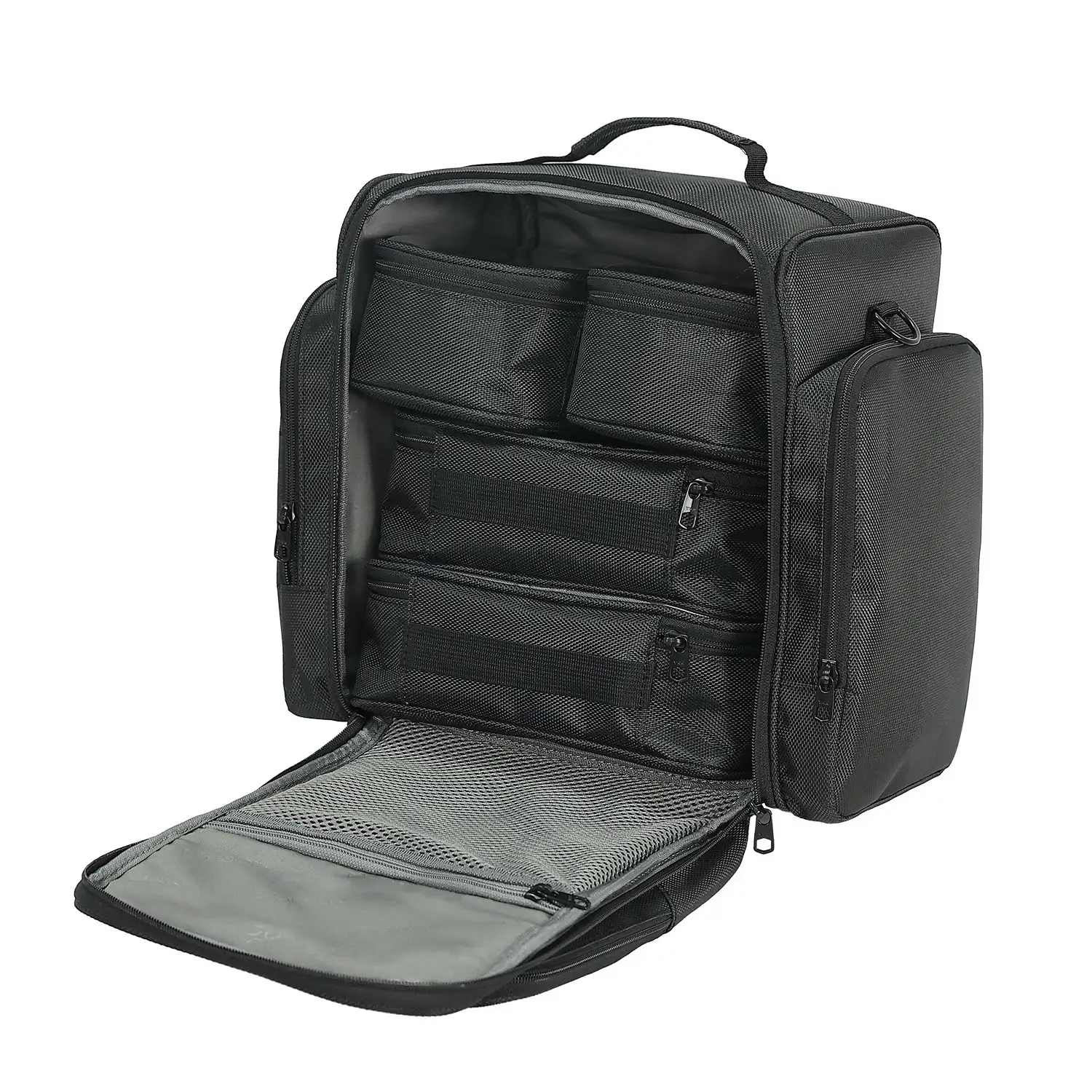
Quick answer: A well-specified OEM makeup organizer bag is more than a branded soft bag. For professional kits, the useful starting point is a 1680D Oxford outer, a practical compartment layout, removable pouch sizes that match the products being carried, and approved sample checks for seams, zippers, handles and branding. The 3329 reference configuration uses a 35 × 27 × 33 cm bag with two large and two small removable PVC-top pouches.
For brands, academies, salons and wholesale distributors, a makeup organizer bag needs to work after it has been packed, carried and repacked many times. A product photo can show capacity, but a purchase specification needs to define the structure, materials, removable components and acceptance criteria behind it.
This guide explains how to specify a custom makeup organizer bag around a removable-pouch layout. It uses the 3329 configuration as a practical reference, rather than treating one model as the only possible solution.
Scope of this guide: this is a configuration and application guide for a soft organizer bag with four removable pouches. It does not attempt to compare every makeup-bag material, and it does not cover LED lighting systems, batteries or illuminated makeup cases. Those are separate purchase decisions.
3329 configuration at a glance
These are reference specifications for the 3329 configuration. A change to fabric, pouch construction, hardware, logo method or packaging can change the final measurement, weight, MOQ or lead time, so the approved sample and order confirmation remain the controlling documents.
What is an OEM makeup organizer bag?
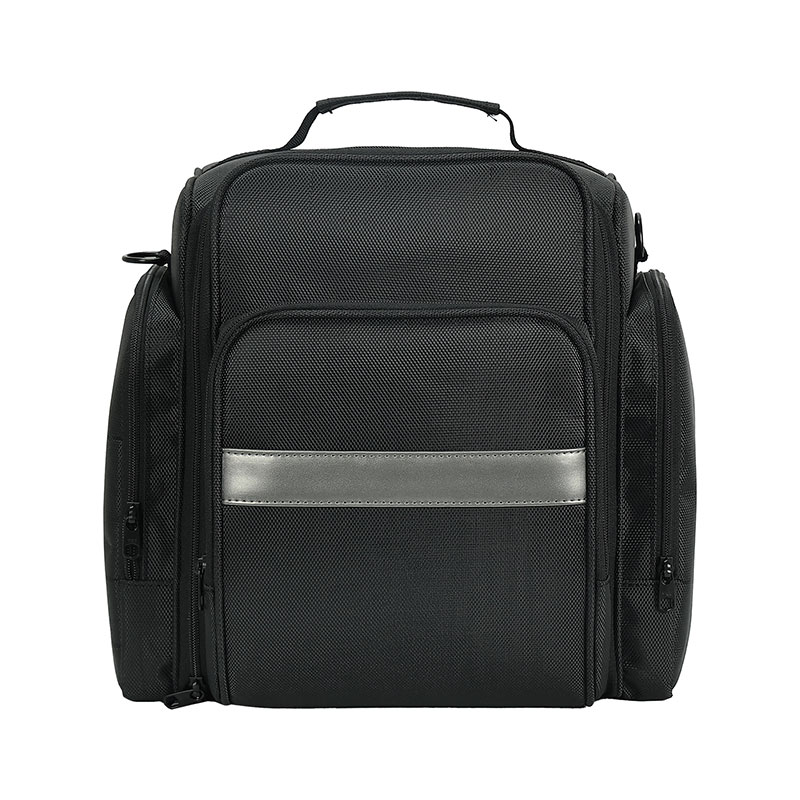
An OEM makeup organizer bag is a soft-sided storage bag produced to a buyer’s approved specification and branding requirements. Depending on the project, customization can include the logo, exterior color, lining, pouch layout, transparent PVC material, zippers, webbing, hardware and export packaging.
The key buying question is not simply whether the bag has many pockets. It is whether each section has a purpose: items used together should stay together, frequently used tools should be easy to reach, and removable components should be simple to repack between jobs, training sessions or retail deliveries.
Reference configuration: 3329 removable-pouch organizer bag
The 3329 is a large soft-sided organizer bag with a 180° opening structure. Its reference dimensions are approximately 35 × 27 × 33 cm. The empty bag weighs approximately 1.1 kg; the reference packed weight is approximately 1.5 kg. Confirm the final measurement and tolerance on the approved sample, especially if the construction, lining or hardware changes.
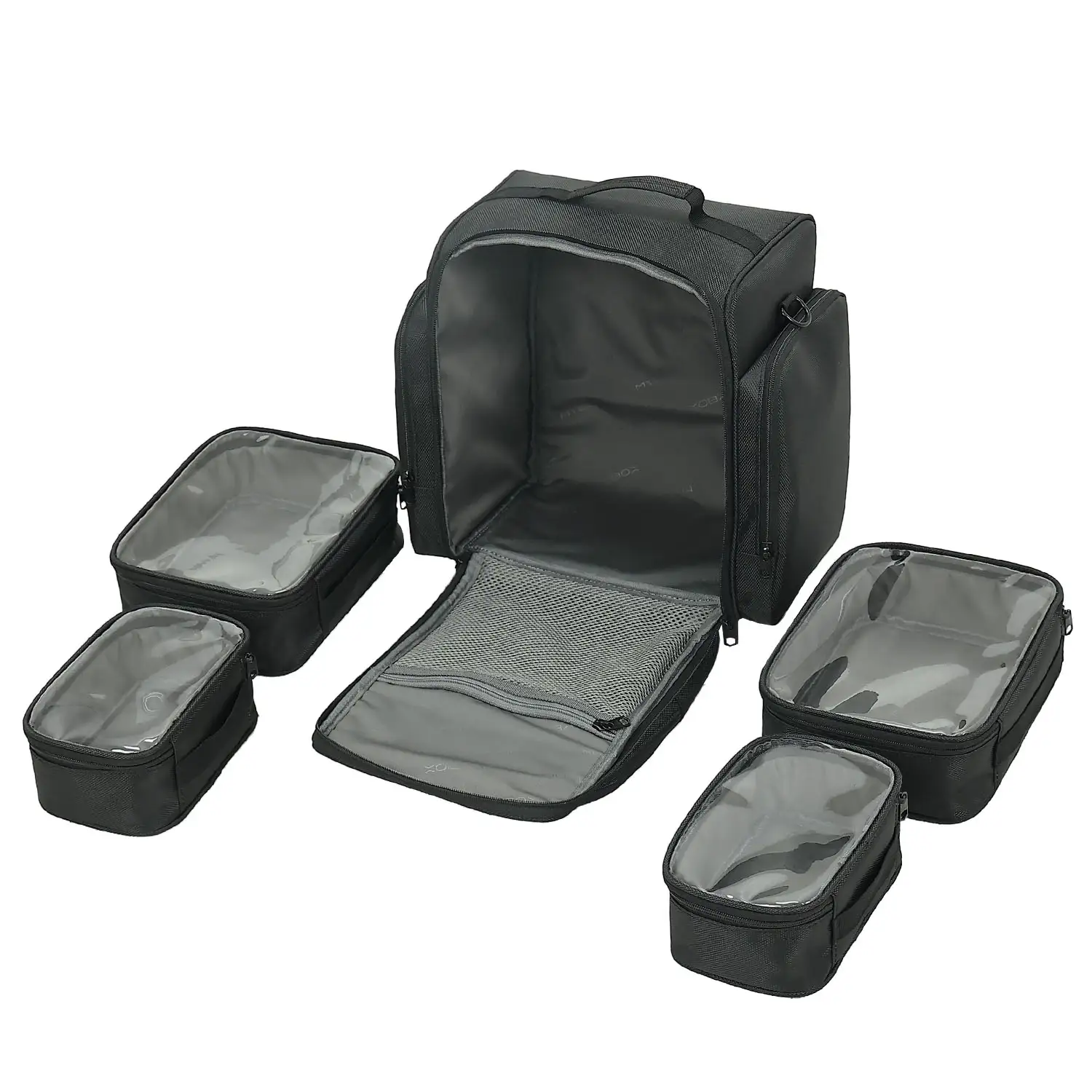
Instead of describing this configuration as an adjustable-divider bag, the more accurate description is a makeup organizer bag with four removable storage pouches:
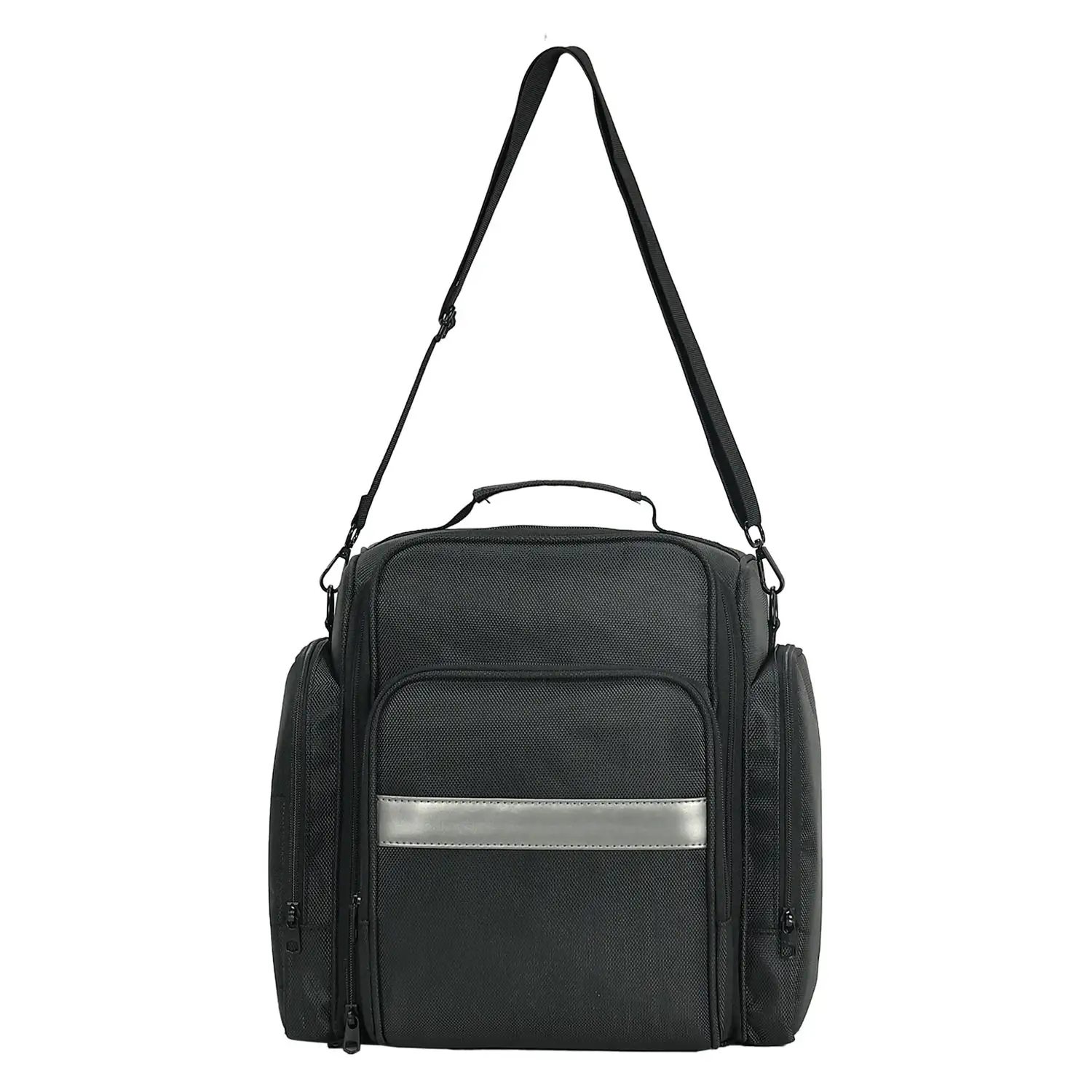
The configuration also includes a top carry handle, detachable shoulder strap, side pockets, a front-opening storage area, mesh and zipper pockets, and a rear trolley sleeve for placing the bag over luggage handles. The silver front strip is reflective PU leather.
What the layout is designed to do
The bag is not intended to replace a hard rolling makeup case. It is a portable organizer format for buyers who need visible, grouped storage in a lighter soft bag. The four removable pouches let the user move selected product groups between the main bag, a workstation and a smaller travel kit without repacking every item.
For a wholesale program, that also creates a merchandising choice: the bag can be supplied as a complete kit, or the pouch configuration can be adapted to the buyer’s own product assortment. The correct choice depends on the products being packed, not on a generic “large capacity” claim.
Why removable pouches are useful for professional kits
Fixed compartments can work well when every customer carries the same products. Removable pouches are more flexible when the user changes kit contents by appointment, service type or training task.
For example, a salon or academy can allocate pouches by product group; a distributor can keep accessories separated during packing; and a working makeup artist can remove a small pouch for a touch-up kit without moving the entire bag. This is a workflow benefit, not a claim that one layout suits every buyer.
When reviewing a removable-pouch design, ask these questions:
– Are the pouch dimensions suitable for the buyer’s actual product list?
– Do the zipper openings allow easy access when the pouch is inside the main bag?
– Is the transparent PVC top clear enough for fast identification and appropriate for the intended market?
– Do the pouches remain stable when the bag is carried upright or opened fully?
– Is the requested pouch quantity confirmed on the approved sample and packing list?
Material specification: 1680D Oxford outer and PVC pouch tops
The reference bag uses 1680D Oxford cloth for its exterior. This is a fabric specification, not a guarantee that the bag is waterproof. For product copy and buyer documents, use water-repellent only when describing its resistance to light moisture; do not promise protection against immersion, prolonged rain or leakage through zippers.
The removable pouches use transparent PVC tops. Buyers should decide whether visibility, PVC clarity, color, thickness and zipper construction suit the intended use. If a project changes the PVC specification, it should be rechecked on the sample because transparency, flexibility and appearance can change together.
The lining can carry a printed pattern or buyer branding. It is worth approving the lining artwork alongside the exterior logo, not after bulk production begins.
Material language that should stay accurate
Use 1680D Oxford cloth for the exterior specification and transparent PVC top for the removable pouches. Do not describe the configuration as nylon if Oxford cloth is the approved material. Do not describe the bag as waterproof unless a separate, documented waterproof construction and test requirement has been agreed.
The reflective PU leather strip is a visual and material detail. It should be specified by position, color and finish if the buyer needs it retained, changed or removed; it should not be presented as a safety certification.
If the buyer is still deciding between PU, PVC and Oxford as the principal bag material, use the makeup bag materials guide for that format-level comparison. This page assumes the 1680D Oxford and PVC-top configuration has already been selected.
Customization options to confirm before sampling
For this makeup organizer bag configuration, the following options can be customized:
Do not approve a quotation based only on a generic “customizable” statement. Record the final options in the approved sample specification and, where appropriate, include a signed color or material reference.
Information to send with an RFQ
An efficient RFQ gives the manufacturer enough detail to quote the correct structure the first time. Copy the following outline into the enquiry rather than sending only a product photo:
The product list is particularly important. A pouch that appears generous in a photo may not accommodate a tall bottle, a wide palette or the buyer’s preferred device. Sending representative contents before sampling is more useful than asking for “more capacity.”
What changes cost and lead time
It is not reliable to estimate price from pouch count alone. The commercial impact usually comes from the combination of fabric, pouch construction, logo process, hardware, packaging and order quantity.
For example, a logo position may require a different panel construction; a new pouch size may change the main-bag layout; and a custom lining print can require artwork approval before production. If the buyer needs a specific zipper, PVC appearance or carton marking, include it in the first quotation request. This avoids comparing a basic configuration from one supplier with a fully customized configuration from another.
The reference MOQ is 200 units. Below that level, feasibility and commercial terms should be confirmed case by case rather than assumed.
A practical sample checklist
Before confirming a production sample, inspect the bag as it would be used rather than only as it appears on a table.
1. Open and close the main zipper several times, then check whether the 180° opening lays flat and remains usable.
2. Fill each removable pouch with representative products and check whether the zipper, pouch shape and PVC top remain practical.
3. Carry the loaded bag by the top handle and shoulder strap; inspect stitching, webbing attachment points and comfort.
4. Place the rear trolley sleeve over a luggage handle to confirm fit and stability.
5. Check logo placement, lining artwork, Oxford color, reflective PU strip and hardware finish against the approved specification.
6. Confirm the pouch quantity, dimensions, packaging method and carton markings before mass production.
If the buyer needs third-party inspection or a project-specific test method, agree on the standard and acceptance criteria before the sample is approved.
Before bulk production, buyers should verify the physical sample against the final specifications, artwork and packaging requirements. Use our makeup bag sample approval checklist to record the approved version.
What to record in the approved sample file
Keep one final PDF or worksheet that shows the approved external dimensions, empty weight, pouch count and size, fabric name, PVC-top requirement, logo location, lining artwork, component colors, packaging method and inspection points. It should also identify the sample version and approval date.
This is not unnecessary paperwork. It gives the buyer, sales team, production team and inspector the same reference when questions arise during mass production.
For the 3329 configuration, use this OEM makeup bag sample approval checklist to confirm the approved specifications before bulk production.
MOQ, sample and production timing
For this reference configuration, the minimum order quantity is 200 units. Sample lead time is approximately 15 days. Bulk production lead time is normally approximately 25–35 days after the sample and relevant production details are confirmed.
Lead time can change with material availability, custom components, artwork revisions, packaging requirements and order volume. Treat these figures as planning references and reconfirm the production schedule on the final quotation or order confirmation.
Packaging planning for wholesale orders
The reference individually packed weight is approximately 1.5 kg. This is useful for early logistics planning, but it is not a substitute for a final carton specification. Carton size, gross weight, packing quantity and protection materials depend on the finished bag configuration and the buyer’s shipping method.
Before bulk production, confirm:
– the individual packing method for the bag and removable pouches;
– whether the shoulder strap is packed inside the bag, separately or attached;
– outer-carton quantity and maximum gross-weight requirement;
– customer markings, model number, quantity and carton number requirements; and
– any destination-market labeling or retail-ready packaging requirements.
For export orders, the makeup bag export packaging guide explains how to confirm carton construction, packed weight and carton marks.
Where the buyer has a warehouse or fulfilment requirement, provide the carton-marking format before production. It is much easier to print the correct information during packing than to relabel cartons after delivery.
How to avoid common specification mistakes
Three avoidable mistakes cause most confusion with organizer-bag projects.
First, do not call removable pouches “adjustable dividers” unless the approved configuration truly includes a divider system. These are different structures and buyers will expect different functionality.
Second, do not use the phrase “carry-on approved.” Airlines apply their own current size, weight and route rules. A soft-sided organizer bag may be suitable for cabin travel, but the buyer or traveller should check the packed dimensions with the airline.
Third, do not assume a water-repellent Oxford outer makes every part of the bag waterproof. Zippers, seams, openings and the intended exposure conditions all matter.
Choosing the right buyer use case
This format is particularly relevant for:
– beauty brands building coordinated professional-kit programs;
– beauty schools and academies needing organized training kits;
– salon groups managing product and tool storage across locations;
– wholesale distributors assembling value-added beauty accessory ranges; and
– mobile artists who need grouped, removable storage rather than a hard rolling case.
Buyers who need large rigid storage, drawers or heavy equipment capacity should compare this soft organizer format with a rolling makeup case instead of forcing every requirement into one bag.
Buyers who need a hard shell, lockable structure or a workstation-style setup should also evaluate a different product category. A clear use-case decision protects the buyer from ordering a bag that is technically well made but structurally wrong for the job.
For a project that needs built-in lighting rather than a soft organizer format, see the portable lighted makeup case wholesale guide. That page covers a different product format and should not be used as the specification for this non-lighted bag.
Requesting an OEM makeup organizer bag specification
For a recommendation that fits the buyer’s market, send the target user, representative product list, estimated order quantity, preferred exterior color, logo requirements, desired pouch layout and destination-market packaging needs. The product team can then match the structure and customization details to the project instead of quoting from a generic bag description.
For the reference configuration, see the 3329 makeup organizer bag. For additional soft organizer formats, visit the makeup bags category.
If you are deciding whether a removable-pouch organizer is the right structure for your range, compare it with a rigid lighted alternative in our hard shell makeup case vs makeup organizer bag guide.
Frequently asked questions
Are the four transparent pouches included in the reference configuration?
Yes. The reference configuration has two larger pouches and two smaller pouches. For an OEM order, confirm the final quantity, dimensions and PVC specification on the approved sample.
Is the 1680D Oxford exterior waterproof?
No waterproof claim should be made. It is suitable to describe the exterior as water-repellent for normal light-moisture exposure; suitability for heavier exposure depends on the full construction and use conditions.
Can the pouch sizes be customized?
Yes. Pouch quantity and dimensions, as well as the transparent PVC top material or color, can be customized. Any change should be confirmed on the sample because it affects packing layout and usability.
What is the MOQ for this bag?
The MOQ for this reference configuration is 200 units. Confirm the MOQ again if the project changes materials, pouch design, hardware or packaging significantly.
Can the bag be used with a suitcase handle?
The reference structure includes a rear trolley sleeve. Buyers should test it with their intended luggage handle size during sample approval.
Is the reflective front strip a certified safety feature?
No. The front strip in the reference configuration is reflective PU leather. It can be retained, changed or removed as part of the product specification, but it should not be described as certified high-visibility equipment unless a separate applicable standard has been agreed and documented.