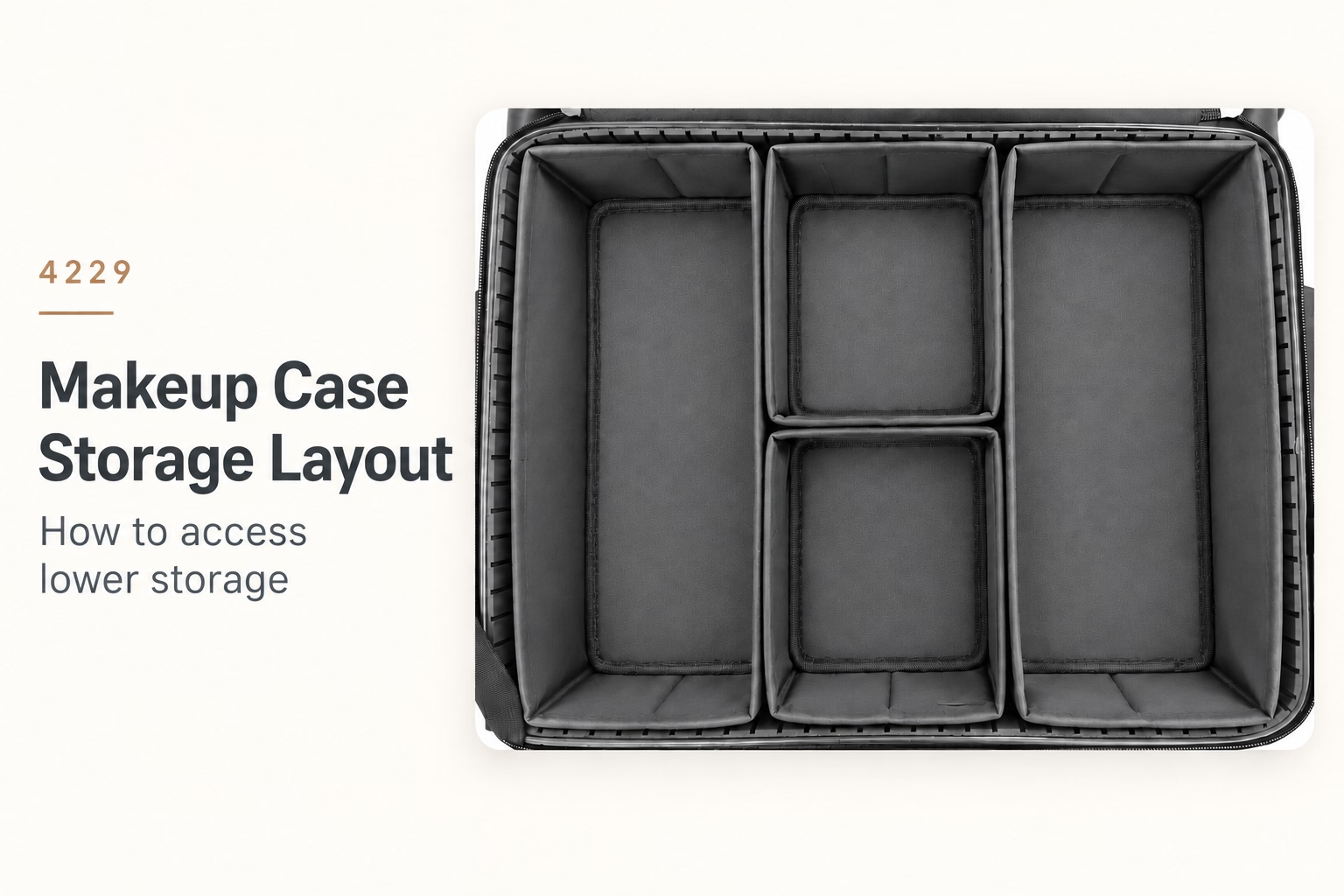
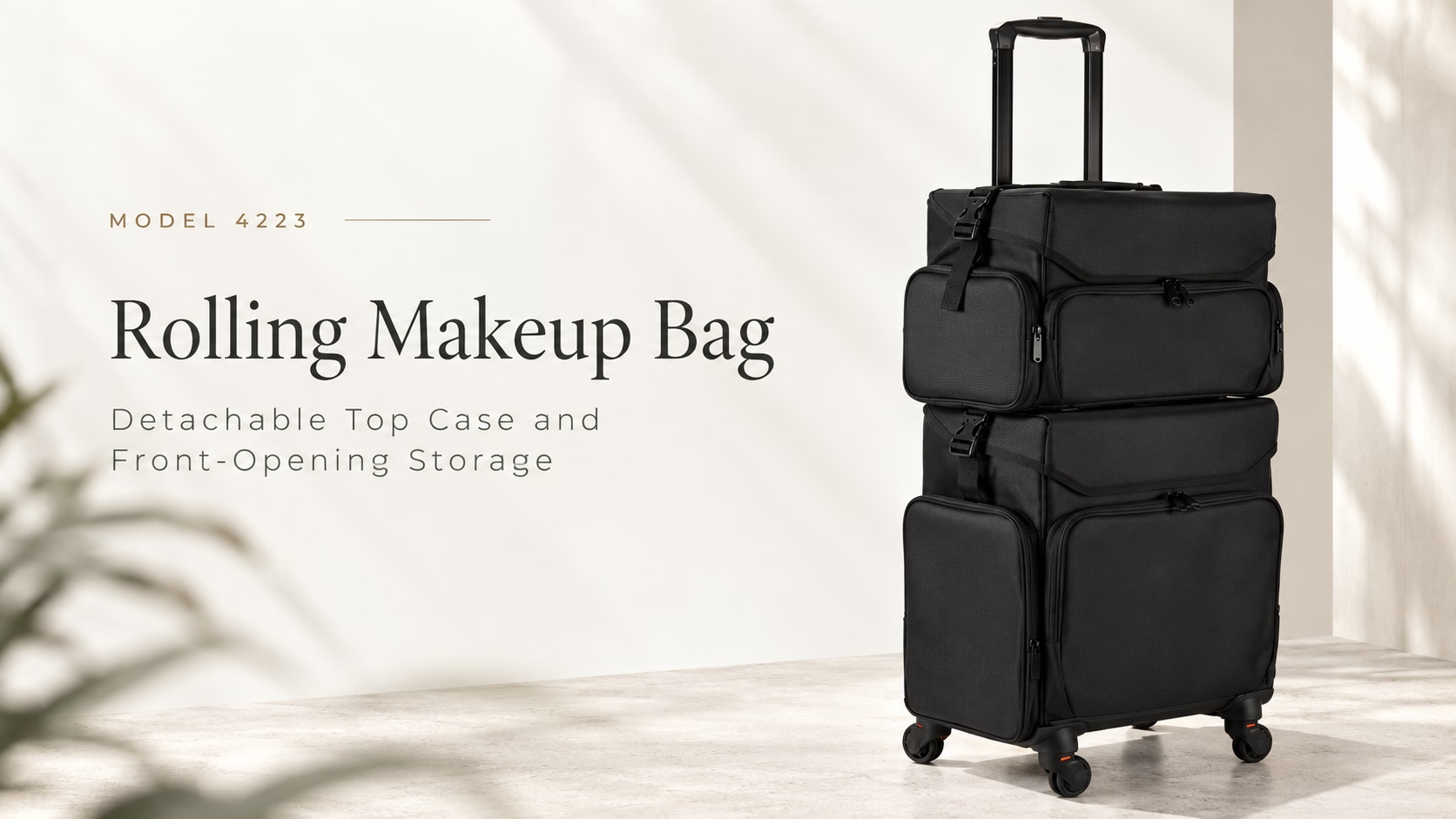
The 4223 combines a detachable upper case with a lower rolling trolley, but its two lower-access routes work differently. The front zippered panel can be opened while the upper case remains attached. Opening the lower trolley’s top lid requires removing the upper case first.
This guide uses photographs and owner-confirmed operating observations from a custom-order sample to explain that distinction. The storage counts and packing figures below describe this sample; buyers should confirm the configuration supplied for their own order.
Understanding the Two-Part 4223 Layout
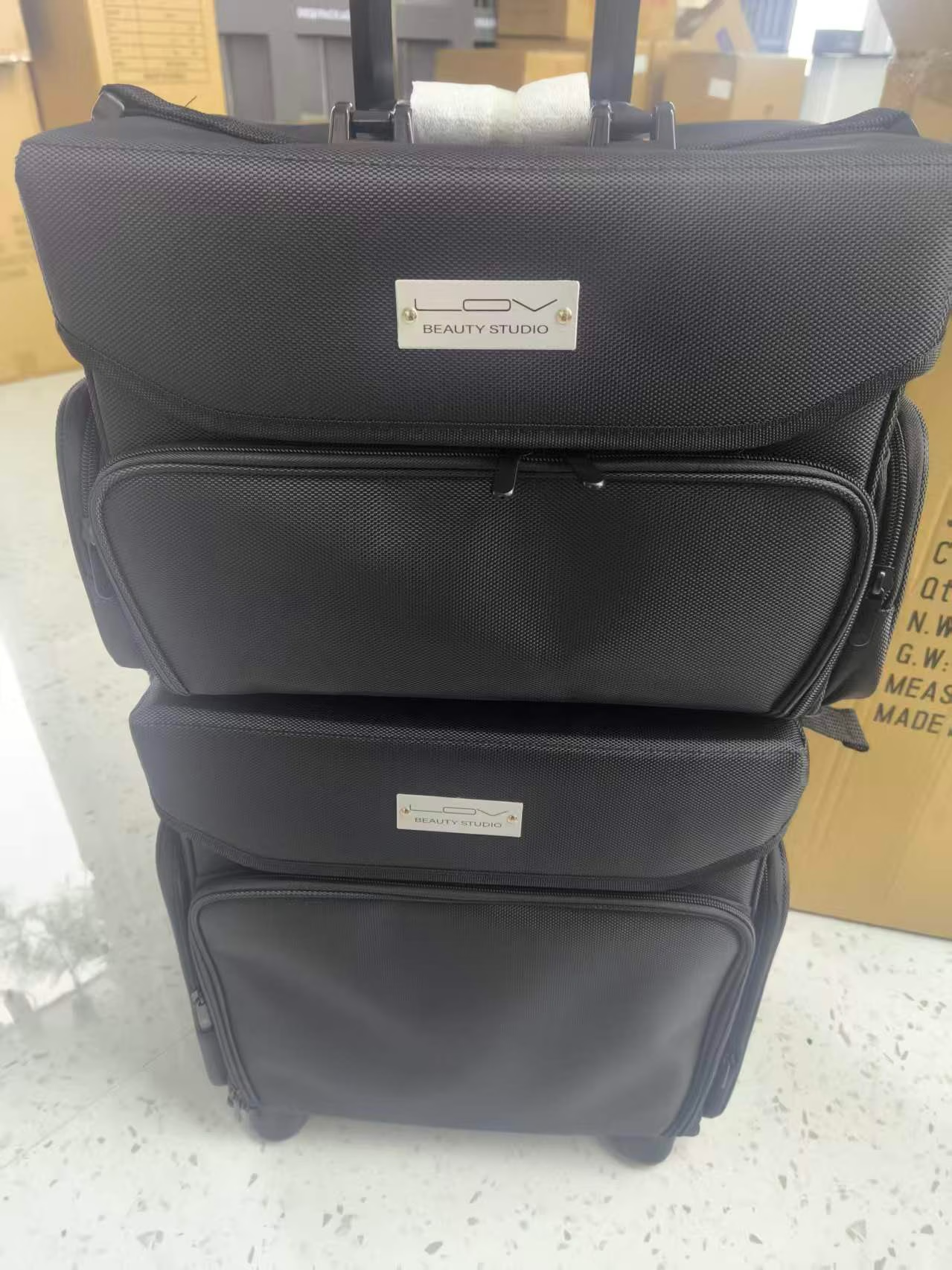
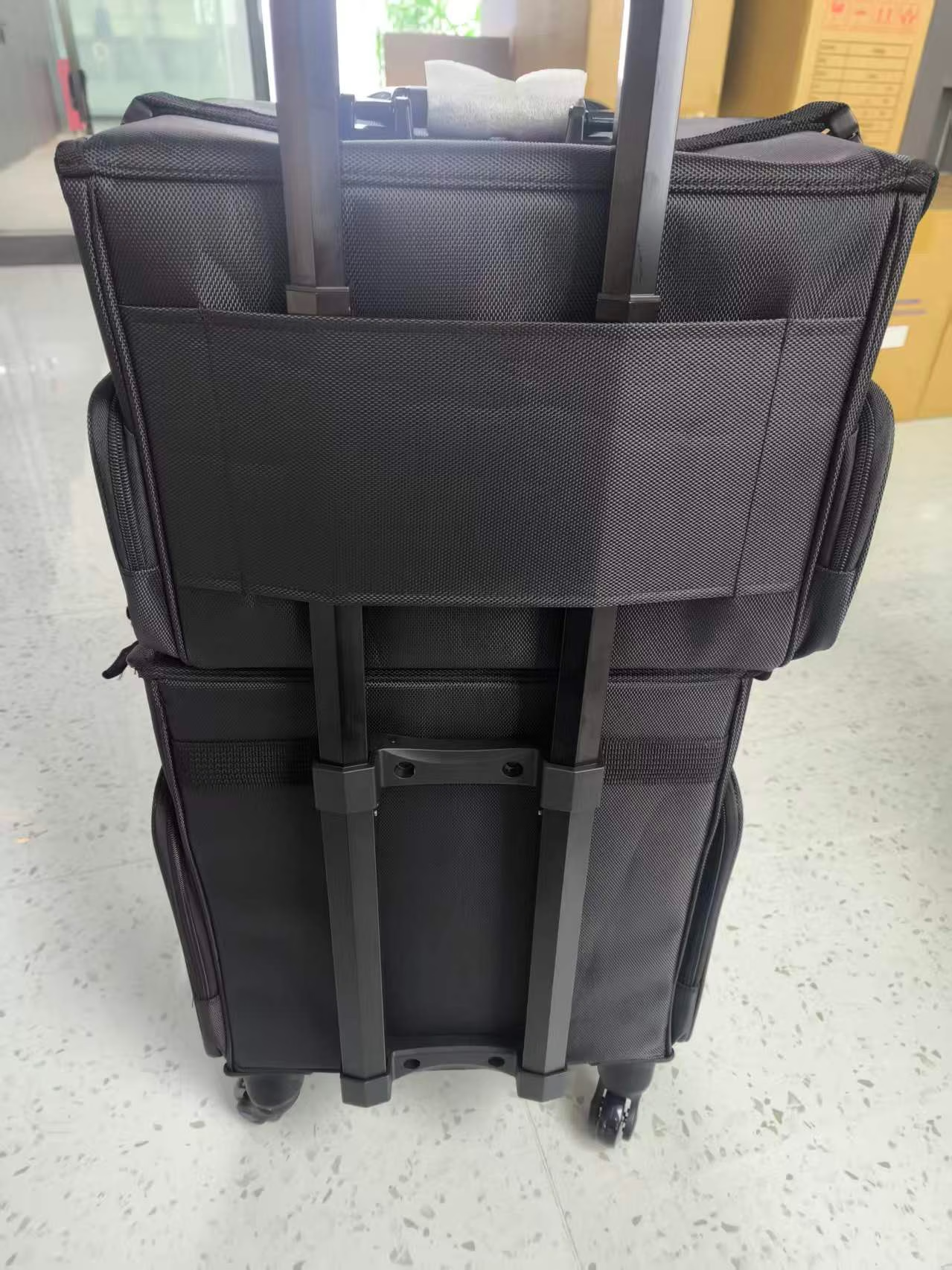
The upper case sits above the lower trolley. Its rear pass-through sleeve fits over the lower trolley’s telescopic handle, allowing the two sections to be carried together. The upper case can also be removed for independent use.
This detachable design gives buyers two practical options: use the upper case as a smaller, independent tool bag, or combine it with the lower trolley through the rear sleeve for a fuller kit.
The 4223 modular rolling makeup bag product page provides the broader specification reference. Here, the focus is how the sections are accessed and used together.
Two Ways to Access the Lower Trolley
Front Zippered Access
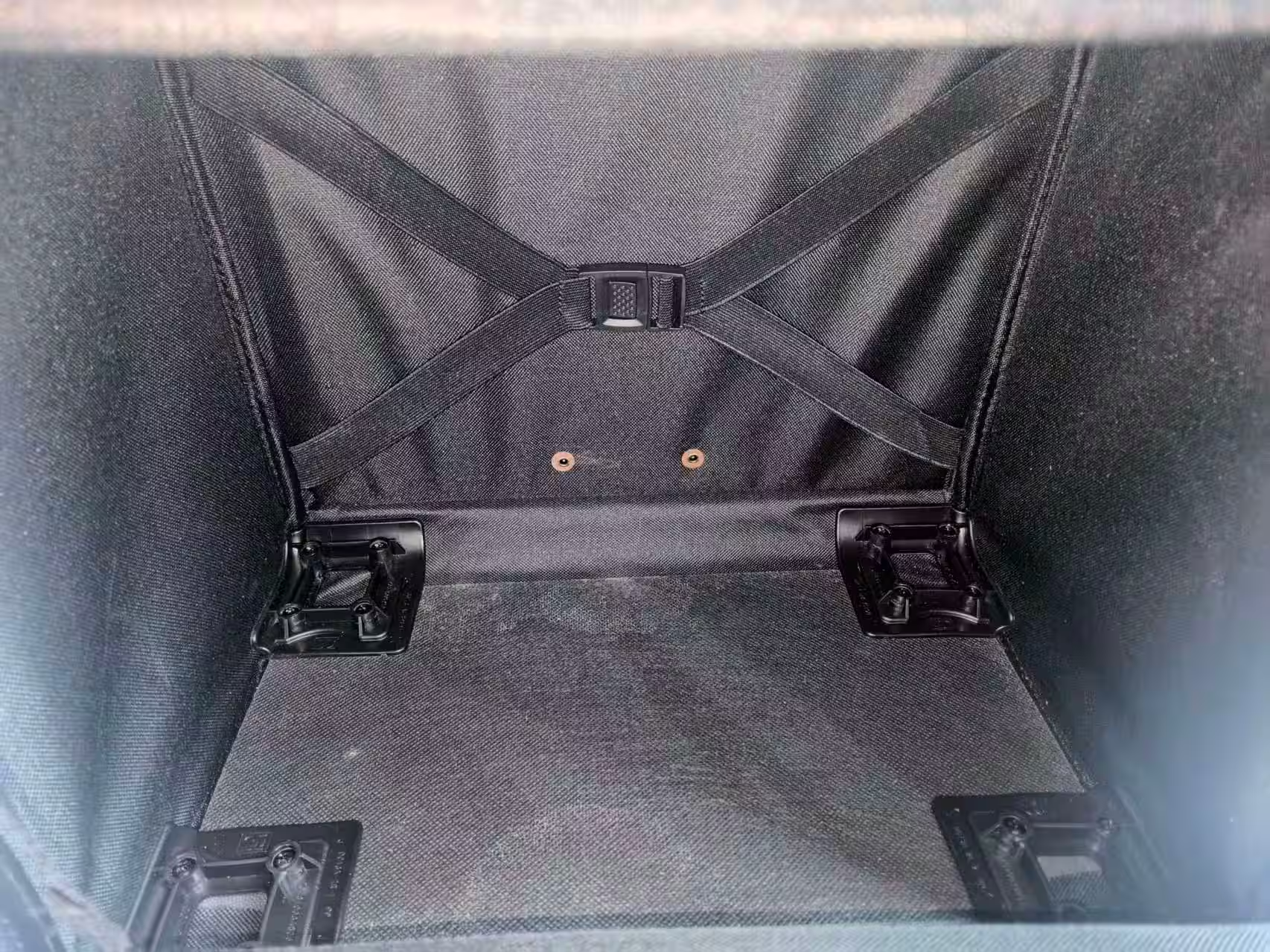
The lower trolley’s front zippered access panel can be opened while the upper case remains attached. Items inside the lower trolley can therefore be retrieved from the front without first separating the two cases.
For a buyer planning a working kit, the useful question is whether frequently needed items remain reachable through that opening after packing. Check the space needed in front of the trolley and whether other contents obstruct the intended item’s removal.
Top-Lid Access
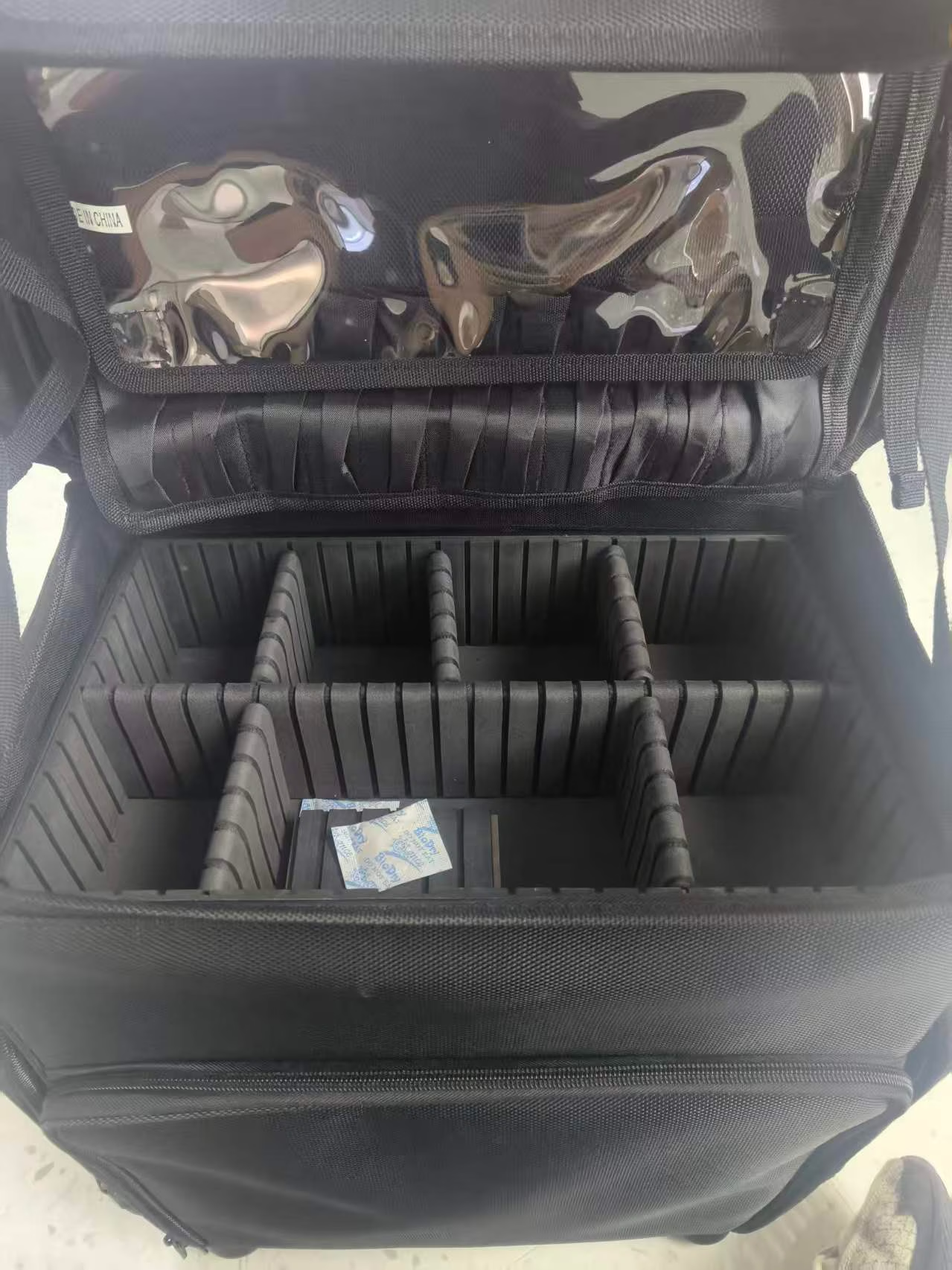
Accessing the lower trolley through its top lid requires removing the upper case first. Once the upper case is taken off, the lower lid can be opened to reach the storage arrangement from above.
Set the upper case on a nearby surface to use the top opening. Compare the two routes with the intended kit to decide which items are best retrieved from the front and which from above.
| Access route | Upper case position | Confirmed operation |
|---|---|---|
| Front zippered panel | Can remain attached | Lower contents can be accessed from the front |
| Lower trolley’s top lid | Must be removed first | Lower storage can then be accessed from above |
How the Upper and Lower Cases Organize Tools
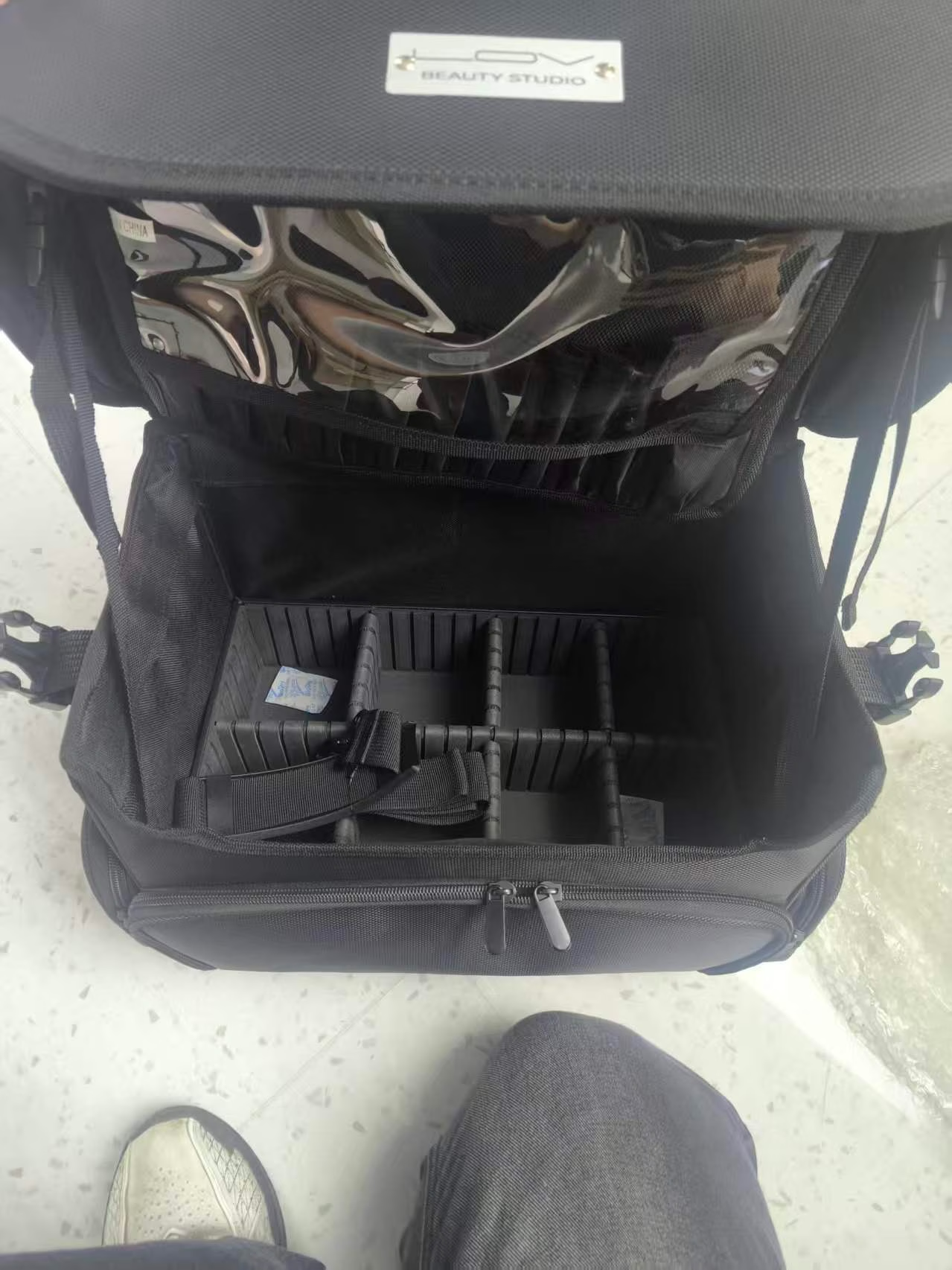
Both sections provide their own brush storage and removable dividers. The confirmed sample configuration includes 22 brush slots and 14 removable dividers across the two cases:
| Sample section | Brush slots | Removable dividers |
|---|---|---|
| Upper case | 11 | 7 |
| Lower case | 11 | 7 |
| Combined sample | 22 | 14 |
The removable dividers give buyers flexibility to plan separate spaces for different items. Match the layout to the dimensions and shapes of the intended tools, including their brush handles.
When planning the assortment, distinguish items that should travel with the independent upper case from those intended to remain in the lower trolley. Check the lower storage layout through the access route the user will actually need.
Choosing a Configuration for Your Working Kit
Start with the intended routine. If some appointments require only a smaller selection, identify what must fit in the upper case alone. For a fuller kit, decide which lower items need frequent front access and which will be reached from above after removing the upper case.
An item fitting inside the compartment does not automatically mean it is convenient to retrieve through either opening. Evaluate its removal path, surrounding contents and the space available at the workstation.
If a different overall format is needed, the rolling makeup case buying guide explains broader size, storage and transport considerations.
What Buyers Should Verify Before Sample Approval
Use the actual intended tools, including their caps, cables and protective cases, during sample review.
- Check item dimensions against the usable storage spaces and proposed divider positions.
- Retrieve the intended lower items through the front panel with the upper case attached.
- Remove the upper case and check access through the lower top lid.
- Check separation, reassembly and zipper closure with the proposed contents in place.
- Record the agreed brush slots, dividers, accessories and configuration in the sample approval documents.
Packaging and Specification Notes
The supplied packing information for this custom-order sample is:
| Item | Sample reference |
|---|---|
| Outer carton dimensions | 40 × 29.5 × 74 cm (L × W × H) |
| Net weight | 7.8 kg |
| Gross weight | 9 kg |
The dimensions describe the outer shipping carton—not the assembled product, extended handle height or usable interior. Confirm the final packing figures for the ordered configuration.
Discuss Your 4223 Configuration
Evaluate the 4223 around the kit and access routine it needs to support. Discuss your project requirements with the team, including the intended contents, preferred configuration and any OEM/ODM requests.