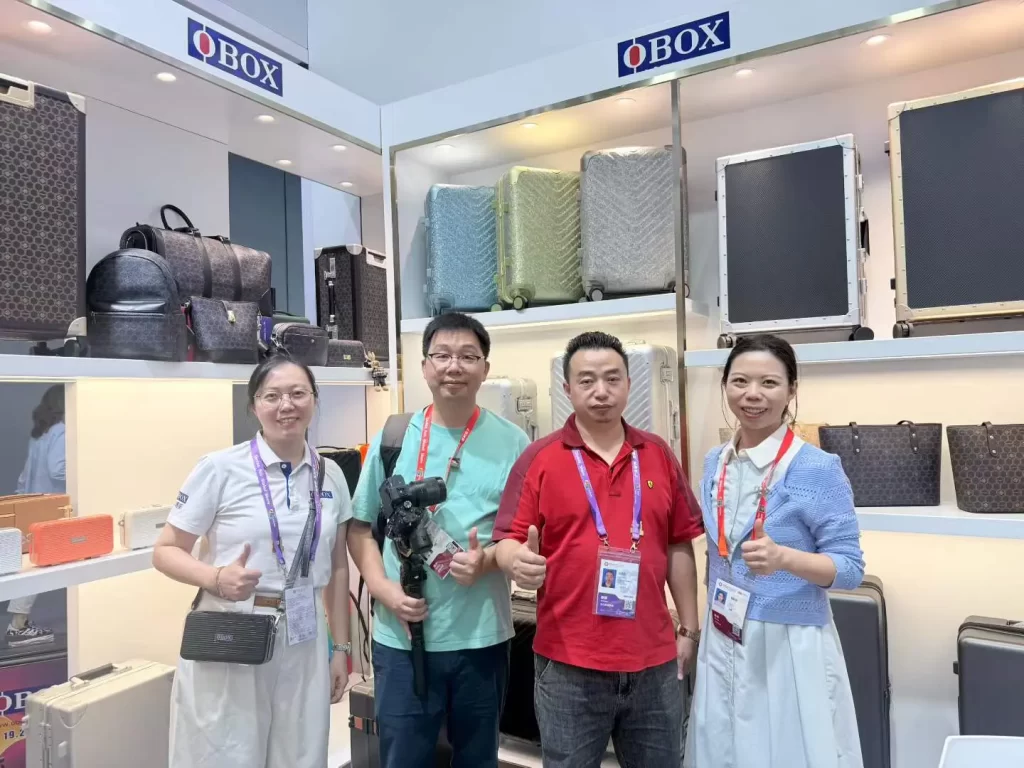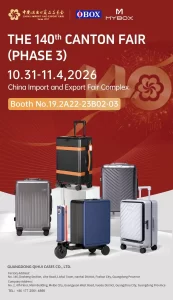
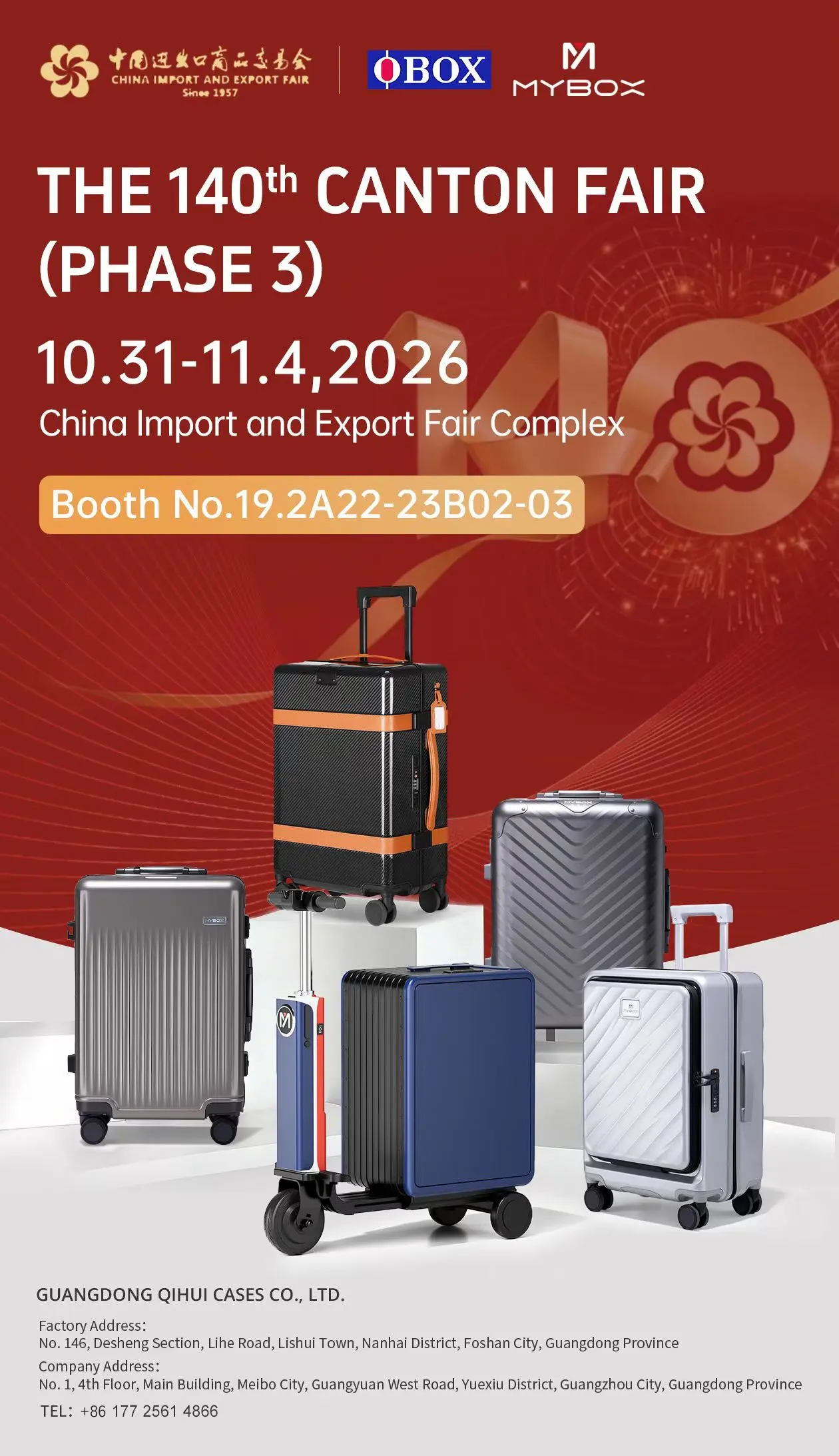
We spent five days at the 140th Canton Fair (Phase 3, 31 October – 4 November 2026) at booth 19.2A22-23 / 23B02-03, showing makeup cases, trolley cases and storage bags to buyers from Europe, the Middle East, Southeast Asia and the Americas.
Most visitors did not arrive asking for a model number. They arrived with a problem — a product line that needed a case, a retail set that needed packaging, or an existing supplier whose quality had slipped. These are the questions that came up again and again, and what they tell us about sourcing in 2026.
What we brought to the booth
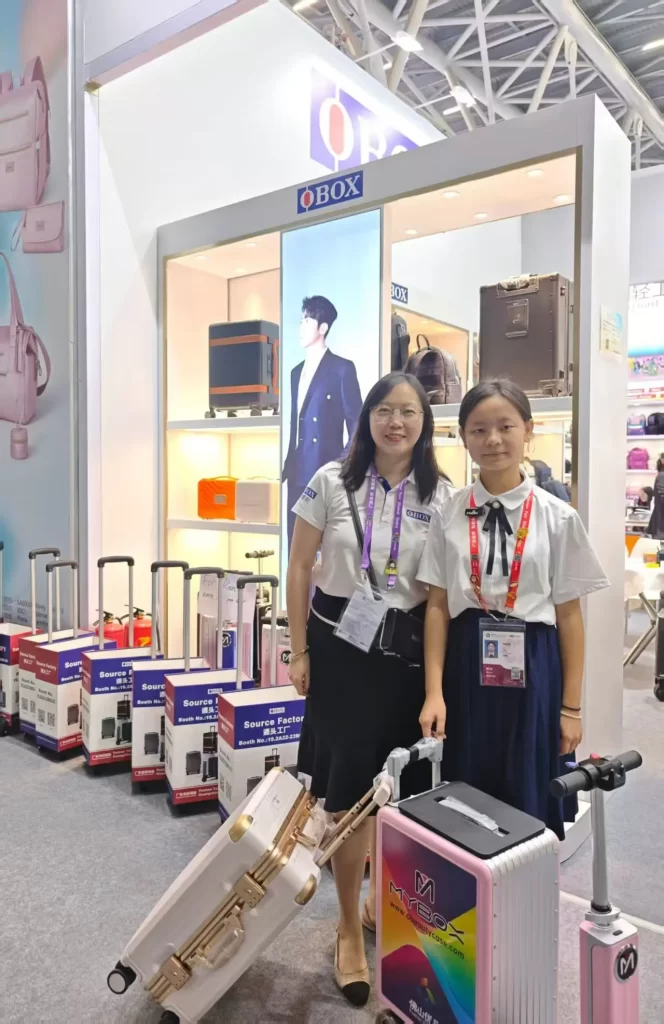
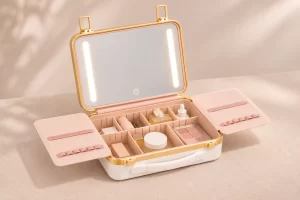
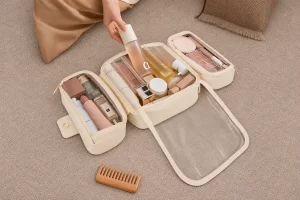
The display was deliberately narrow: aluminium-frame cases, rolling trolley cases with a detachable top case, hard-shell cases with LED mirrors, jewellery storage books with removable pages, and soft PU and Oxford makeup bags. Every unit was a production sample, not a mock-up, so buyers could open drawers, pull trays, test casters and check hinge tension themselves.
Two configurations drew the most attention. The first was a modular rolling case where the top case detaches and becomes a standalone kit for on-site work. The second was a hard-shell case with a detachable LED mirror, because it solves a problem that studios and travelling artists keep raising: the mirror is the first thing to fail, and replacing the whole case is expensive.
The four questions buyers asked most often
1. What is the shell actually made of?
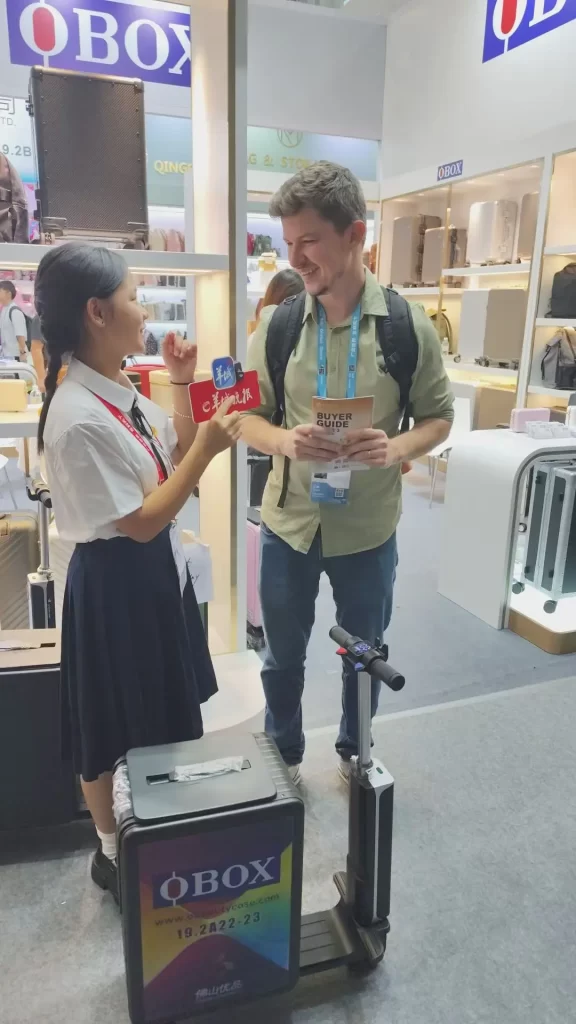
Material questions were rarely about price. Buyers wanted to know whether a case was PU, PVC, Oxford fabric or aluminium, and what that meant for water resistance, weight and how the surface ages. Several had been sold “waterproof” cases that were only splash-resistant, and they were checking the difference in person. Our own guide to PU, PVC and Oxford fabric came up in almost every one of these conversations.
2. Is the mirror detachable, and how is it powered?
For LED mirror cases, the useful questions were specific: detachable or fixed, how many light modes, battery capacity, whether the mirror can be replaced on its own, and whether the light is bright enough to work under, not just to look good in a photo. Buyers who had already sourced LED bags knew exactly which failure they wanted to avoid. We keep a separate LED mirror makeup bag guide for that reason.
3. Can the interior be reconfigured?
Fixed dividers are cheaper; adjustable dividers sell better. Buyers asked how many palettes, bottles and brushes a layout holds, whether trays lift out, and whether the same shell can be offered in two interior versions for different markets. This is where OEM projects usually start — not with a new mould, but with a different interior inside an existing case.
4. What are the real MOQ, sample and lead times?
MOQ depends on the model and the level of customisation: 100 units for rolling models, 500 for most non-rolling models, with lower entry points for logo, colour or packaging changes on stock items. Sampling runs 10–15 days and bulk production 25–40 days, confirmed per project before quoting.
What buyers checked by hand
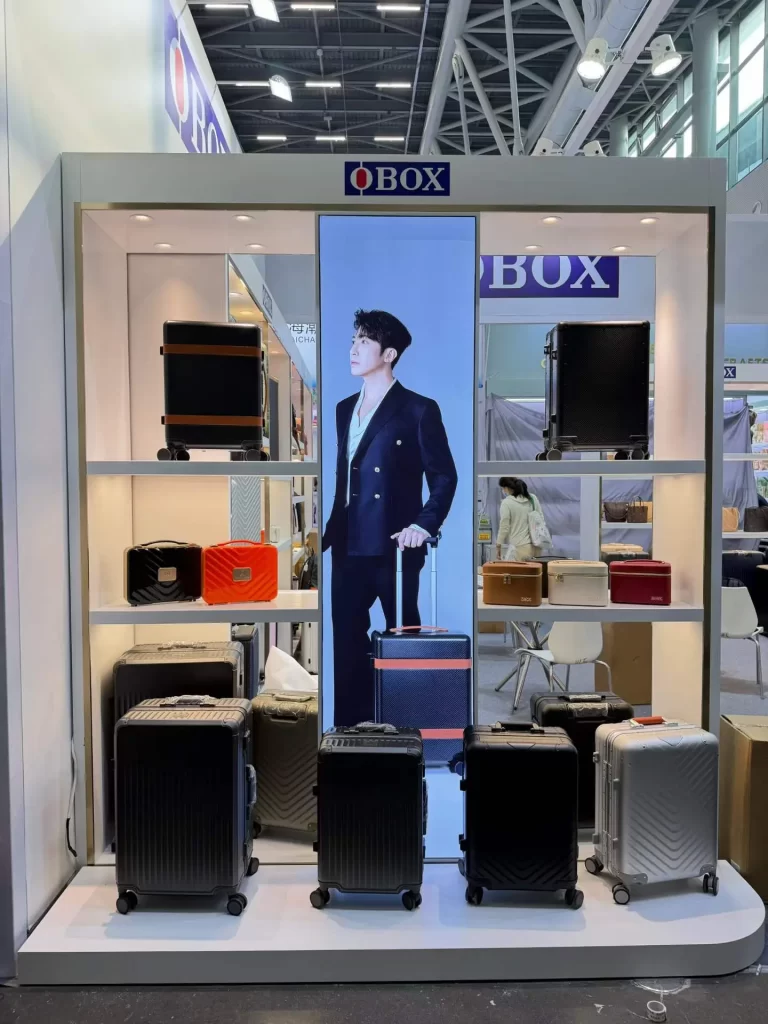
Photographs sell a case; hinges and casters decide whether it comes back. The checks we saw most often were simple and brutal: open and close the lid twenty times, rock the case on its wheels, lift it by the handle with weight inside, pull the telescopic handle to feel the play, and press the mirror hinge to see whether it holds at an angle.
That is also how we test. Every batch goes through a ten-person QC step, and we keep spare parts for two years after delivery, because the failure that matters is the one that happens in month eight, not on the day of delivery.
What this means if you are sourcing this year
Three shifts showed up clearly across the week. Buyers are consolidating suppliers — one partner for cases, bags and packaging rather than three. They are asking for retail-ready packaging earlier, sometimes before the case design is finalised. And they are testing with smaller first orders and faster reorders instead of one large commitment.
None of that is unusual for B2B. What changed is the level of detail: questions about material grade, mirror replacement and interior configuration now come in the first email, not after the third sample.
If you did not make it to Guangzhou
Send the model you are considering, the quantity, your logo file and the market you sell into. We come back with the configuration, the MOQ that applies and the lead time, and we will tell you if a different model fits the brief better. Samples can be shipped before any tooling decision is made.
Browse makeup boxes, makeup bags, or send us the brief.
Obeautycase has been manufacturing makeup cases and bags for 26 years, with OEM and ODM projects for brands, distributors and professional artists.