Quick answer: For an OEM or wholesale order, choose a rolling makeup case supplier that can show clear specifications, a verifiable sample, consistent materials, documented checks and a defined after-sales process. Unit price matters, but it should be compared together with the case structure, storage layout, wheel system, packaging and production schedule.
Obeautycase supplier snapshot
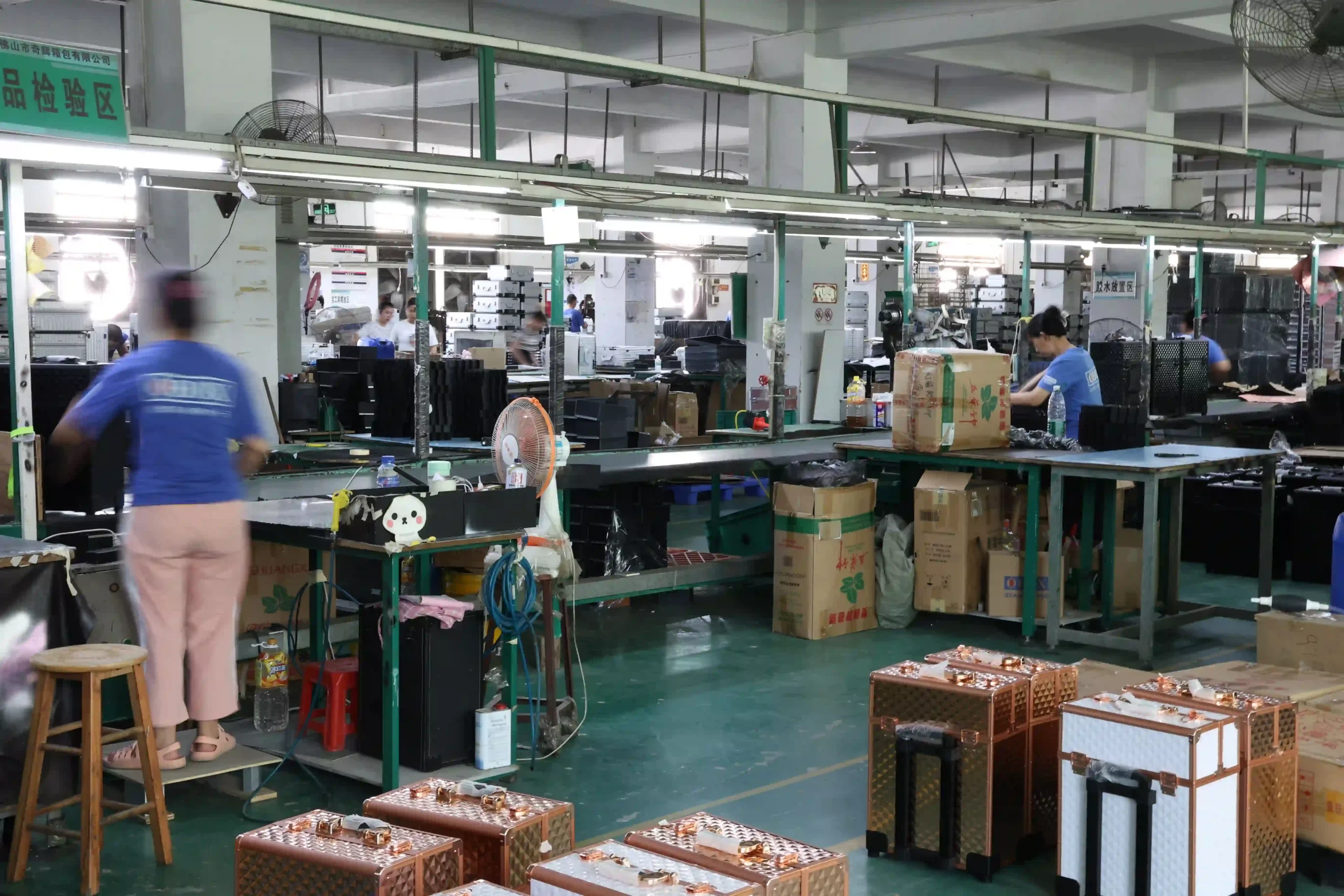
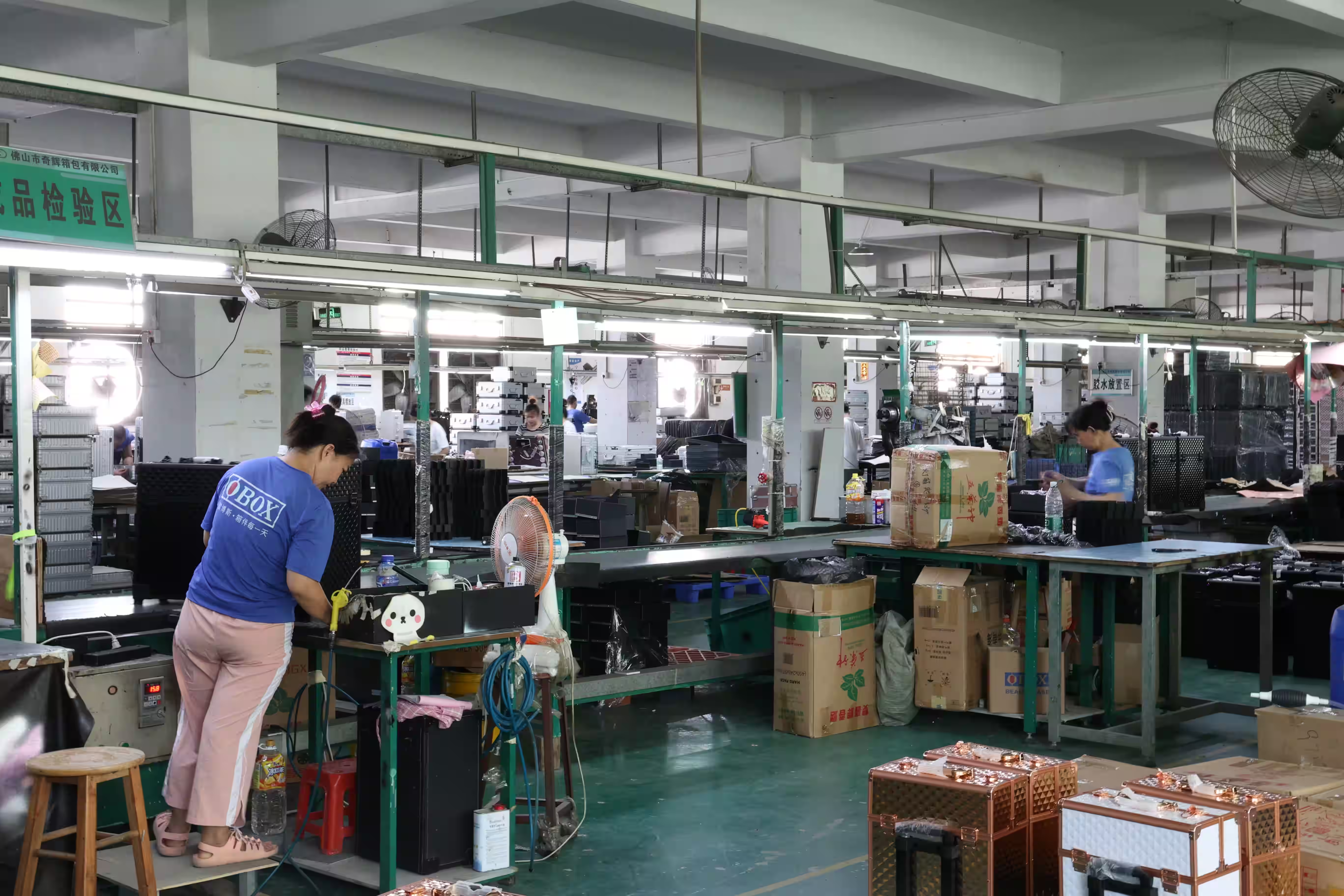
Obeautycase is operated by Guangdong Qihui Cases Co., Ltd., an integrated manufacturer and trading company focused on beauty cases, cosmetic bags and related salon equipment. The company supports brand owners, salons, makeup schools and wholesalers, and accepts long-term OEM/ODM projects.
The public company profile describes a 40,000 m² production facility, more than 400 employees and six production lines. Internally, each production line randomly selects products from five batches every month for inspection, and a dedicated testing department supports product verification. Buyers may also arrange third-party inspection before shipment. A capable supplier should also support a clear pre-shipment review process. See our rolling makeup case inspection checklist for the points buyers should document before dispatch.
For buyers, a factory-and-trading structure can combine direct production coordination with a dedicated commercial contact. That can make it easier to align specifications, customization, quotations, sampling, shipping and after-sales questions through one supplier relationship. The buyer should still confirm the responsible production and quality contacts before placing an order.
What does a rolling makeup case supplier do?
A rolling makeup case supplier provides the product, production service or private-label program behind a mobile makeup case. Depending on the business model, the supplier may be a direct factory, an OEM/ODM manufacturer, a trading company or a distributor.
For a B2B buyer, the important question is not simply whether the supplier can show a finished case. The important question is whether the supplier can reproduce the approved specification at the required quantity and quality level.
A reliable supplier should be able to explain:
– which materials are used in the shell, frame, storage modules and lining;
– how the wheels, handle and case body are assembled;
– which dimensions are external and which are internal;
– how the product is tested under a realistic load;
– what can be customized for a private-label order;
– how samples, production, inspection and after-sales support are managed.
Factory, trading company or distributor?
Direct factory
A direct factory may provide better control over materials, production changes, inspection and customization. It can be a suitable option for brands that need a repeatable OEM program or a long-term product range.
Trading company
A trading company may offer access to several factories or product categories. This can be useful when a buyer needs a broader assortment, but the buyer should confirm who controls the actual production and who is responsible for quality issues.
Distributor
A distributor is often appropriate for ready-stock purchases or regional delivery. It may not be able to change the shell, storage layout, lining or packaging to the same extent as an OEM manufacturer.
The best choice depends on the order. A one-time stock purchase and a private-label product launch require different levels of factory involvement.
Which specifications should buyers request?
Before comparing quotations, request the same information from every supplier. This prevents a low quotation from appearing attractive only because important components or services have been excluded.
External dimensions and internal dimensions
Ask the supplier to separate the product’s external footprint from its usable internal measurements. External dimensions affect carton planning, vehicle loading and storage. Internal dimensions affect the products that can actually be packed.
For a case with multiple modules, request a compartment-by-compartment diagram. A single overall measurement does not explain how the space is divided.
Empty weight and recommended contents weight
The empty case weight and recommended contents weight should be listed separately. A case may physically hold more than the supplier recommends, but excessive loading can affect wheel tracking, handle flex, drawer movement and closure alignment.
The current 3488 reference configuration has an empty weight of approximately 7.5 kg and a recommended contents weight of approximately 25–30 kg. Buyers should compare the normal packed kit rather than selecting a case only by the largest theoretical volume.
Materials and construction
Request a component-level material list. For example, one model may use density board for the outer shell, aluminum alloy for the structural frame and ABS for the storage modules. Another model may use a fireproof-board-laminated MDF construction.
For a component-level explanation of MDF, ABS, aluminum and fireproof board, see our rolling makeup case materials guide.
The quotation should identify the approved material, finish, color reference, lining and hardware. Words such as “premium,” “professional” or “large capacity” should not replace measurable specifications.
How to evaluate wheels and handles
The wheel system affects both the user experience and the long-term return rate. Ask the supplier to specify:
– wheel compound, such as TPE;
– wheel diameter and dual-wheel construction;
– swivel or fixed-wheel arrangement;
– bearing arrangement;
– brake function, if included;
– axle and mounting method;
– replacement-wheel availability;
– floor surfaces used for testing.
The 3488 and 3599 configurations discussed in our product content use TPE wheel systems with 360-degree rotation, dual bearings and brakes. These features are part of the company’s commonly used configuration for similar products, but the final wheel assembly should still be confirmed against the approved sample and production specification.
Obeautycase also has a separate QB/T 2155-2018 test reference for a different trolley-case product. That report recorded 3,000 pull-rod fatigue cycles and wheel abrasion of 0.3 mm under a 16 kg load. It should be treated as a reference for similar materials and production processes—not as a product-specific certification for the 3488 or 3599. The supplier can confirm the applicable internal test items for the buyer’s approved model.
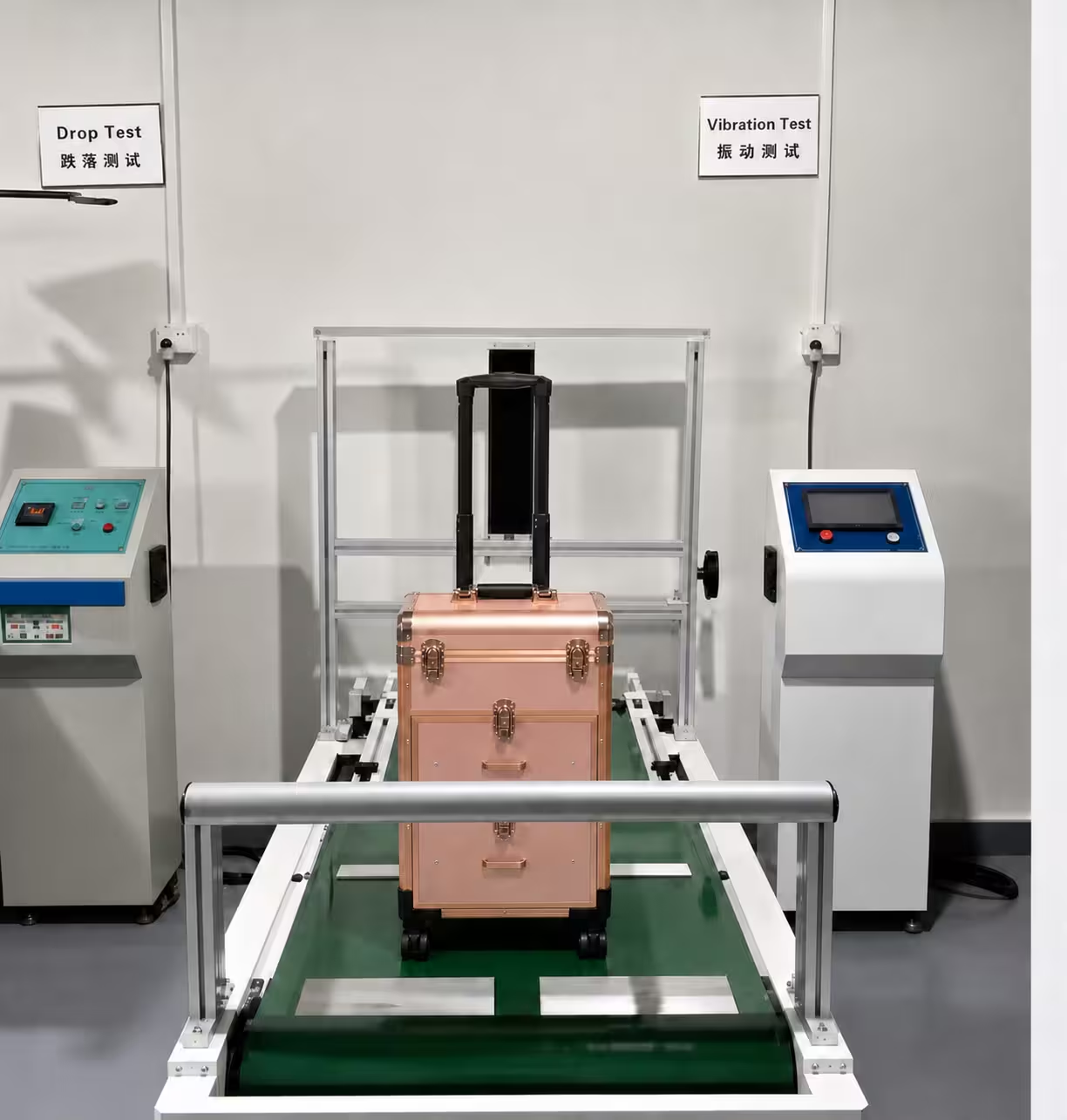
Example of an internal inspection standard
One concrete quality-control practice is the monthly batch-sampling routine: each production line randomly selects products from five production batches for inspection. A dedicated internal testing department supports the checks, while the approved sample and written specification remain the reference for dimensions, materials, storage layout and hardware configuration. This is an example of the supplier’s internal control process, not a claim that every model has the same third-party test report.
For the handle, check the tube material, extension stages, grip construction, mounting points and fatigue-test method. A handle that feels stable on an empty sample may flex differently when the case is packed with bottles, palettes and metal tools.
What should an OEM sample include?
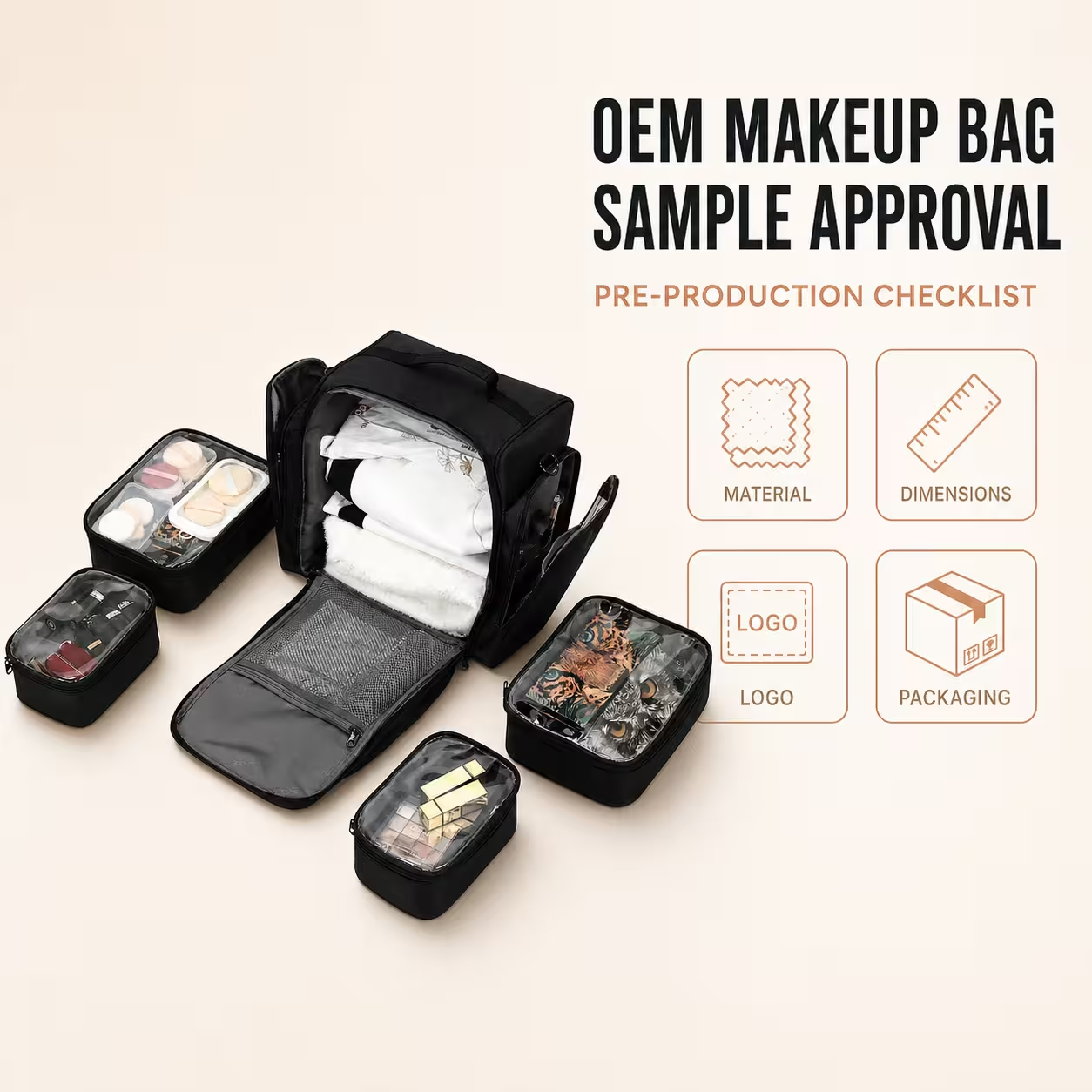
An OEM sample should represent the version that the factory intends to produce, not a generic showroom sample. The sample should include the agreed:
– shell material and exterior finish;
– frame color and profile;
– storage-module layout;
– divider configuration;
– lining and protective padding;
– wheel and handle assembly;
– locks, latches and corner protectors;
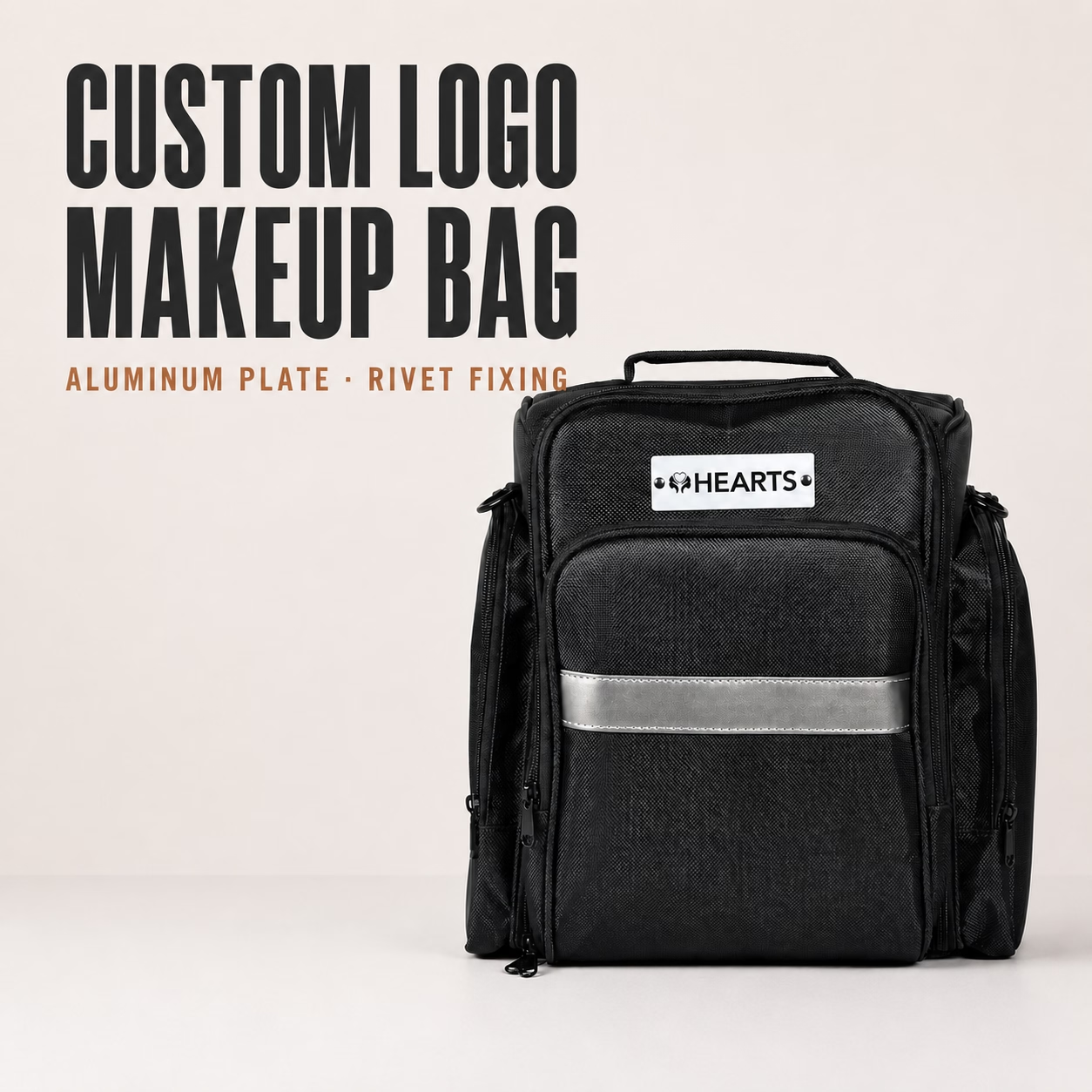
– logo placement and artwork;
– retail packaging or shipping carton, where relevant.
Test the sample in the way the customer will use it. Open and close every section, load the normal product categories, pull it over the expected floor surfaces, test turning and check whether the case remains stable when stationary.
For a step-by-step inspection method, use our makeup artist trolley durability sample checks before approving the sample for bulk production.
OEM customization options
Common rolling makeup case customization options include:
– logo placement and printing method;
– shell or frame color;
– lining color and material;
– removable or adjustable divider layout;
– storage-module configuration;
– handle grip and hardware finish;
– protective corners and latches;
– labels, inserts and retail packaging;
– carton markings and shipping configuration.
Not every change has the same production impact. A logo change may be simple, while a new divider layout can affect tooling, internal clearance, packing and sample approval. Ask the supplier to identify which changes are standard options and which require engineering review.
Our rolling makeup case customization guide helps you evaluate logo, color, lining, divider, hardware and packaging options into a written sample-approval checklist.
OEM and ODM customization process
For a typical rolling makeup case OEM or ODM project, the workflow runs from style confirmation and deposit payment through sampling, bulk production, inspection, delivery and after-sales support.
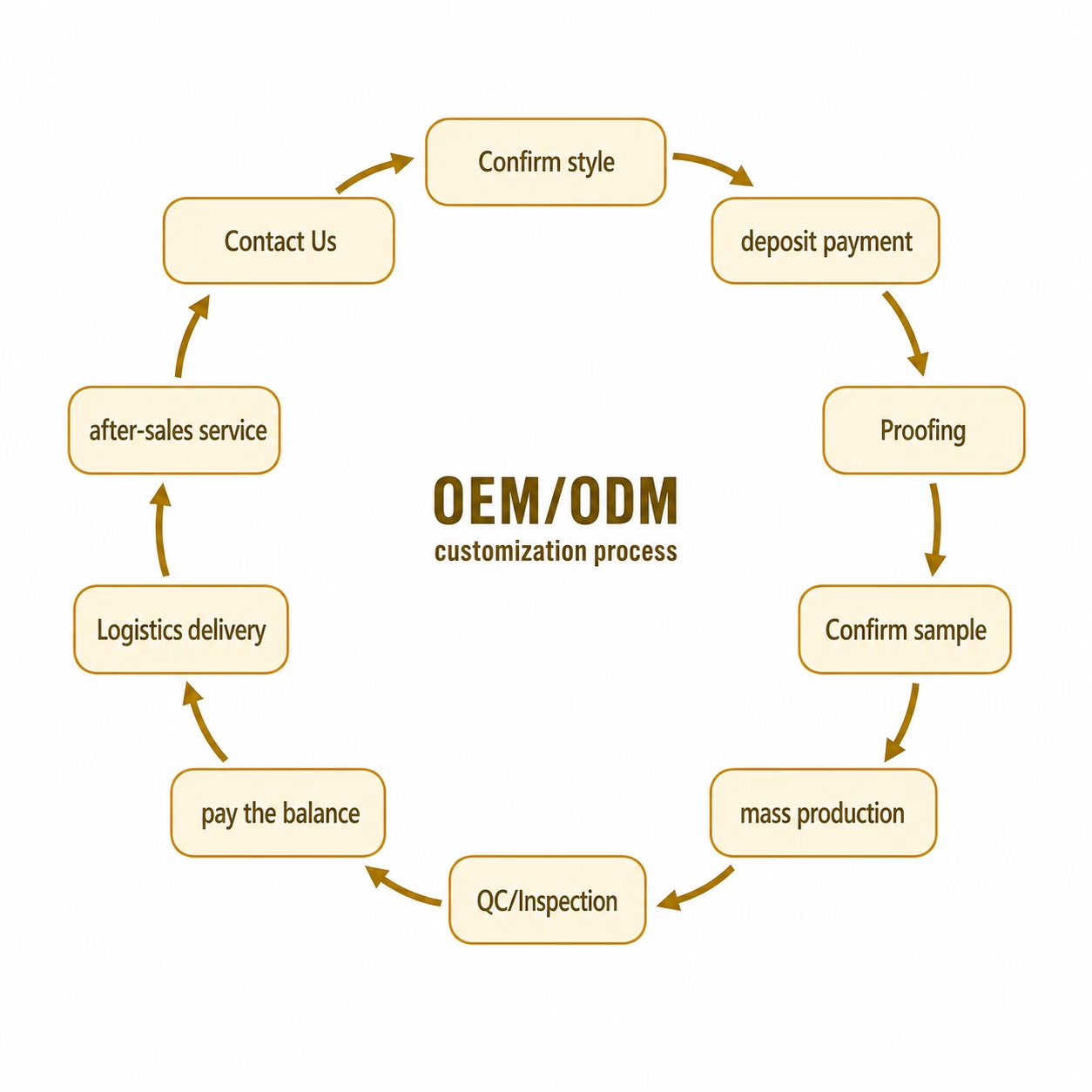
The exact sequence may vary depending on the customization scope, packaging requirements and sample revisions. Confirm each milestone in writing before bulk production begins.
MOQ, sample time and production lead time
MOQ should be stated in units and connected to the approved configuration. A quotation that lists a low MOQ but excludes customized packaging or special materials may not be comparable with a complete OEM quotation.
For the current Obeautycase reference program:
Lead time should normally begin after artwork, materials, colors, divider layout and sample approval are confirmed. Changes after approval, packaging revisions or peak-season production can affect the final schedule.
Quality-control questions to ask a supplier
Before placing an order, ask:
1. Who owns the production specification after sample approval?
2. How are material substitutions handled?
3. What dimensions are checked during inspection?
4. Is the loaded-weight test performed on the complete case?
5. How are wheel tracking, turning and brakes checked?
6. How is handle fatigue tested?
7. What happens when a sample does not meet the agreed standard?
8. Are spare wheels, handles, latches or dividers available?
9. What is covered by the warranty?
10. Which documents are supplied with the final shipment?
The answers should be written into the quotation, inspection standard or purchase agreement rather than left only in informal messages.
How to compare supplier quotations
Use the following purchasing worksheet to record the same information from each supplier before comparing quotations:
The table makes exclusions easier to spot. One supplier may quote a lower price because the sample, packaging, spare parts, inspection or custom divider work is not included.
Which product format should a supplier offer?
A B2B supplier does not need to force every buyer into one case size. A better product range can include different formats for different customer needs.
The 3599 is a compact rolling makeup case for buyers who prioritize a smaller footprint, separated storage and manageable handling. The 3488 is a larger drawer-oriented format for buyers who need more separated space and a fuller professional kit.
For a direct product comparison, read our 3488 vs 3599 rolling makeup case comparison. For product-specific information, see the 3599 rolling makeup case and the large-capacity rolling makeup case with drawers.
For broader category criteria, see our Trolley Makeup Case Buying Guide.
Common mistakes when choosing a supplier
Choosing the lowest unit price first
A low price is not useful if the product requires frequent repairs, has inconsistent colors or arrives with a different storage layout from the approved sample.
Comparing external volume with internal capacity
Large external dimensions do not automatically mean usable storage. Ask for internal measurements and a compartment diagram.
Skipping the loaded sample test
Wheel tracking, handle flex and case stability should be checked with a realistic contents load, not only with an empty sample.
Treating “waterproof” as a complete specification
Unless the exact configuration has a documented water-resistance test, treat a hard-sided rolling makeup case as splash-resistant rather than fully waterproof. Protect liquids inside sealed pouches.
Approving customization without a final sample
Color, lining, dividers and hardware may look different from a digital rendering. Approve a physical sample or a clearly documented production reference before bulk manufacturing.
Final recommendation
The lowest first quotation is not always the lowest-risk option. A better supplier can explain the construction, reproduce the approved sample, document the checks and support the product after shipment.
For OEM and wholesale buyers, define the specification before comparing price. Confirm dimensions, materials, storage layout, wheel and handle performance, MOQ, lead time, packaging, warranty and spare parts in writing. The standard OEM/ODM workflow is: contact the supplier, confirm the style, pay the deposit, approve the sample, start bulk production, complete inspection, pay the balance, arrange delivery and receive after-sales support.
The supplier’s current reference policy includes a 12-month warranty covering functional failure, component damage and wear-related issues within the agreed terms. Replacement wheels, handles, latches and dividers can be discussed with the sales team. This gives buyers a defined support path after delivery instead of relying only on the original quotation.
Frequently Asked Questions
What is the difference between a rolling makeup case supplier and a manufacturer?
A supplier may provide products from one or more sources, while a manufacturer controls production directly. Ask who owns the production specification, who performs inspection and who is responsible for correcting defects.
What MOQ should I expect for an OEM rolling makeup case?
The reference MOQ for the current program is 100 units. The final MOQ can depend on materials, logo method, packaging, divider configuration and the required production setup.
How long does an OEM sample take?
The current reference sample lead time is approximately 15 days. Artwork, color, lining, divider changes and sample revisions can affect the final schedule.
Is the sample fee refundable?
The sample fee can be refunded after the bulk order is confirmed. Modification costs and freight charges should be confirmed separately because they depend on the requested changes and shipping arrangement.
How long does bulk production take?
The current reference bulk and customized production lead time is approximately 25–35 days after the approved sample and production details are confirmed.
Can I customize the logo, color and dividers?
Yes. Logo, exterior color, lining and divider configuration can be discussed for private-label projects. Confirm the final options on the approved sample and quotation.
What after-sales support is available?
The reference policy includes a 12-month warranty. Wheels, handles, latches and dividers can be supplied as replacement parts, and after-sales requests receive a response target within 24 working hours.
What should be included in a supplier quotation?
The quotation should identify the model, materials, dimensions, weight, wheel and handle configuration, MOQ, sample terms, production lead time, packaging, inspection, warranty and spare-parts policy.