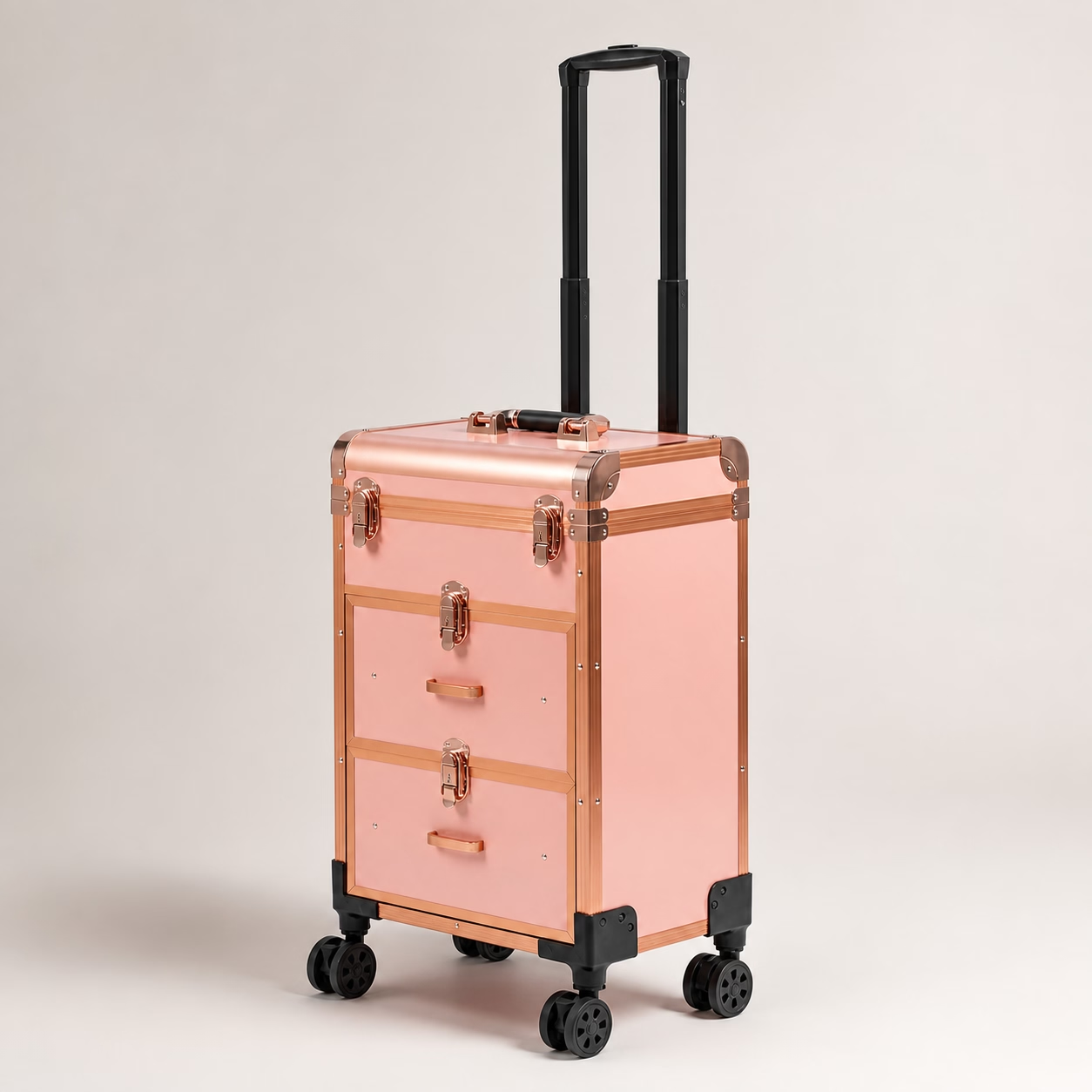
Quick answer
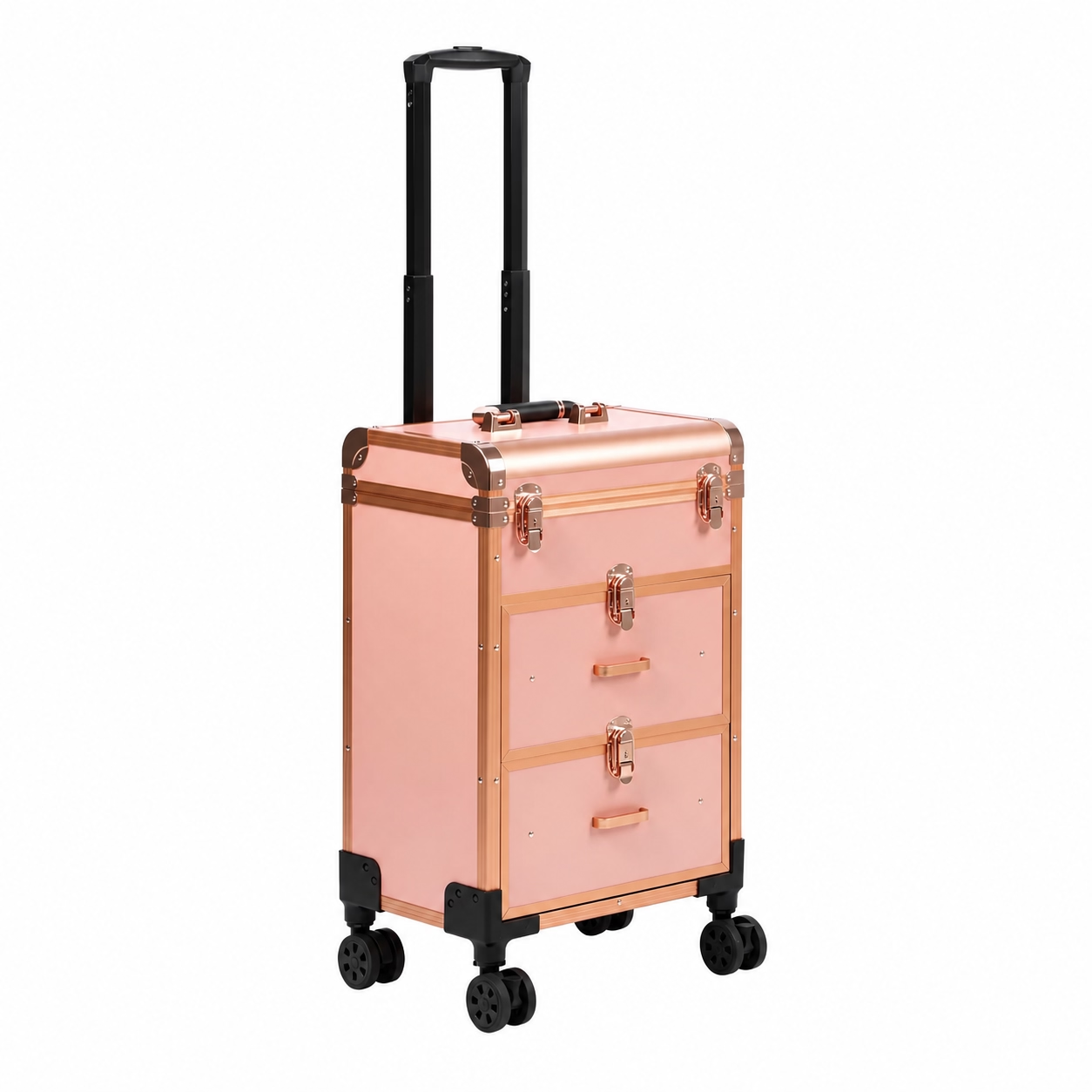
A large-capacity rolling makeup case with drawers makes sense when one kit includes palettes, bottles, brushes, tools and backup stock. Drawers keep those groups within reach, and the trolley base can replace several smaller bags. The compromise is weight: once fully packed, this type of case needs more careful loading than a compact rolling model.
For mobile artists with a focused kit, a compact model may be easier to move. For salons, beauty schools, backstage teams and distributors who need a fuller professional assortment, a large makeup trolley case with drawers can offer a more organized working platform.
For the 3488 configuration discussed in this guide, the supplied internal measurements add up to approximately 23.9 L of theoretical storage volume, with a recommended contents weight of 25–30 kg.
What is a large-capacity rolling makeup case with drawers?
A large-capacity rolling makeup case with drawers combines four functions in one mobile unit:
– a protective hard-sided case;
– a telescopic handle and wheels for transport;
– separated drawers for category-based storage;
– upper compartments or removable dividers for flexible organization.
Unlike a basic cosmetic box, a rolling makeup storage case is designed around movement and workflow. The user can transport the case to a salon, studio, classroom, hotel room, bridal appointment or backstage area, then open the drawers and work from the same organized unit.
“Large capacity” does not mean that every cubic centimetre is usable. Drawer depth, dividers, wheel clearance, lining and hardware all take up space. In practice, a well-organized medium load is often more useful than a case packed so tightly that it is hard to roll or close.
Who needs a professional makeup case with drawers?
Mobile makeup artists with a full kit
Artists carrying multiple complexion shades, palettes, brushes, tools, lashes, accessories and backups may benefit from drawers because each group can have a defined location. The point is not to carry more for its own sake, but to spend less time searching during an appointment.
Salons and bridal teams
Salons may use several identical cases for separate service teams. A drawer-based layout makes it easier to prepare a repeatable kit for bridal makeup, special events or on-location services. Team members can also identify missing items before leaving the salon.
Beauty schools and training programs
In a school, products can be separated by student, service type, shade family or lesson stage. A consistent packing system helps when several users share the same equipment.
Backstage and production teams
Backstage users often need a broad selection of products within quick reach. Drawers can separate daily-use items from backup inventory, while the rolling base helps move the kit between rooms or workstations.
Distributors and private-label brands
For distributors, a large makeup trolley case can occupy the premium or high-capacity position in a product range. It gives sales teams a clear answer when buyers ask for more separation, more storage and fewer individual bags.
How drawers improve the daily workflow
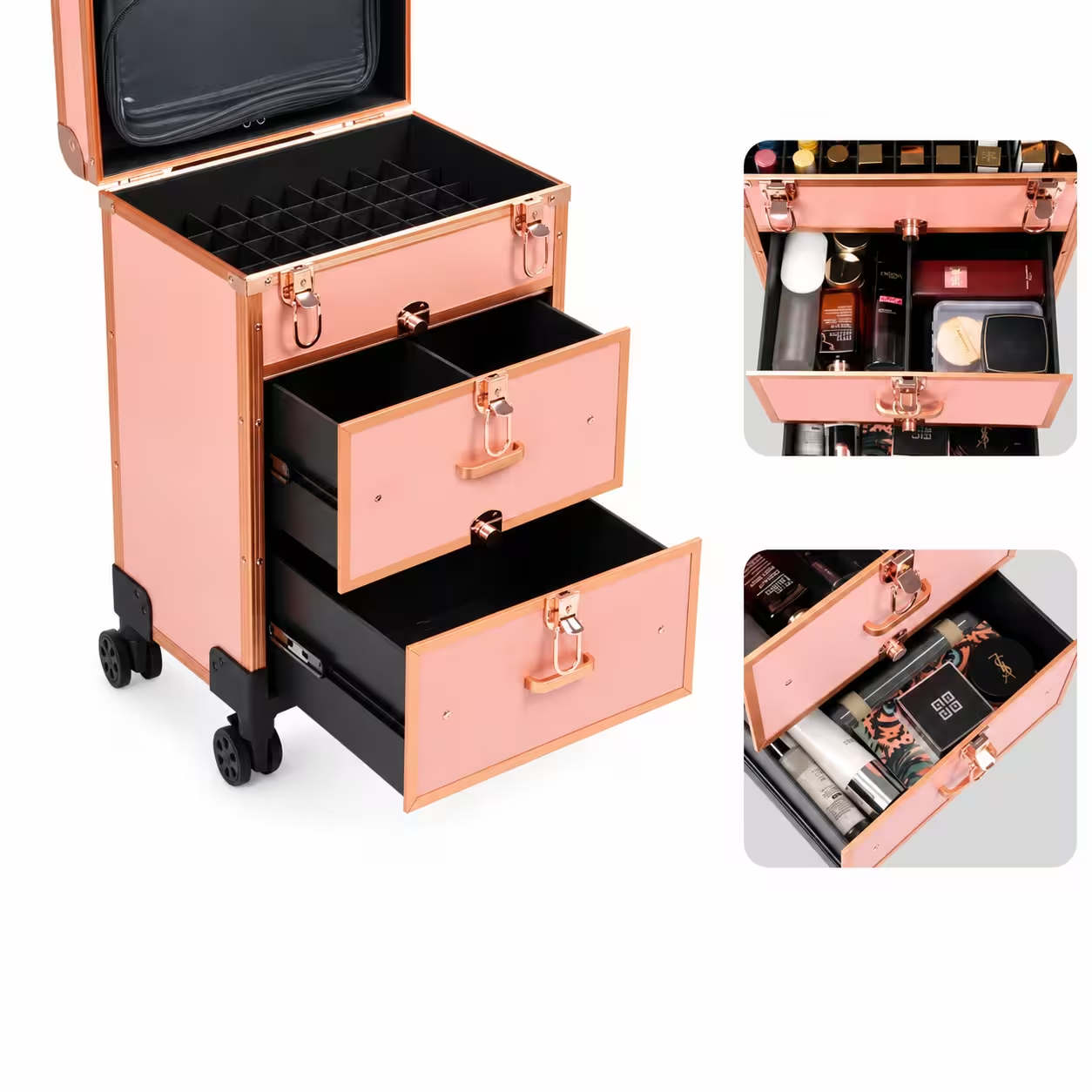
The best drawer layout follows frequency of use rather than product type alone. A practical arrangement might look like this:
The arrangement will change from one artist to another, but the principle is simple: give each category a repeatable home. That makes restocking quicker and prevents the case from turning into one mixed container.
Packing a large makeup trolley case safely
1. Separate daily-use products from backup stock
Start by making two groups. Daily-use products should be placed in the easiest-access drawer. Backup items can go lower or into a secondary compartment. This prevents the user from opening every drawer during a routine service.
2. Place heavy items close to the wheel base
Bottles, metal tools and dense palettes should sit low and close to the case base. Keeping heavy items high can increase tipping and make the handle feel less stable when the case is pulled.
3. Keep liquids upright and protected
Liquid products should remain upright and separated from powders, paper packaging and electrical accessories. Use internal pouches or sealed bags when a leak could damage other products.
4. Use dividers instead of filling empty space randomly
Adjustable dividers are useful because product sizes change. A divider layout should prevent bottles from moving while still allowing the user to remove one item without unpacking the entire drawer.
5. Test the case when fully packed
Test the case in the configuration you will actually use. Check handle flex, wheel tracking, turning, drawer movement and closure alignment. A case that feels smooth when empty can behave differently once bottles, palettes and tools are inside.
For this 3488 configuration, the recommended contents weight is approximately 25–30 kg. A supplier should simulate this contents load and inspect rolling, turning, handle flex, wheel alignment and closure performance. The 25–30 kg figure is the recommended contents weight for this configuration; it should not be interpreted as a universal capacity for every rolling makeup case design.
3488 as a large-capacity example
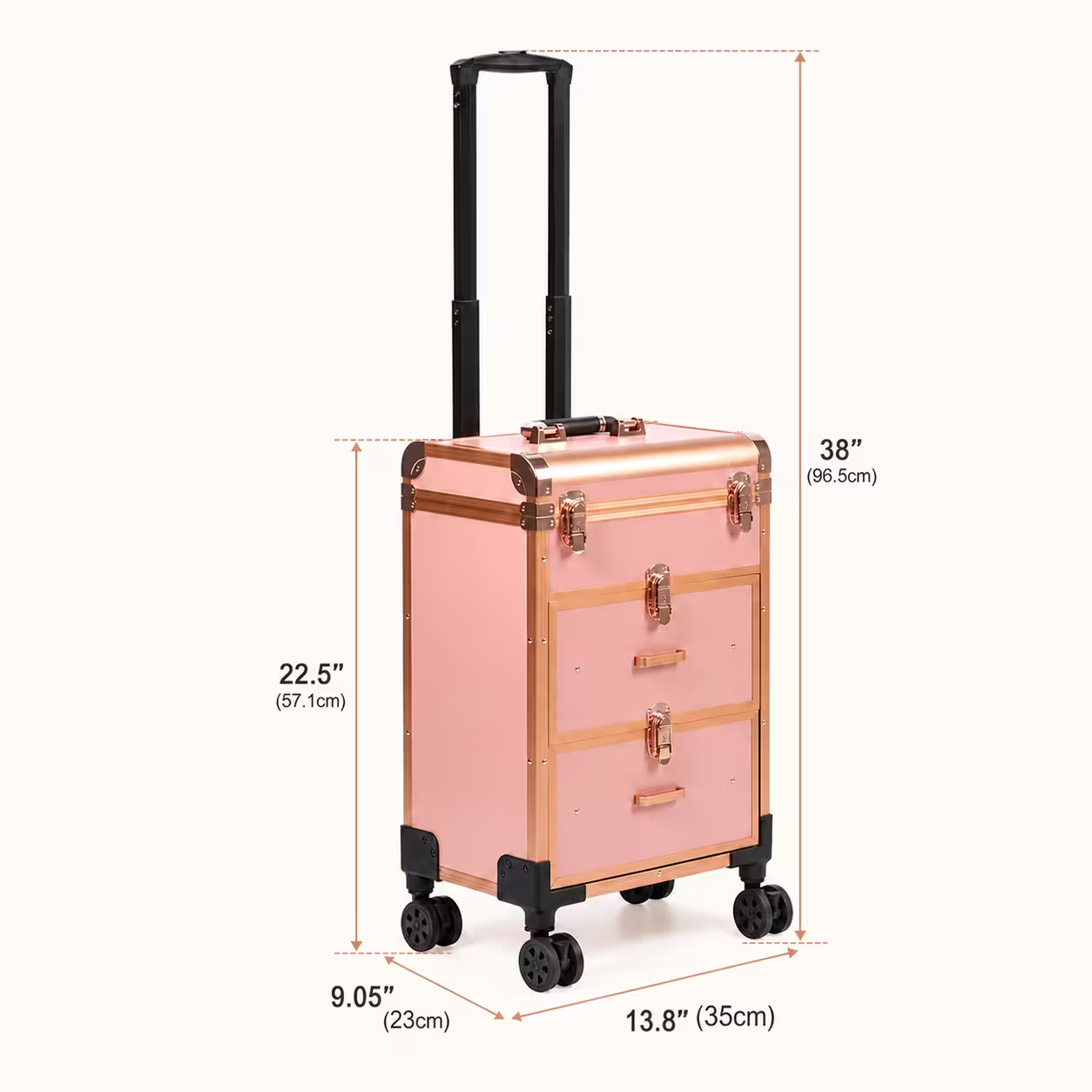
The 3488 is positioned as a taller, storage-oriented 3-in-1 rolling makeup case. Its displayed overall height is approximately 96.5 cm, with a main case height of approximately 57.1 cm and a footprint of approximately 35 × 23 cm. These dimensions create a strong large-capacity impression while keeping the case in a mobile trolley format.
Based on the internal measurements supplied for this configuration, the theoretical storage volume is approximately 23.9 liters before subtracting corners, hardware, dividers and clearance. The calculation is shown below so buyers can understand how the estimate was made:
The two smaller drawer figures are treated as separate left and right compartments. This is a geometric estimate, not a guaranteed usable packing volume. The practical capacity will be lower if the case includes thick lining, corner reinforcement, dividers, drawer runners or areas that cannot be packed efficiently.
The supplied empty weight is approximately 7.5 kg, and the recommended contents weight is approximately 25–30 kg. That produces an estimated total rolling weight of approximately 32.5–37.5 kg including the case.
3488 material and construction reference
This material configuration is a technical reference for the 3488 model. Confirm the final production specification against the approved sample and factory bill of materials.
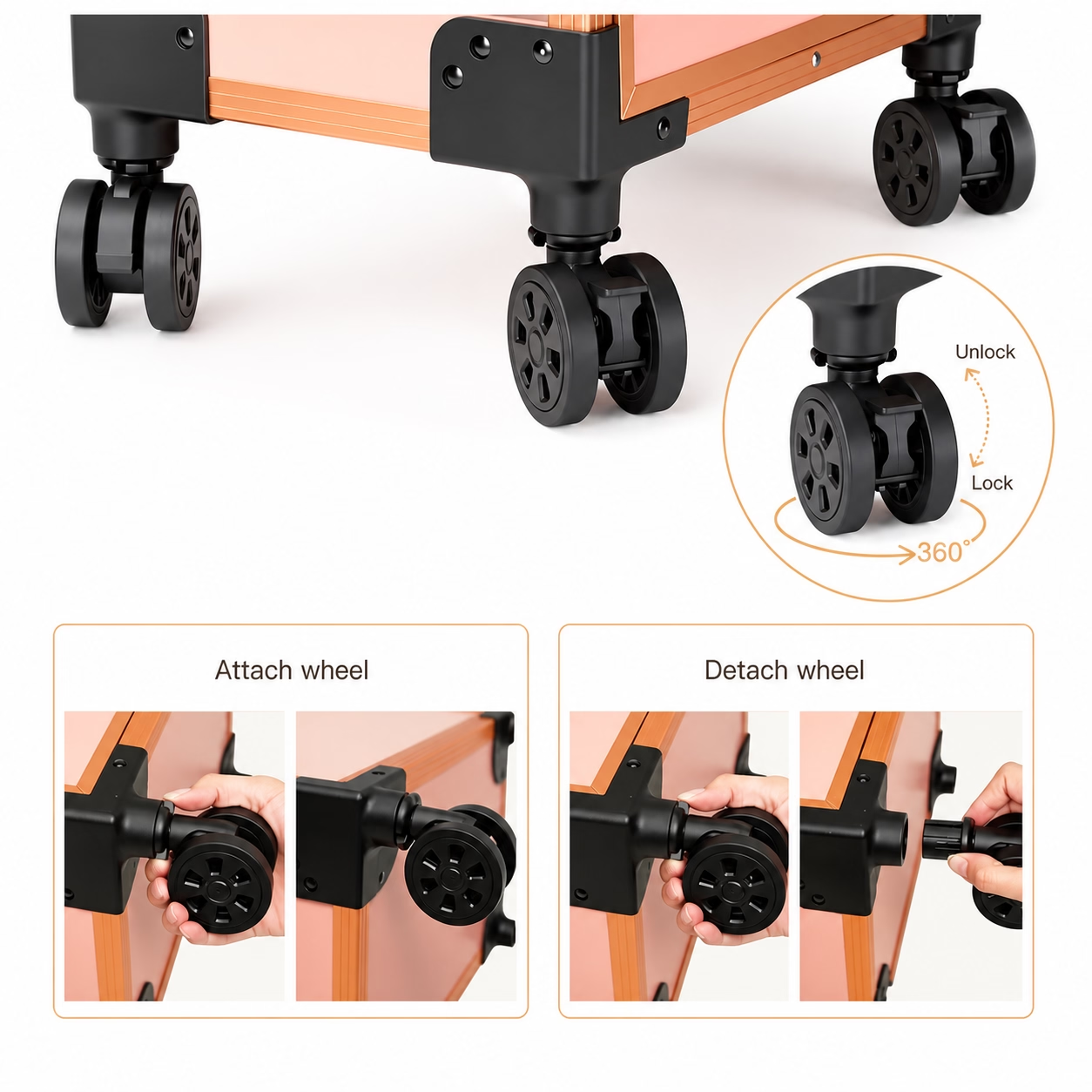
The TPE 90A reference follows the site’s silent-caster engineering description. It is not a universal specification for every Obeautycase model, so the wheel compound, axle construction and bearing design should be confirmed for the production order.
TPE versus PVC for caster wheels
TPE and PVC are not interchangeable descriptions. TPE is generally selected when a caster needs a softer rolling feel, lower vibration and better floor contact. PVC can be a practical lower-cost option, but its hardness, noise and wear performance depend strongly on the formulation and wheel design. For a professional rolling makeup case, buyers should confirm the exact compound, hardness rating, axle and bearing configuration rather than judging the wheel only by its appearance.
Wheel, handle and OEM performance reference
Two related site articles cover different caster constructions and testing contexts, so they should not be read as one identical wheel design. For the 3488 configuration, the confirmed points are TPE 90A wheels, 360° swivel movement, dual bearings and a brake function. The earlier caster engineering reference explains caster design principles, while the separate trolley-case testing article reports 0.3 mm wheel abrasion under a 16 kg load and a 3,000-cycle pull-rod fatigue test for its tested sample. These test figures should be treated as site-level engineering references unless the supplier confirms that the exact 3488 production configuration is covered by the same report.
For B2B and private-label orders, the standard commercial reference is:
Lead times should be counted after artwork, color, lining, divider layout and sample approval are confirmed. Packaging requirements, peak-season capacity and changes made after sample approval can also affect the final schedule.
The 3488 suits users who carry a fuller professional kit, need separated drawer space or want one rolling unit to replace several smaller cases. Its suitability still depends on packed weight, stair handling, vehicle loading and the floor conditions where it will be used.
For a direct comparison with a more compact format, read our 3488 vs 3599 rolling makeup case comparison.
Large capacity versus compact mobility
The larger format is not automatically the better choice. Compare both formats with the conditions in which the case will be used:
Instead of asking which case holds the most, ask which one holds the customer’s normal kit and is still practical to move, store and maintain.
What buyers should check before placing an order
Whether you are buying one case or sourcing for a private-label project, verify the following points:
– external dimensions, including wheels and protective corners;
– body dimensions and usable drawer depth;
– empty weight and recommended loaded weight;
– handle extension, retraction and reinforcement;
– wheel material, tracking and replacement options;
– drawer runners, latches and closure alignment;
– divider material and adjustment range;
– lining, shell and frame construction;
– liquid protection and electrical-accessory layout;
– logo position, colors, lining and packaging requirements;
– sample approval and inspection standards;
– carton dimensions, loading quantity and lead time;
– warranty, spare parts and after-sales support.
Do not rely on a catalog phrase such as “large capacity” without checking the internal layout. Ask the supplier for a packing sample, a loaded-weight test and a clear explanation of which components are included in the standard configuration.
How to position a large-capacity rolling makeup case for retail
Retail copy should explain the working benefit, not just call the case “large.” Mention the separated space for complexion products, palettes, brushes, bottles and backup inventory so customers understand why the larger format may be useful.
For distributors, the case can be presented as a premium upgrade from a soft makeup bag or a basic train case. Product photography should show the closed trolley profile, open drawers, divider layout and wheel system. A short packing diagram can also help customers understand how the space is intended to be used.
For private-label brands, the large-capacity model can serve as the high-volume SKU, while a compact model covers customers who prioritize portability. This two-level range makes the buying decision clearer without forcing every customer into the largest case.
Final recommendation
A large-capacity rolling makeup case with drawers is a practical choice when separated storage, a full kit and mobile transport all matter. It is suited to salons, beauty schools, bridal teams, backstage departments, distributors and artists carrying a broad assortment.
Before selecting a model, define the normal packed kit, measure the working space and test the case under a realistic load. The most useful case is the one that keeps products organized without becoming unstable or difficult to move.
For product-specific details, review the 3488 3-in-1 Rolling Makeup Case. For broader category decisions, use the Trolley Makeup Case Buying Guide.
Frequently Asked Questions
Is a large-capacity rolling makeup case with drawers better than a soft makeup bag?
It can be better for users who need stronger structure, separated storage and easier transport of a full kit. A soft bag may remain more suitable for lightweight travel or customers who carry only a small selection of products.
How much weight can a large makeup trolley case hold?
With the supplied 3488 configuration, the recommended contents weight is approximately 25–30 kg and the empty case weighs approximately 7.5 kg. That gives an estimated total rolling weight of 32.5–37.5 kg. A loaded rolling test is still advisable because shell, frame, drawer, wheel and handle construction all affect performance.
How should heavy products be packed in a makeup case with wheels and drawers?
Place heavy bottles, metal tools and dense palettes low and close to the wheel base. Keep liquids upright, use dividers to prevent movement and avoid concentrating all weight in one drawer.
Is the 3488 suitable for professional makeup artists?
The 3488 is designed as a taller, storage-oriented 3-in-1 rolling makeup case. It can suit professional artists and teams carrying a fuller kit, provided the packed weight and working environment are appropriate.
What should distributors request before ordering a private-label case?
Request a physical sample, confirmed dimensions, empty and recommended loaded weight, wheel and handle test results, drawer and divider specifications, logo requirements, packaging details, lead time and after-sales support terms.
Is a rolling makeup case with drawers waterproof?
Not necessarily. A hard shell and fitted closures may help resist light splashes, but seams, drawer joints, locks, handle openings and wheel areas can still allow water to enter. Unless the supplier provides a documented water-resistance or IP test for the exact configuration, treat the case as splash-resistant rather than fully waterproof. Keep it covered in heavy rain and protect liquids inside sealed pouches.