Quick answer: A pre-shipment inspection should verify more than appearance. Compare the finished goods with the approved sample and specification sheet, then check quantity, dimensions, functions, workmanship, packaging and shipping marks before the balance payment or dispatch is released.
For a rolling makeup case order, the most useful inspection standard is the one agreed by the buyer and supplier before production. It should reflect the approved sample, purchase order, drawings, colour reference, logo artwork and packaging requirements. This keeps the inspection practical: the question is not whether a case looks generally acceptable, but whether the delivered batch matches the version the buyer approved.
This guide is written for importers, brands, wholesalers, salon suppliers and professional education projects purchasing rolling makeup cases in volume.
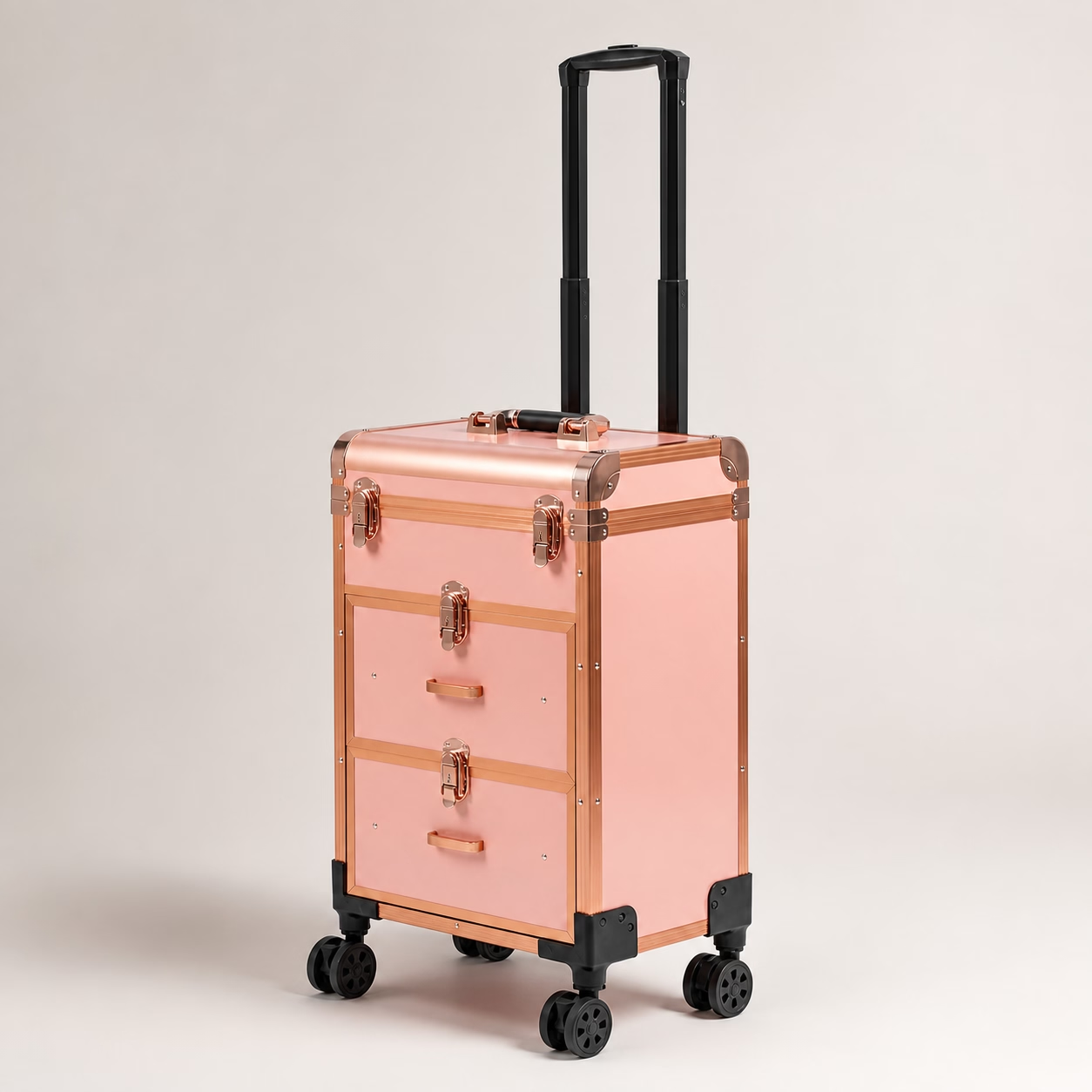
When should a rolling makeup case inspection take place?
Plan the inspection before the goods are fully dispatched. In most B2B orders, the practical point is when production is substantially complete and the cartons are available for checking, but before final release for shipment.
Early confirmation matters as well. A buyer should approve the sample, technical details and packaging plan before bulk production begins. If a change is requested only at the final inspection, it may affect cost, lead time or whether the change can be applied consistently across the batch.
For projects requiring independent verification, the buyer may appoint a third-party inspection company. The inspection scope, sampling method, defect definitions and acceptance standard should be agreed in advance by the buyer and supplier.
What to confirm before the inspection starts
Approved sample and specification sheet
Prepare one clear reference set. It may include:
– approved physical sample or signed sample photos;
– model number and order quantity;
– external dimensions and any agreed usable internal dimensions;
– shell, frame, lining, divider and hardware requirements;
– colour, logo artwork and logo placement;
– wheel, brake and pull-handle requirements where applicable;
– packaging method, carton marks and carton quantity.
Do not rely on a general product-page image as the only standard. A custom project can have different colours, lining, dividers, packaging or logo details from the reference model shown online.
Quantity, inspection scope and acceptance criteria
Confirm what will be checked, who will check it and what happens if a non-conformity is found. The final inspection can follow the buyer’s agreed standard, a jointly confirmed inspection plan or the requirements of an appointed third-party inspector.
At Obeautycase, products are checked during production, with each finished product receiving an inspection. The internal quality team also conducts monthly follow-up checks by randomly selecting five production batches from each production line. These internal checks support production control; for a buyer’s order, the approved sample and confirmed project requirements remain the release reference.
Who performs the inspection?
The buyer may inspect remotely, visit the factory, authorize a third party or request the supplier’s inspection records. For higher-value or highly customized projects, combining the supplier’s internal check with an independent third-party inspection can give the purchasing team a clearer final record.
Rolling makeup case pre-shipment inspection checklist
Use the following sections as a working checklist. Record findings with photos, carton numbers and quantities rather than relying only on general comments such as “good” or “not good.”
1. Verify the model, colour and logo
Check that the delivered model matches the approved configuration:
– correct case style and module layout;
– shell, metal frame and lining colours match the confirmed reference;
– logo spelling, size, position and finishing match approved artwork;
– requested accessories, dividers, trays or removable bags are included;
– mixed colours or versions are correctly separated and labelled.
For an OEM order, check several units across different cartons. A logo that looks correct on one sample does not confirm that the full batch uses the same artwork, position or finish.
2. Check dimensions and usable storage space
Measure the agreed external dimensions and compare them with the approved specification. Where storage capacity is a purchase requirement, also check the usable internal space, drawer opening or tray clearance defined for the project.
Small production tolerances can occur, so the acceptable tolerance should be confirmed before bulk production. Do not use estimated volume alone as a release criterion: dividers, frame thickness, drawer structure and removable modules can change the usable space.
3. Check the shell, frame and corner protection
Inspect the case from several angles under normal lighting. Look for:
– scratches, dents, stains or obvious colour variation;
– loose rivets, sharp edges or poorly finished corners;
– frame joints that do not sit flush;
– panel movement, warping or separation;
– corner protectors that are loose, cracked or poorly aligned.
The appropriate check depends on the agreed construction. For example, a rolling makeup case may use a laminate-covered panel with an aluminum frame, while tray or storage components may use a different material. The inspection should verify the agreed specification rather than assume that every component uses the same material.
4. Test wheels, brakes and the pull handle
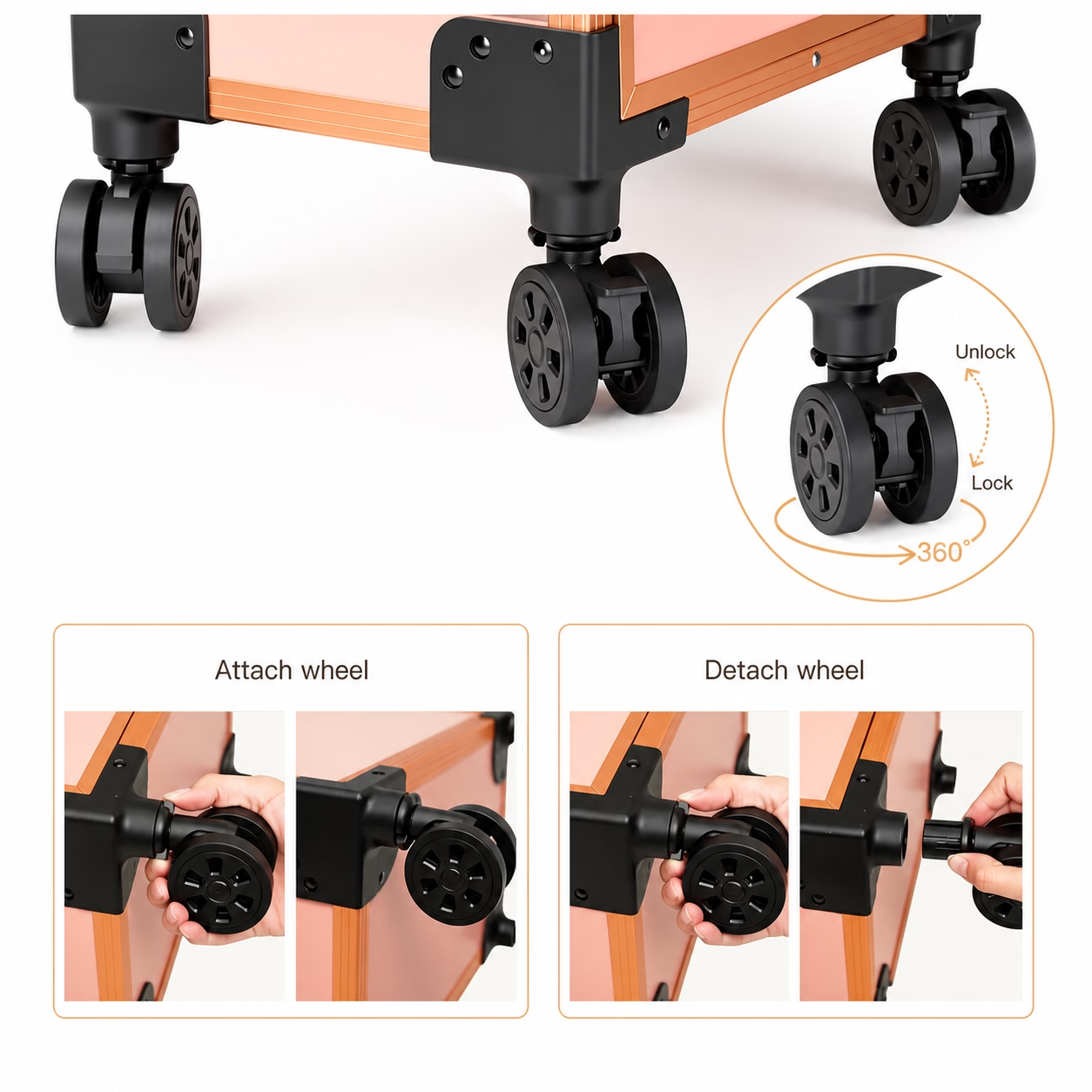
Roll the loaded or suitably weighted case on a clean, level surface. Check that the wheels turn and swivel normally, the case tracks without obvious pulling, and the wheel fittings are secure.
If the project includes brakes, verify that the brake engages and releases correctly. Extend and retract the pull handle several times, checking for smooth operation, secure locking positions and abnormal looseness. Any product-specific wheel or handle performance requirement should be stated on the approved specification or sample record.
For examples of the components buyers should define before production, see our rolling makeup case durability guide.
5. Test locks, hinges, drawers and trays
Open and close the case repeatedly. Confirm that:
– locks latch and release correctly;
– hinges move without binding or excessive play;
– drawers slide, close and align as intended;
– trays open and fold back without rubbing or obstruction;
– removable dividers, bags and modules fit securely;
– hardware is complete and consistently fitted.
For a trolley makeup case with drawers, drawer alignment and latch operation deserve close attention. For an expandable tray design, inspect the balance and support of the open sections rather than checking only the closed case.
6. Inspect lining, dividers and removable accessories
Check the interior against the approved layout. Verify lining adhesion and finish, divider quantity and placement, removable accessory fit, and whether the packing arrangement prevents loose parts from moving in transit.
If the buyer has specified particular divider sizes or a custom storage arrangement, record those dimensions on the approved sample sheet. This avoids disputes caused by descriptions such as “large divider” or “deep tray,” which are too vague to inspect consistently.
7. Assess workmanship and cosmetic defects
Inspect the finish at a practical viewing distance and then more closely where needed. Separate functional defects from cosmetic issues. A loose wheel or non-locking latch is a functional issue; a minor mark may be cosmetic, but it still needs a jointly agreed acceptance decision.
Common points to record include coating defects, inconsistent seams, exposed adhesive, uneven gaps, damaged protective film and visible marks on metal hardware. Document the location, quantity and severity so the supplier can confirm corrective action before shipment.
8. Confirm packaging, carton marks and shipment readiness
rolling makeup case protected with bubble wrap and foam corners for export packaging
Packaging should match the product’s size, weight and transport conditions. Depending on the product, packaging may use five-layer or seven-layer export cartons. Larger cases may use foam corner protection and bubble wrap; smaller products may use bubble wrap or other appropriate protective material.
Check that the finished product is protected from movement, abrasion and impact inside the carton. Confirm carton quantity, product quantity per carton, gross-weight information where required, and any buyer-approved outer-carton markings.
Carton marks, model numbers, quantities and carton numbering are not automatically applied to every order. They can be confirmed as part of the project packaging requirements. For customized packaging, markings or inspection requirements, buyers should confirm details with the project team before production. Obeautycase is supported by a service team of more than 400 people for project communication and order follow-up.
Where a project requires additional transport-risk evaluation, buyers can discuss a joint packaging and transportation simulation test with the supplier. The method, loading condition and acceptance criteria should be agreed for that project rather than assumed from a generic test.
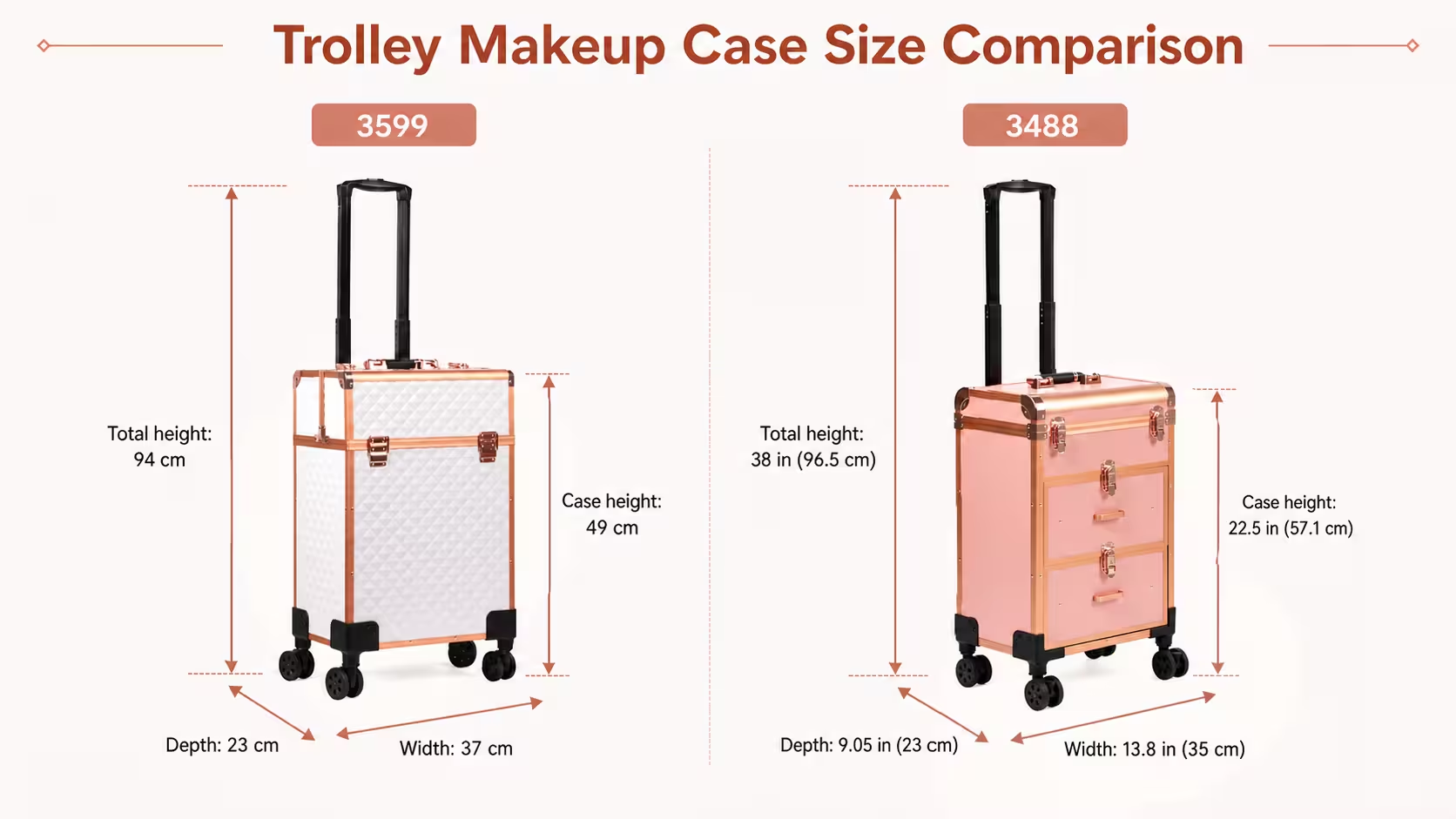
How to inspect 3488 and 3599 rolling makeup cases
Model-specific checks should follow the approved order version, especially when colours, interior configurations or accessories have been customized.
3488: drawer alignment and caster checks
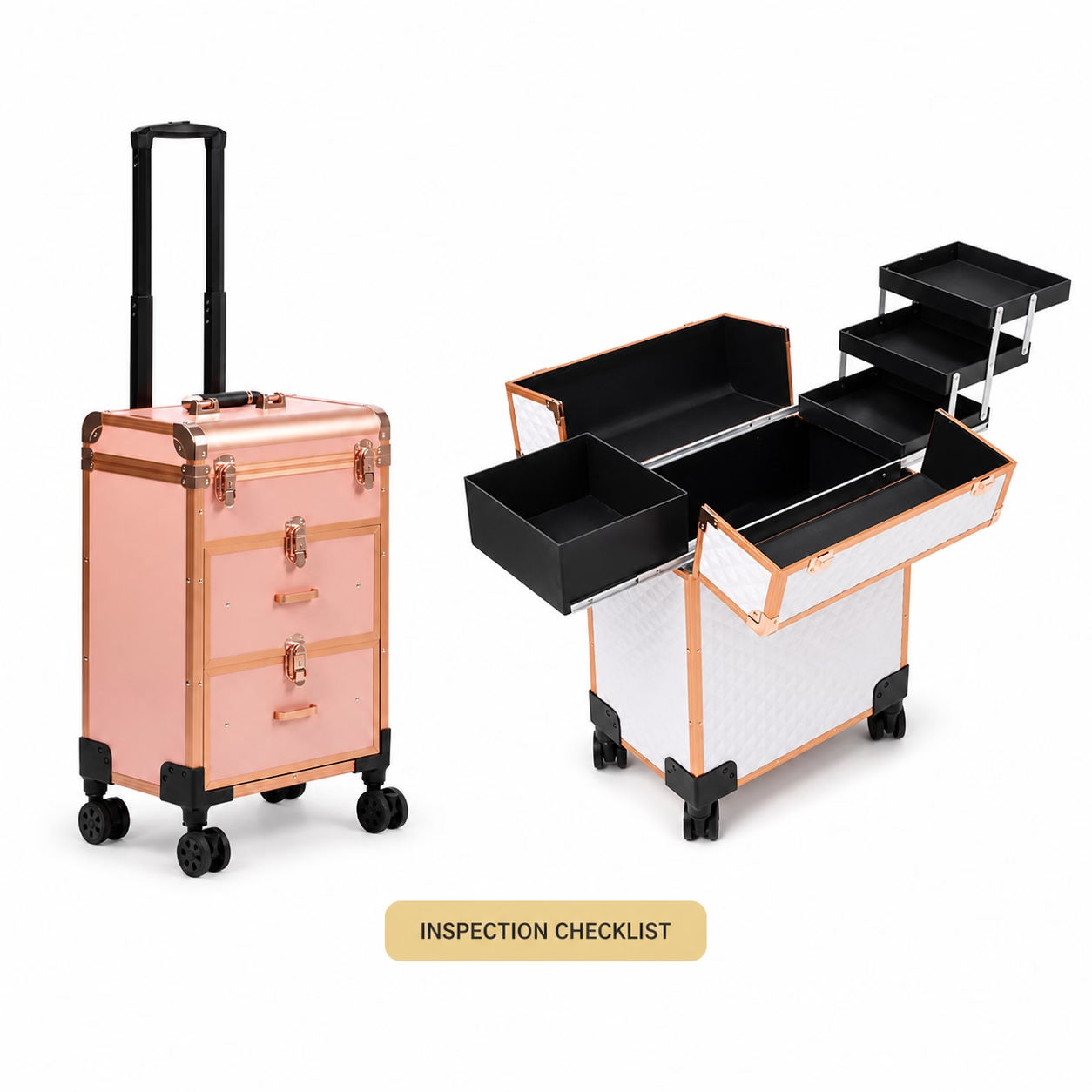
The 3488 reference configuration combines an upper compartment with two front drawers. During inspection, check the front drawer gaps and alignment, latch operation, drawer slide movement, removable tray fit and caster security. Also confirm the agreed loading guidance against the sample or specification, rather than using a general description of capacity.
For configuration details, see the 3488 vs 3599 rolling makeup case comparison.
3599: expandable trays and module balance
The 3599 reference configuration includes a main storage body, a divider-equipped storage box and three shallow expandable trays. Inspect the tray arms, opening sequence, support balance and the fit of removable dividers. When open, the case should remain appropriately supported under the agreed usage conditions; do not load every upper tray with dense, heavy items during a functional check unless that loading condition was specifically approved.
See the 3599 rolling makeup case guide for the reference storage layout.
What should happen if defects are found?
First, classify the issue clearly: model mismatch, functional failure, workmanship defect, packaging issue or documentation issue. Attach photos and identify the relevant unit or carton. The buyer and supplier can then agree whether the issue requires sorting, replacement, repair, repacking, re-inspection or another documented solution.
Avoid accepting an informal promise without a record. For an order with a confirmed inspection plan, the final outcome should identify the corrective action, responsible party and whether the goods must be checked again before release.
Factory inspection and third-party inspection options
Obeautycase welcomes factory visits and third-party inspections. Buyers can also provide their own inspection checklist, carton-marking requirements and project-specific acceptance points before production.
This is especially helpful for a long-term OEM or ODM program, where the same product family may be produced with different colours, branding, liners, divider layouts or packaging across markets. For a broader supplier-selection framework, read our rolling makeup case supplier guide.
Documents buyers should keep after inspection
Keep a simple order file containing:
– the approved sample record and signed specifications;
– purchase order and confirmed artwork;
– inspection checklist, photos and defect summary;
– carton specification and approved shipping marks;
– re-inspection or corrective-action record, if applicable;
– packing list and final shipment documents.
These documents make repeat orders easier to control and give both sides a clear reference if a question arises after delivery.
Final recommendation
Use the approved sample and specification sheet as the centre of the inspection. Check several units across the production batch, test moving parts rather than only looking at the exterior, and verify packaging before shipment is released. For customized rolling makeup cases, confirm the inspection points, carton requirements and acceptance criteria with the supplier before bulk production starts.
If you are preparing a custom order, our rolling makeup case procurement guide explains what to confirm before requesting quotations and samples.
Frequently asked questions
Should buyers inspect every rolling makeup case before shipment?
Not necessarily. The inspection method should be agreed for the order. Obeautycase checks each finished product during production, while buyers may also set a project-specific inspection plan or appoint a third-party inspector before shipment.
What is the most important reference for a custom makeup case inspection?
The approved sample and confirmed specification are the primary reference. They should state the model, materials, colour, logo, dimensions, accessories and packaging requirements relevant to the order.
Can buyers request custom carton marks and packaging?
Yes. Carton marks, model information, quantities, carton numbering and protective packaging can be confirmed for the project before production. Requirements should be provided early so the packaging plan can be checked with the finished goods.
Can a third party inspect a rolling makeup case order?
Yes. Buyers may arrange a third-party inspection and provide the inspection scope and acceptance requirements in advance. Factory visits and third-party inspections are welcome.
What should be checked on a rolling makeup case wheel?
Check that the wheel fitting is secure, the wheel rolls and swivels normally, any specified brake engages and releases correctly, and the loaded case moves without obvious instability on the agreed test surface.