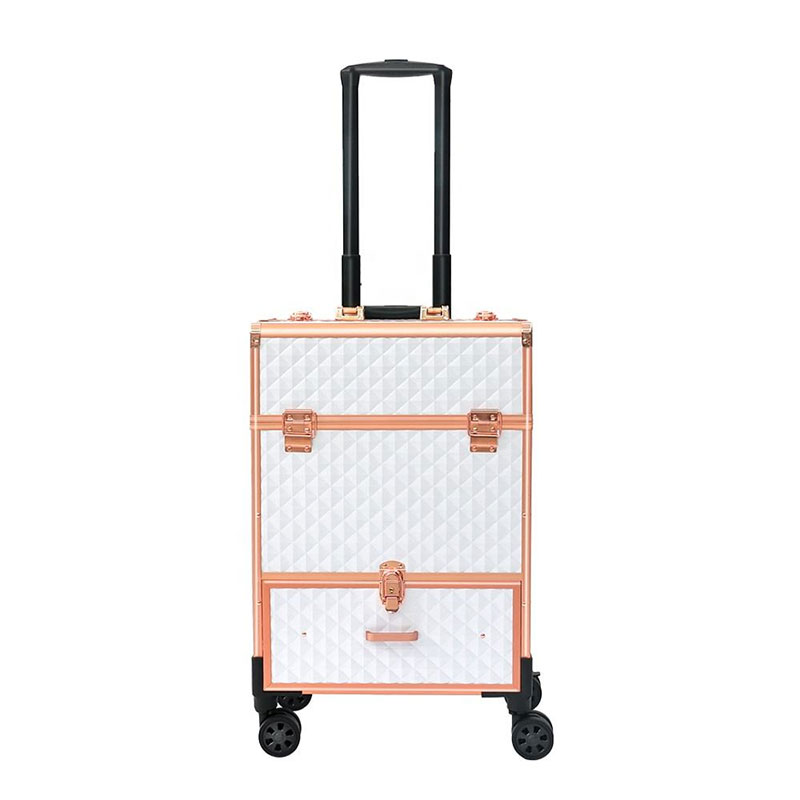
A makeup artist trolley may look suitable in photographs but still develop problems after repeated loading, rolling and opening. For importers, beauty brands, wholesalers, salons and makeup schools, the most useful time to identify these weaknesses is during sample approval—not after bulk production has started.
This guide explains how to inspect a physical sample for frame alignment, caster performance, telescopic-handle stability and storage-hardware operation. It is a practical approval checklist rather than a universal laboratory standard. The final inspection criteria should match the confirmed product configuration, intended load and target market.
Quick answer
To evaluate makeup artist trolley durability, load the approved sample with a realistic distribution of products and check five areas: frame and panel alignment, caster movement and braking, telescopic-handle stability, lock and hinge operation, and the movement of drawers or trays. Record the accepted materials, dimensions, load conditions and hardware configuration so the approved sample can serve as the reference for bulk production.
What durability means during sample approval
Durability is not a single feature. It is the combined result of the case structure, panel material, frame connections, wheel assemblies, handle system and frequently operated hardware.
A useful sample inspection should answer three questions:
1. Does the trolley remain stable and functional under its intended contents weight?
2. Do the moving parts operate consistently without excessive play, rubbing or misalignment?
3. Does the sample match the construction and components stated in the quotation or specification sheet?
Do not use one load figure for every rolling makeup case. Recommended contents weight depends on the model, dimensions, internal structure, caster system and intended use. Confirm both the empty weight and recommended contents weight for the exact configuration being purchased.
1. Check the frame, panels and overall alignment
Begin with the case standing on a flat surface and remove any packaging material that may affect its position. View it from the front, sides and rear.
Check whether:
– the case stands level without rocking;
– the aluminum frame sections meet cleanly at the corners;
– the panels sit evenly inside the frame;
– the lid closes without being pushed sideways;
– paired locks and latches line up with their receiving parts;
– visible fasteners are present and properly seated;
– corner protectors fit closely against the case body.
Minor cosmetic variation and structural misalignment should not be treated as the same issue. A small surface variation may be handled through the agreed appearance standard, while a distorted lid, uneven base or displaced frame joint can affect operation and should be resolved before approval.
For a closer explanation of common shell, frame, lining and wheel materials, see our rolling makeup case materials guide.
2. Inspect the casters, brakes and mounting points
Casters affect both mobility and the load transferred into the base of the trolley. Their performance should therefore be checked as a complete assembly rather than by looking at wheel material alone.
Product specifications should be checked again on finished goods before shipment. For checks covering wheels, handles, hardware and packaging, use our rolling makeup case inspection checklist.
Rolling and swivel check
Place a realistic test load inside the case and distribute heavier items low and near the center. Push and pull the trolley over a clean, level surface. Where the approved specification includes 360-degree swivel casters, change direction several times and check whether each assembly rotates without sticking or producing irregular resistance.
Look for:
– wheels that do not remain in contact with the floor;
– noticeable side-to-side wobble;
– rubbing between the wheel and its fork or housing;
– abnormal clicking, scraping or intermittent resistance;
– loose caster sockets, fasteners or corner mounts;
– visible deformation around the base after loaded movement.
Brake check
If brakes are specified, engage them individually and verify that the trolley remains stationary on a level surface under normal handling pressure. Release each brake and confirm that the wheel returns to free movement. The approved sample should establish which caster positions include brakes; do not assume every wheel is braked unless this is stated in the specification.
Removable-caster check
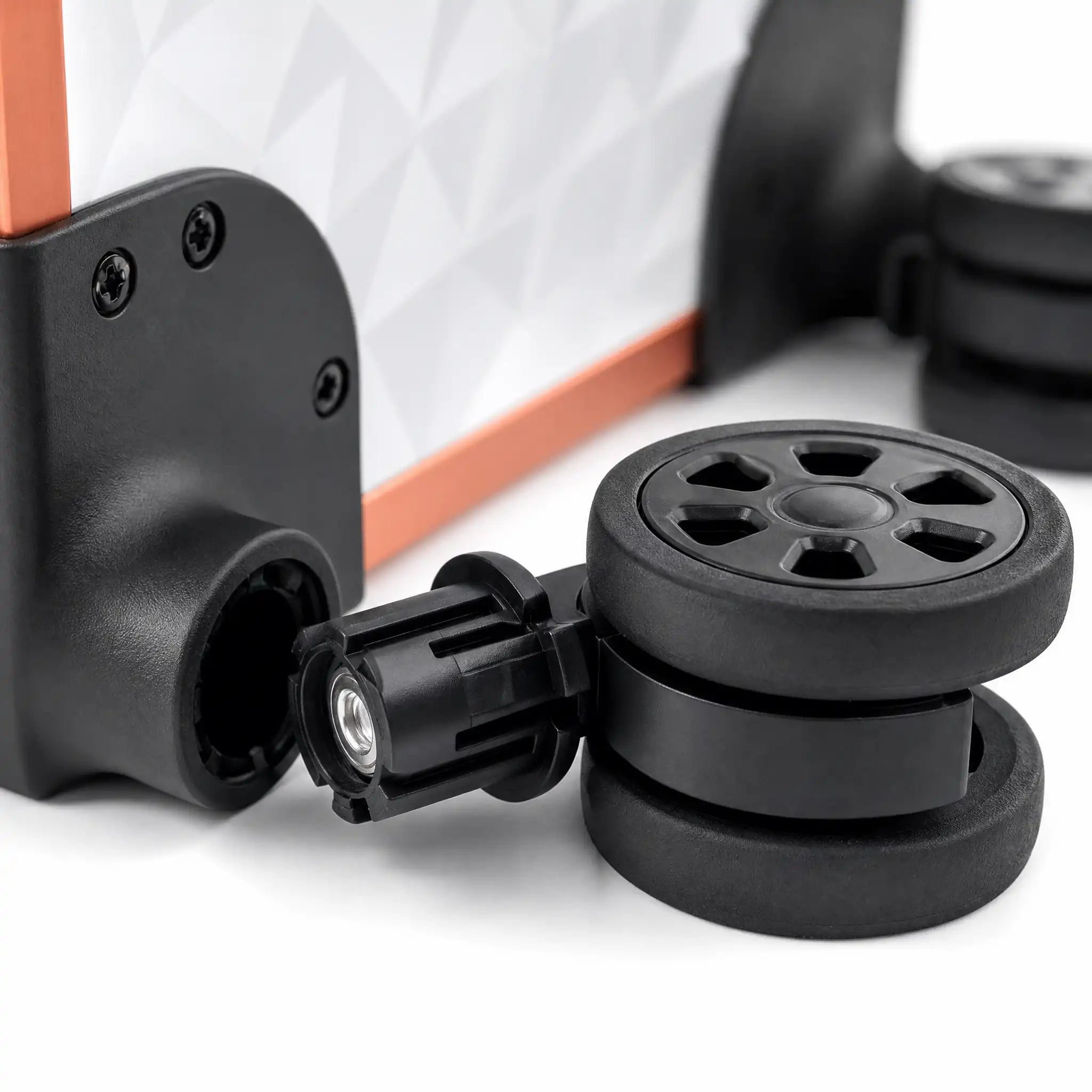
For removable casters, install and remove each unit using the intended mechanism. Confirm that the caster seats fully, locks in position and cannot be released accidentally during normal movement. Inspect the socket after repeated fitting for looseness or visible damage.
Selected Obeautycase configurations, including specified versions of the 3488 and 3599, can use TPE 360-degree dual-bearing casters with brakes. Treat these features as configuration-specific and confirm them on the quotation and approved sample.
3. Test the telescopic handle under realistic use
Extend and retract the telescopic handle several times before loading the case, then repeat the check with the intended test load.
Confirm that:
– both rods extend at the same rate;
– each height position locks positively where multiple positions are provided;
– the release button returns normally;
– the rods retract without twisting or jamming;
– the handle housing remains firmly connected to the case;
– normal pulling does not produce excessive side movement;
– the handle does not interfere with the lid, rear panel or internal fittings.
A small amount of working clearance may be necessary for a telescopic mechanism. The important question is whether the movement is consistent with the approved sample and whether it affects control, locking or retraction. If the trolley is likely to be used fully loaded, do not approve the handle based only on an empty-case demonstration.

4. Operate locks, hinges, drawers and trays
Hardware should be checked in the same sequence a user will follow during daily work.
Open and close the lid repeatedly, checking that the hinges move evenly and that the lid remains supported as intended. Engage every latch or lock without forcing the panels into position. If a selected model uses a TSA-style lock, confirm the exact lock configuration on that model rather than applying the claim to the whole product range.
For drawer-style cases, pull each drawer through its normal travel with a representative load. Check for uneven gaps, rubbing, uncontrolled movement and interference between adjacent drawers. For trays or cantilever modules, open both sides in a balanced manner and verify that the support arms, pivots and fasteners remain aligned.
Also inspect removable dividers and accessory bags. They should fit their intended locations without preventing the lid, drawer or tray from closing correctly.
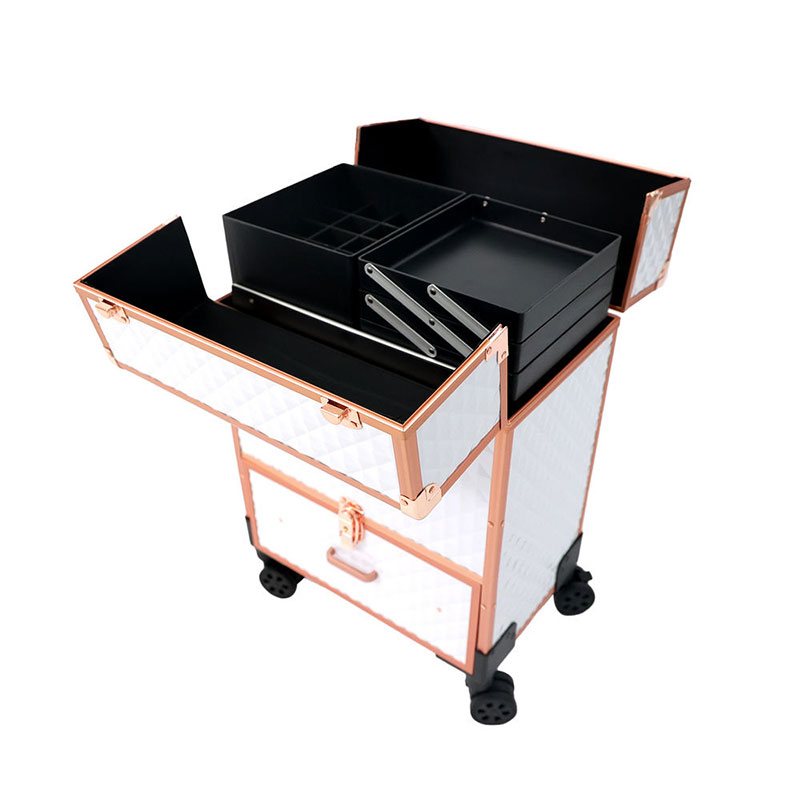
5. Check loaded handling and balance
A stationary case can appear stable even when its weight distribution makes it difficult to control during movement. Use products or test weights that represent the buyer’s actual application and record the total contents weight used during approval.
Pack dense items in the lower and central storage areas. Place lighter, frequently accessed items in upper trays or shallow compartments. Then check straight movement, turning, stopping and repositioning in a normal working area.
Stop the test if the case becomes unstable, the frame visibly deforms, the handle cannot be controlled normally or a wheel assembly begins to loosen. Increasing the load beyond the supplier’s confirmed recommendation does not provide a meaningful approval result for ordinary use; it changes the test condition and should be handled as a separate requirement.
Sample durability inspection worksheet
The following worksheet can be completed by the purchasing or quality-control team during sample approval. Add measurable acceptance limits where the project requires them.
Photograph the test setup, record the load and keep the completed worksheet with the approved sample record. This makes later production inspections more consistent than relying on memory or general descriptions such as “good quality.”
How to use laboratory reports correctly
A laboratory report can provide useful evidence, but its scope must be read carefully. Check the applicant, manufacturer, sample description, model, test method, report date and individual results. A result for one identified sample should not automatically be presented as certification for other models or an entire product range.
Report PTC25110301801C-CN01 applies only to the OBOX sample identified in that report. It is not a model-specific certificate for the 3488, 3599 or every Obeautycase product. Similar materials and manufacturing processes may make it relevant as evidence of factory testing experience, but buyers requiring model-specific verification should agree on the sample, standard and test scope before production.
For the report scope and recorded results, read our separate trolley makeup case QB/T 2155-2018 testing guide.
Turn the approved sample into a production reference
Once a sample is approved, attach the final specification sheet and inspection record to the order. At minimum, record:
– exterior and usable internal dimensions;
– empty weight and agreed contents-weight recommendation;
– panel, frame, lining and internal-component materials;
– caster material, swivel, bearing, brake and removable-wheel configuration;
– telescopic-handle material and locking positions;
– lock, latch, hinge, drawer and tray configuration;
– approved colors, logo placement and packaging;
– agreed appearance and functional acceptance criteria.
This does not replace production inspection. It gives the supplier, buyer and any third-party inspector the same reference when checking bulk goods.
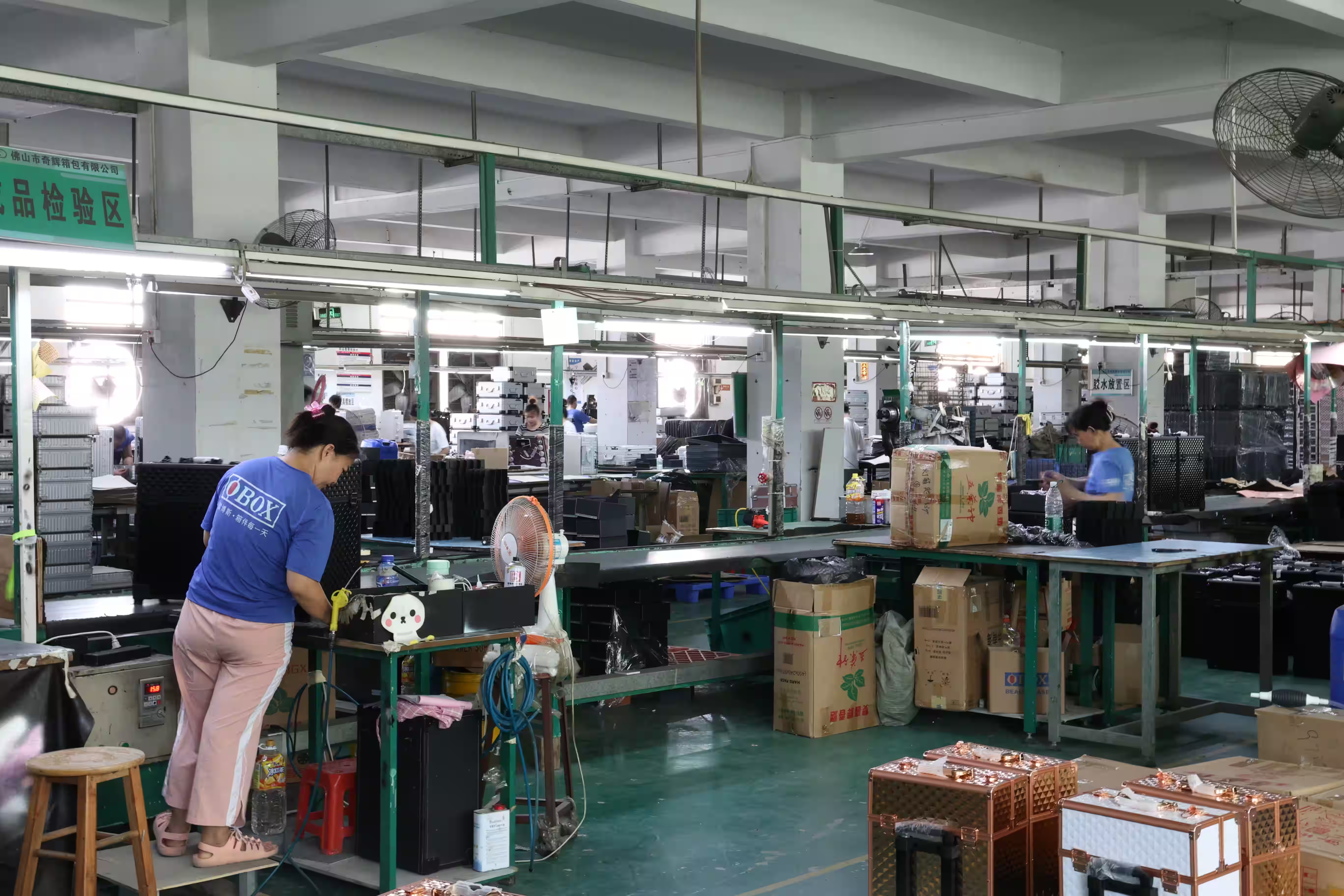
Guangdong Qihui Cases Co., Ltd. operates an internal testing function and randomly selects five production batches from each production line every month for internal inspection. Third-party inspection is also welcome. Project-specific inspection items and acceptance criteria should be confirmed before production because different trolley structures do not carry identical risks.
For broader supplier qualification, quotation details and order preparation, use our rolling makeup case B2B procurement guide.
Final recommendation
The strongest durability decision is based on an approved physical sample, a recorded test condition and clearly defined production criteria. Inspect the case as a complete working system: the frame supports the panels, the base carries the casters, the handle controls the loaded trolley, and the hardware determines how reliably the storage layout can be used.
If you need a recommendation for a specific market or user group, provide the intended application, target contents weight, required storage layout and customization list. A suitable configuration and sample-check plan can then be matched to the project before bulk production.
Frequently asked questions
How should buyers test makeup artist trolley durability before a bulk order?
Inspect a physical sample with a realistic, documented contents load. Check frame alignment, loaded caster movement, brakes, telescopic-handle locking, locks, hinges, drawers and trays. Record the accepted configuration and use the approved sample as the production reference.
Is a heavier makeup trolley always more durable?
No. Empty weight alone does not prove durability. Construction, frame connections, panel selection, caster mounting, handle design and hardware quality all affect performance. Compare products against the intended use and confirmed load recommendation rather than weight alone.
Can one test report be used for every rolling makeup case model?
No. A test report applies to the sample and scope identified in the document. It should not be described as model-specific certification for other products unless those models are included. Buyers can request additional testing when their market or project requires it.
Should a trolley be tested empty or loaded?
Both checks are useful, but loaded operation provides more relevant information about movement, balance, handle control and hardware behavior. Use a realistic load within the confirmed recommendation and record how the weight was distributed.
What information should be kept after sample approval?
Keep the final specification, photographs, sample inspection worksheet, test conditions, customization details and packaging requirements. These records help the purchasing team, supplier and third-party inspector evaluate bulk production against the same reference.