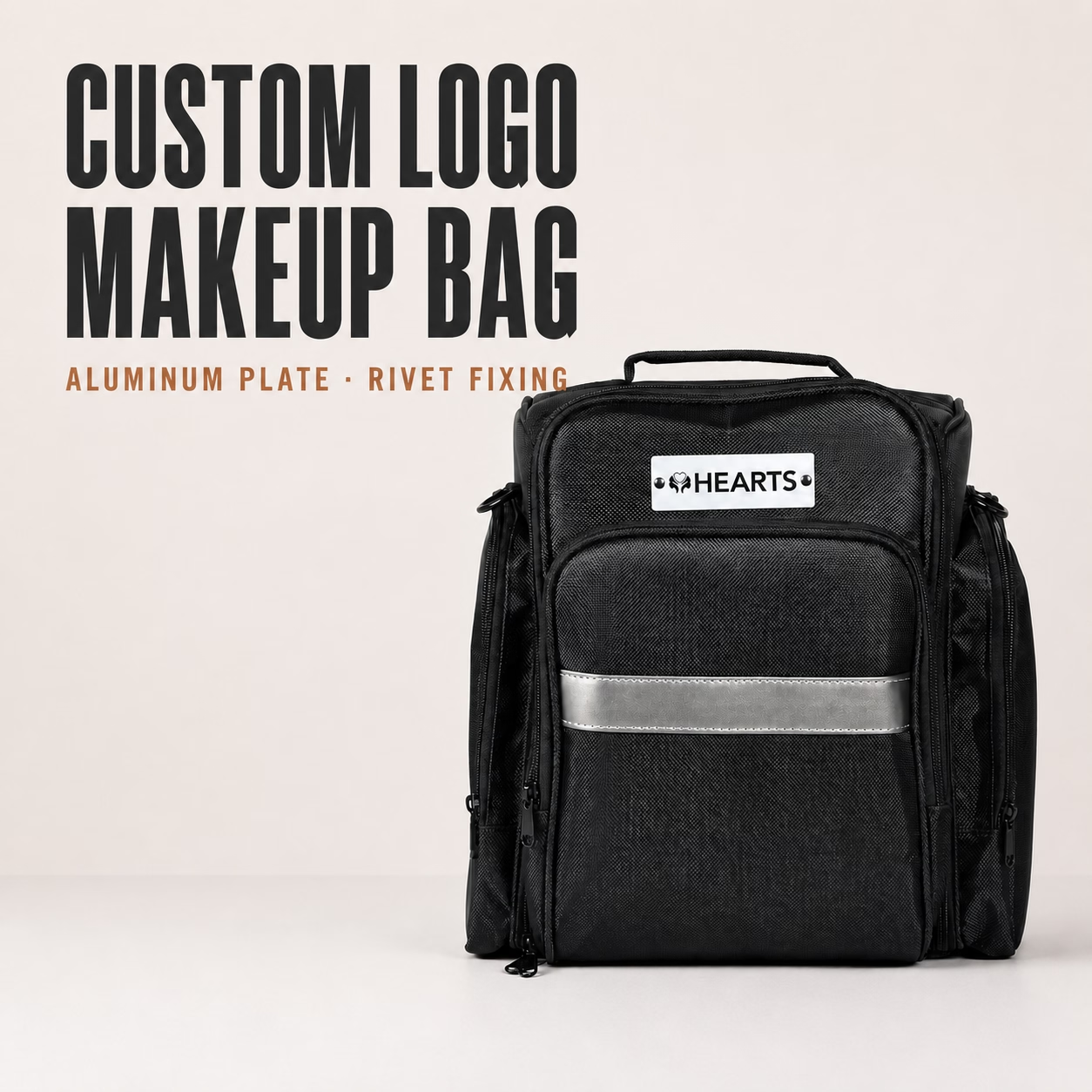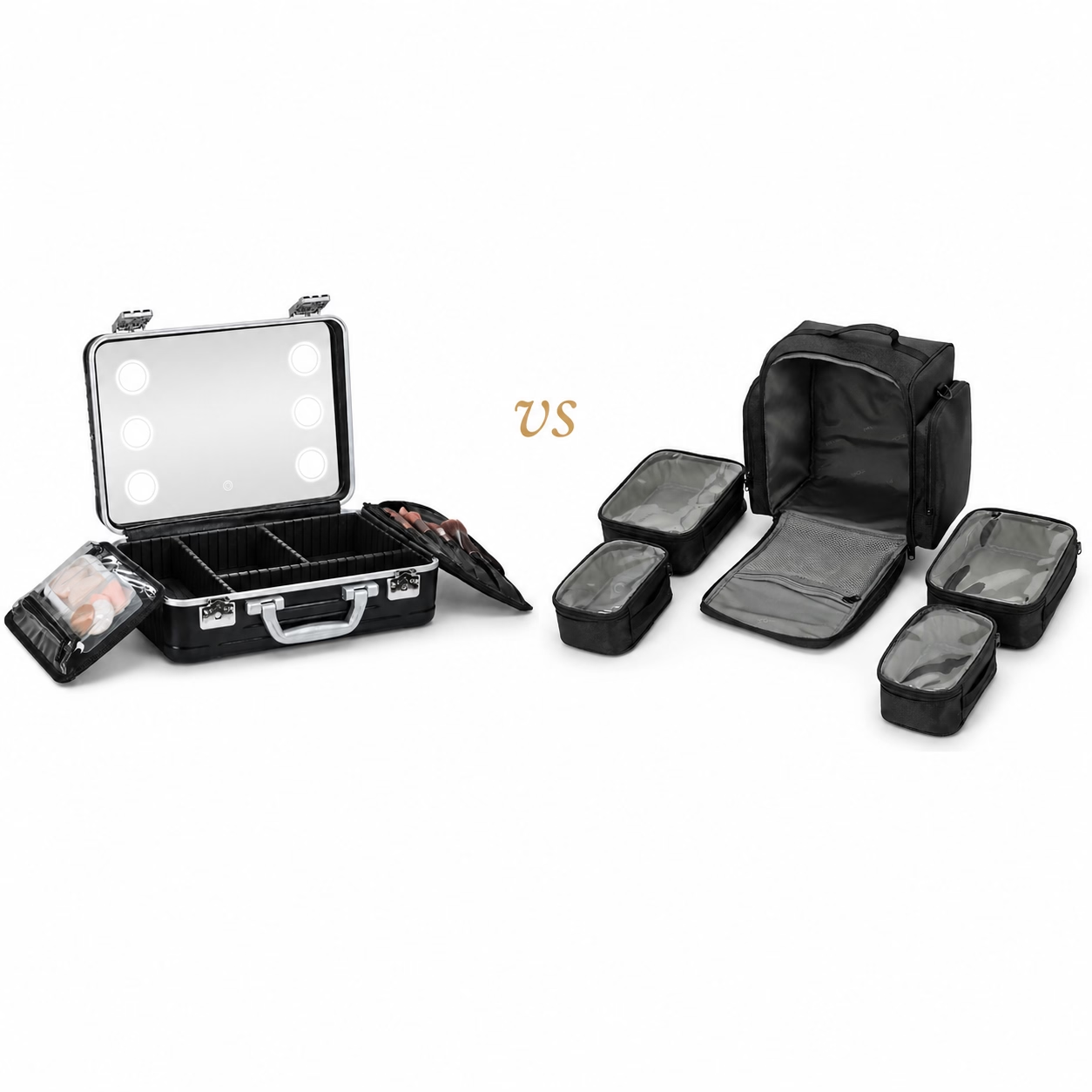
This article covers the vanity case material and physical construction of the PDW-12 travel vanity case: shell material, internal reinforcement, latch hardware, hinge mechanics, and the storage compartment layout. It’s aimed at buyers who need to evaluate build quality against a spec sheet — engineering leads, quality control teams, and OEM buyers comparing suppliers — rather than at end consumers. For the full product overview this article is part of, see the Travel Vanity Case OEM/ODM Guide.
Outer Shell Material
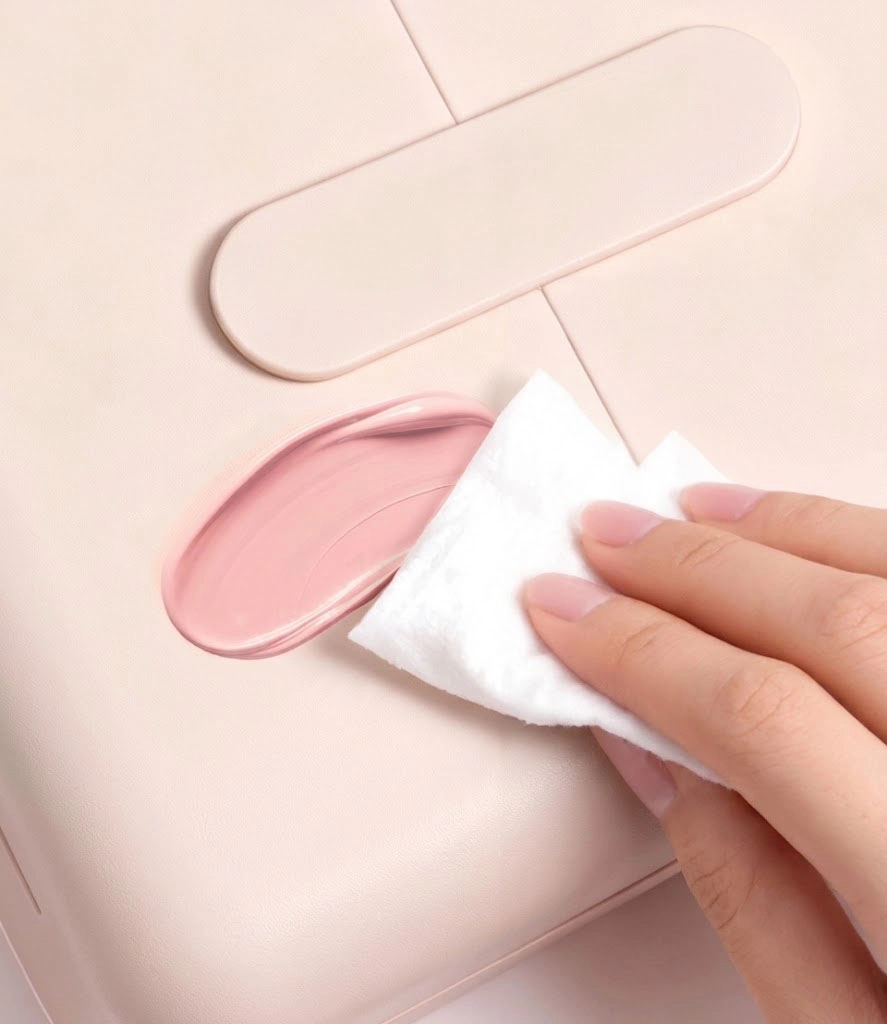
Internal Reinforcement
Base and Stability
Latch and Closure Hardware
Closure hardware has two distinct components:
- Right-side partition cover: a magnetic cover that opens and closes with one hand, without needing to align a separate latch. The same four-leaf-clover-shaped metal magnetic snap detailing appears on the exterior as a decorative closure element.
- Main body closure: a separate round metal magnetic base handles the primary case closure, keeping the case sealed during transport without relying on a mechanical clasp that can loosen over time.
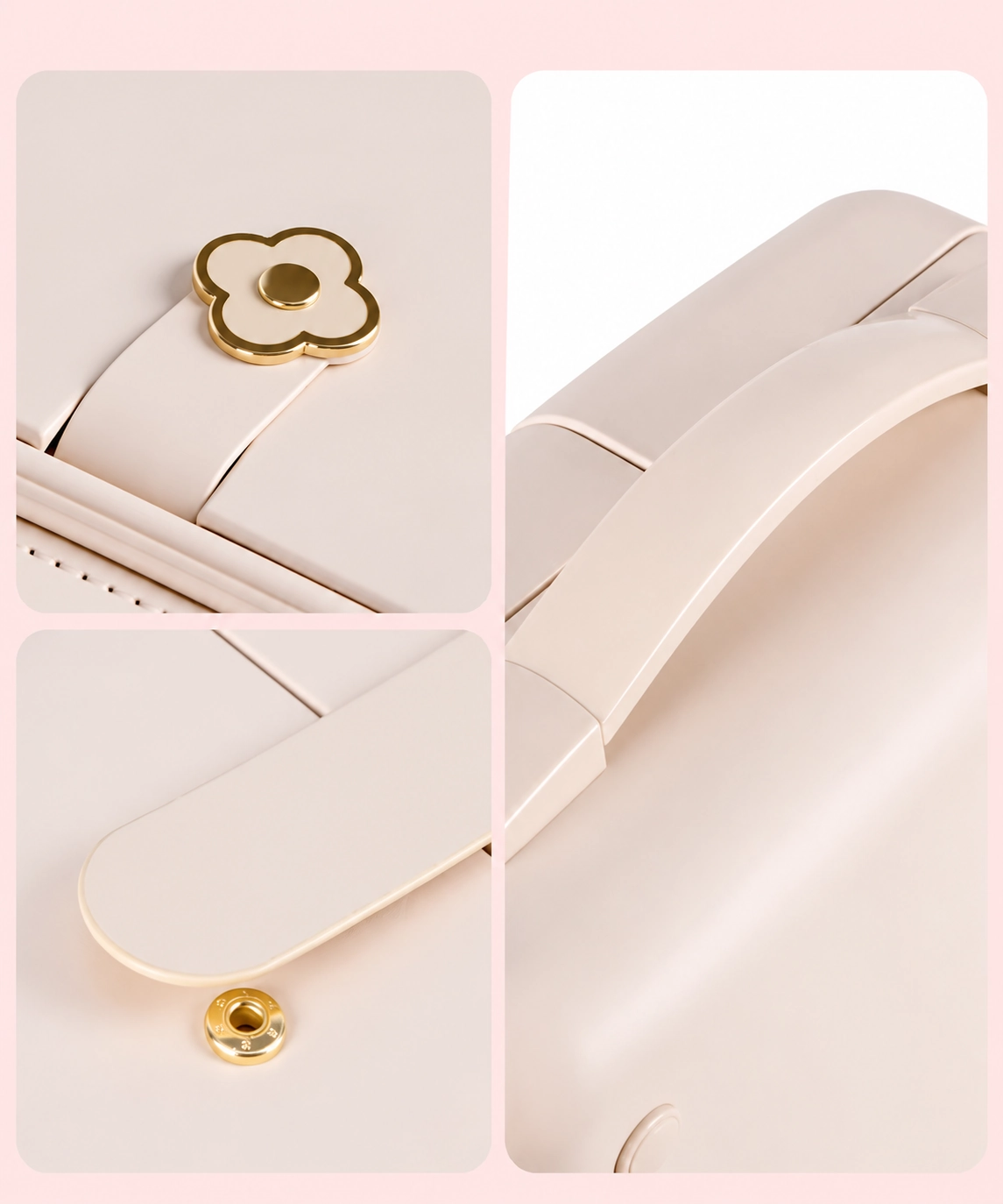
Mirror Hinge
Magnetic Mirror Attachment System
Internal Storage Compartment Structure
The interior is organized into three stacked partitions, each with a distinct capacity and role, rather than a single undivided cavity:
- Left-side partition — 0.7L of storage capacity, sized at 2 cm × 21.5 cm × 11 cm. Designed for flatter items like eyeshadow palettes, lip products, and thin compacts.
- Middle partition — the largest section at 2.64L capacity, sized at 5.5 cm × 24 cm × 20 cm. This is the main storage zone for bulkier items — foundation bottles, blush compacts, loose powder, and skincare bottles.
- Right-side partition — closed with a magnetic cover for one-handed opening and closing, without a separate latch to align.
This partition-based layout is a deliberate design choice over a single open compartment: it keeps flatter and bulkier products physically separated so they don’t shift, crush, or leak against each other in transit — a common complaint with single-cavity competitor cases.

Built-In Electronics Housing
Dimensional Specifications
| Measurement | Value |
|---|---|
| Closed outer dimensions | 25.5 cm × 10 cm × 21 cm (10″ × 3.9″ × 8.3″) |
| Official internal volume | 23 cm × 10 cm × 29.5 cm |
| Net weight | 1.6 kg (3.6 lb) |
| Left-side partition | 0.7L capacity — 2 cm × 21.5 cm × 11 cm |
| Middle partition | 2.64L capacity — 5.5 cm × 24 cm × 20 cm |
| Right-side partition | Magnetic cover closure (capacity not separately rated) |
| LED mirror surface | 18.8 cm × 15.8 cm (widened and heightened) |
Why This Construction Matters for Buyers
For B2B buyers evaluating multiple suppliers on paper, shell material, hinge type, and internal reinforcement are the details that most reliably predict whether a case will hold up to repeat travel use and repeat magnetic mirror attachment/detachment over months of use — and they’re also the details most often glossed over in supplier listings. Requesting confirmation of hinge type (metal-damped vs. plastic) and shell reinforcement (aluminum-framed vs. unreinforced ABS) specifically is a reasonable, low-friction question to put to any manufacturer during sourcing.
Frequently Asked Questions
Is the shell strong enough to survive checked luggage handling, not just carry-on use?
The aluminum alloy inner frame is specifically there to prevent the ABS shell from deforming under compression — the scenario checked luggage creates when other bags are stacked on top. It’s built for that use case, not just for being carried by hand.
Why use both ABS and aluminum instead of just a heavier-duty plastic shell?
single thicker plastic shell to get equivalent rigidity would add significant weight. Pairing a lighter ABS outer shell with a targeted internal aluminum frame achieves similar structural rigidity at a lower total weight — which matters directly for a product marketed on portability.
Does the magnetic mirror attachment weaken with repeated detaching and reattaching?
The magnets are embedded permanently in the mirror’s back panel and the case’s mounting zone, rather than relying on adhesive or a mechanical latch that wears with use — magnetic attraction strength doesn’t degrade the way a mechanical clip or adhesive bond does over repeated cycles.
Can the side partitions hold heavier bottles without the divider warping?
The partition dividers are structural, not just decorative — they’re built into the case’s molded interior rather than being a separate insert, which is why the 2.64L middle partition is sized for the bulkier items (full-size bottles) rather than the smaller left-side partition.
Where to Go From Here
Shell and hinge quality only tell half the story — pair this with LED vanity case lighting system to see how the mirror and battery hold up under the same durability standard.
If these specs are checking out and you’re ready to talk numbers, the OEM vanity case manufacturing guide covers MOQ, pricing, and lead times.
Arrived here without the full context? Start from the Travel Vanity Case OEM/ODM Guide for the complete product overview.