This guide is written for brands, wholesalers, distributors and bulk-gifting buyers evaluating the PDW-12 LED travel vanity case—or a customized version—for an OEM or private-label program. It covers what to compare across suppliers, common sourcing pitfalls, the OEM/ODM process, and how pricing and lead times are structured. For the full product overview this article is part of, see the Travel Vanity Case OEM/ODM Guide.
Comparing This Case to Lower-Cost Market Alternatives
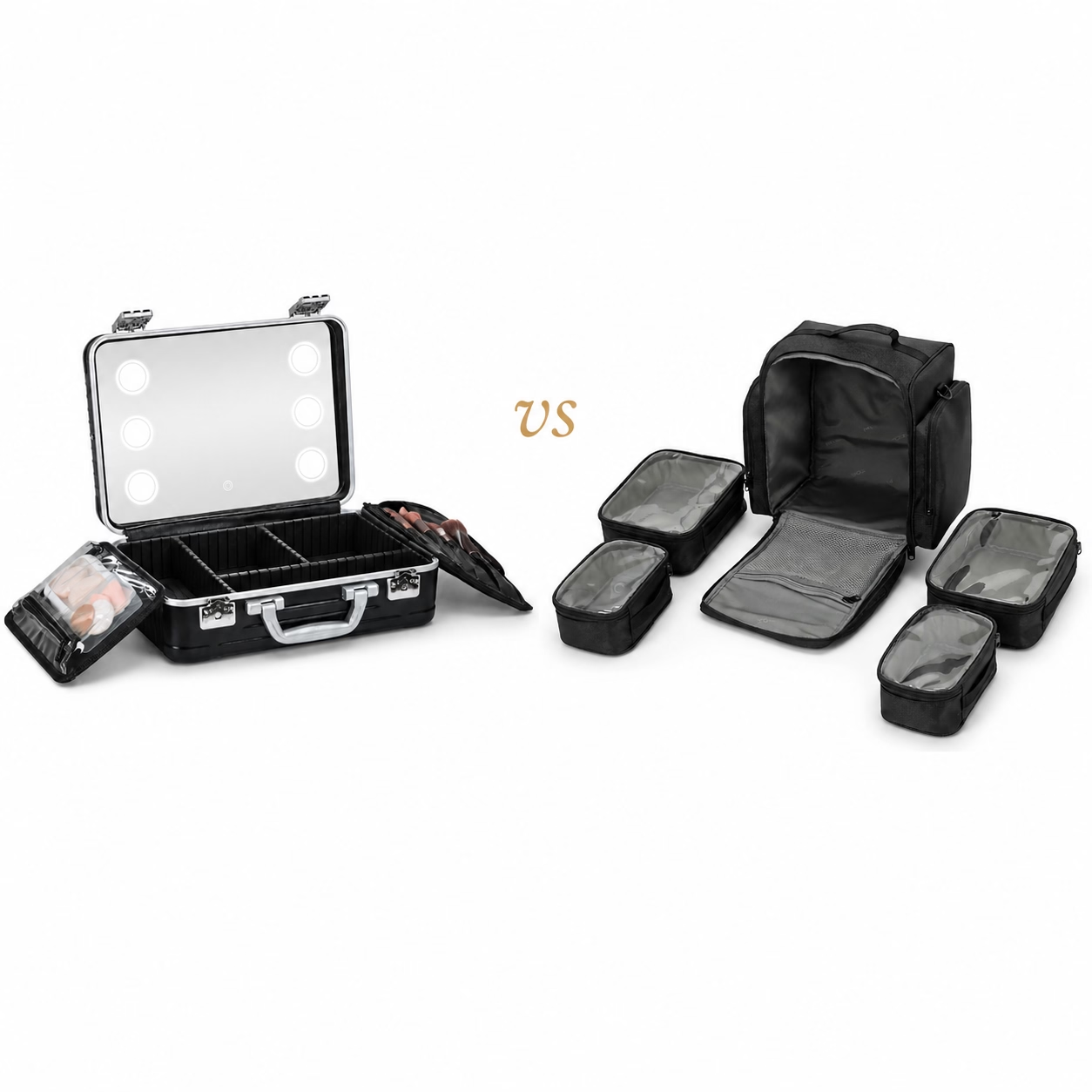
Because this product category is visually crowded, the specifications that actually differentiate quality are rarely visible in a thumbnail image. Four areas are worth checking line-by-line against any competing quote:
| Spec | PDW-12 reference configuration | Points to verify in another quotation |
|---|---|---|
| Mirror | 4K silver-coated mirror, three light modes and stepless dimming | Mirror coating, color-temperature options and dimming method |
| Battery | 6,000mAh rated battery; documented runtime up to approximately 30 hours under specified conditions | Rated capacity, test conditions, charging interface and declared runtime |
| Shell and frame | ABS shell with internal aluminum-alloy reinforcement | Shell thickness, reinforcement structure and sample compression resistance |
| Net weight | Approximately 1.6 kg | Confirm the finished sample weight for the quoted configuration |
| Mirror mounting | Magnetically detachable | Fixed or removable construction and hinge retention |
| Storage layout | Two side compartments plus a central compartment | Divider arrangement, usable internal dimensions and access |
Sourcing Pitfalls to Watch For
- Hinge construction and retention. Hinge performance cannot be judged from appearance alone. Ask the supplier to identify the hinge material and retention method, then check angle holding and repeated opening on the approved sample.
- Define the water-resistance claim. Do not rely on the word “waterproof” without a defined test method. Confirm whether the claim refers to the shell surface, seams or the complete closed case, and verify the applicable method on the approved sample.
- Evaluate battery capacity with test conditions. Battery capacity should be evaluated together with LED power, brightness settings and declared runtime. Request the rated capacity and the conditions used for the runtime claim.
- Check usable storage rather than compartment count alone. Storage layout affects access and transit organization. Confirm the usable compartment dimensions, divider arrangement and whether the approved sample matches the layout shown in the quotation.
Who Typically Sources This Product
Frequent business travelers and long-distance commuters (as end buyers), beauty content creators and mobile makeup artists, dormitory/student retail channels, and — most relevant for B2B buyers reading this guide — companies sourcing in bulk for corporate holiday gifting programs or as a wholesale SKU for beauty retail.
Standard Product Specification Sheet
| Spec | Detail |
|---|---|
| Outer dimensions | 25.5 × 10 × 21 cm |
| Internal volume | 23 × 10 × 29.5 cm |
| Net weight | 1.6 kg |
| Shell material | Waterproof, wear-resistant ABS + aluminum alloy inner frame |
| Mirror | 4K silver-coated ring LED mirror |
| Battery | 6,000mAh rechargeable lithium |
| Lighting modes | Warm / Natural / Cool (3 modes), stepless dimming |
| Hinge range | 0–180° |
| Standard set contents | 1 × case with LED magnetic mirror, 1 × USB charging cable |

Pricing Structure
Lead Times and MOQ
- Small-batch custom orders: typically 15–20 working days
- Mass production orders: typically 25–35 working days
- MOQ: varies by product configuration and customization scope, confirmed per project
OEM/ODM Process, Step by Step
- Requirement communication and solution confirmation — style, size, functionality, color, materials, and customization scope are discussed and a development direction is confirmed.
- Product design and prototyping — the design is refined against requirements and initial samples are produced.
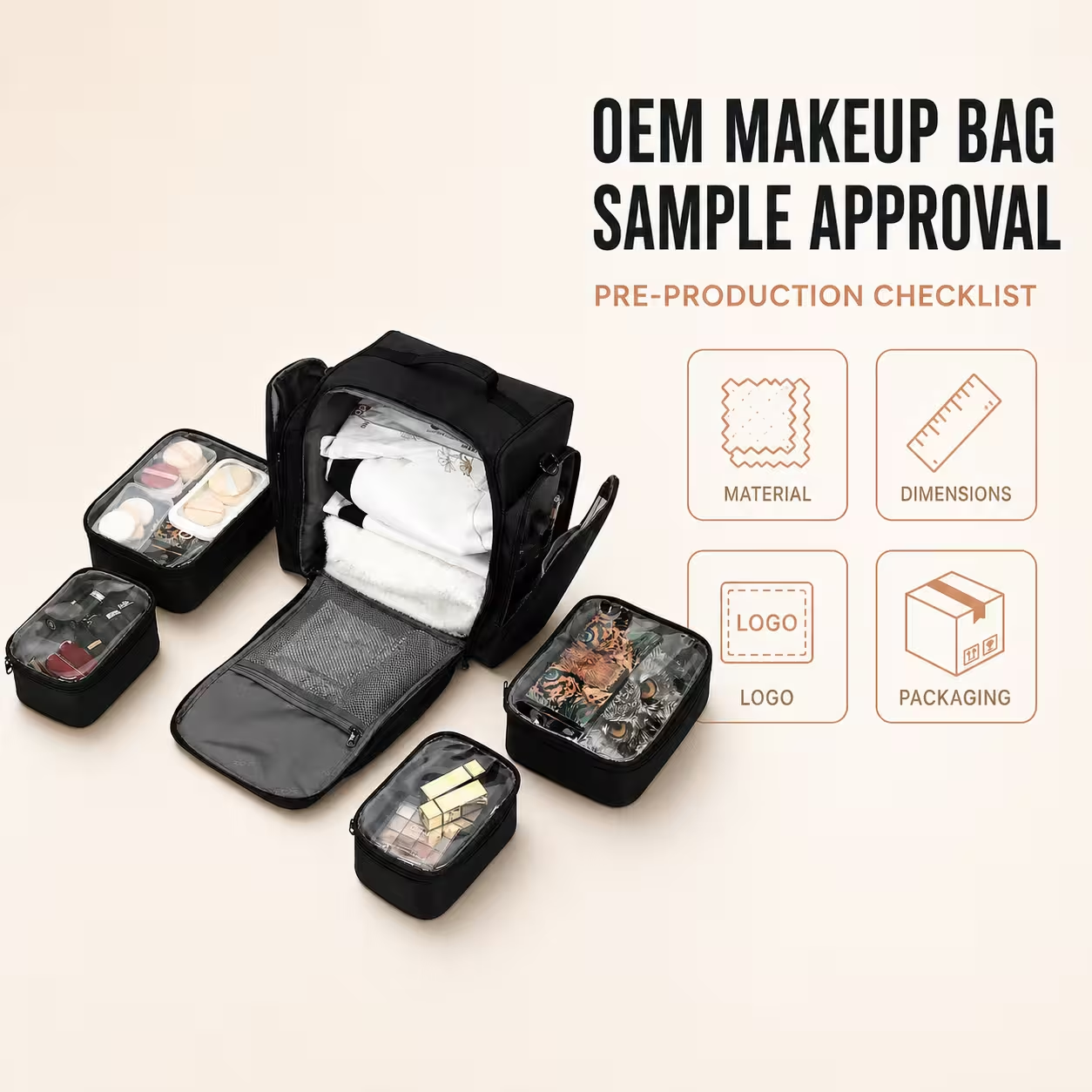
- Sample approval — the buyer reviews the sample for appearance, structure, function, and finish against mass-production standards.
- Order confirmation and deposit — quantity, production specs, and delivery timeline are finalized; production begins once the deposit is paid.
- Mass production — units are manufactured to the approved sample and production standard.
- Quality inspection — functional testing and pre-shipment inspection are conducted before goods ship.
- Final payment — the balance is paid after quality approval.
- Logistics and delivery — international shipping is arranged per the buyer’s preference, with shipping documentation provided.
- After-sales support — ongoing support is available for product usage questions or issues.
Customization Options
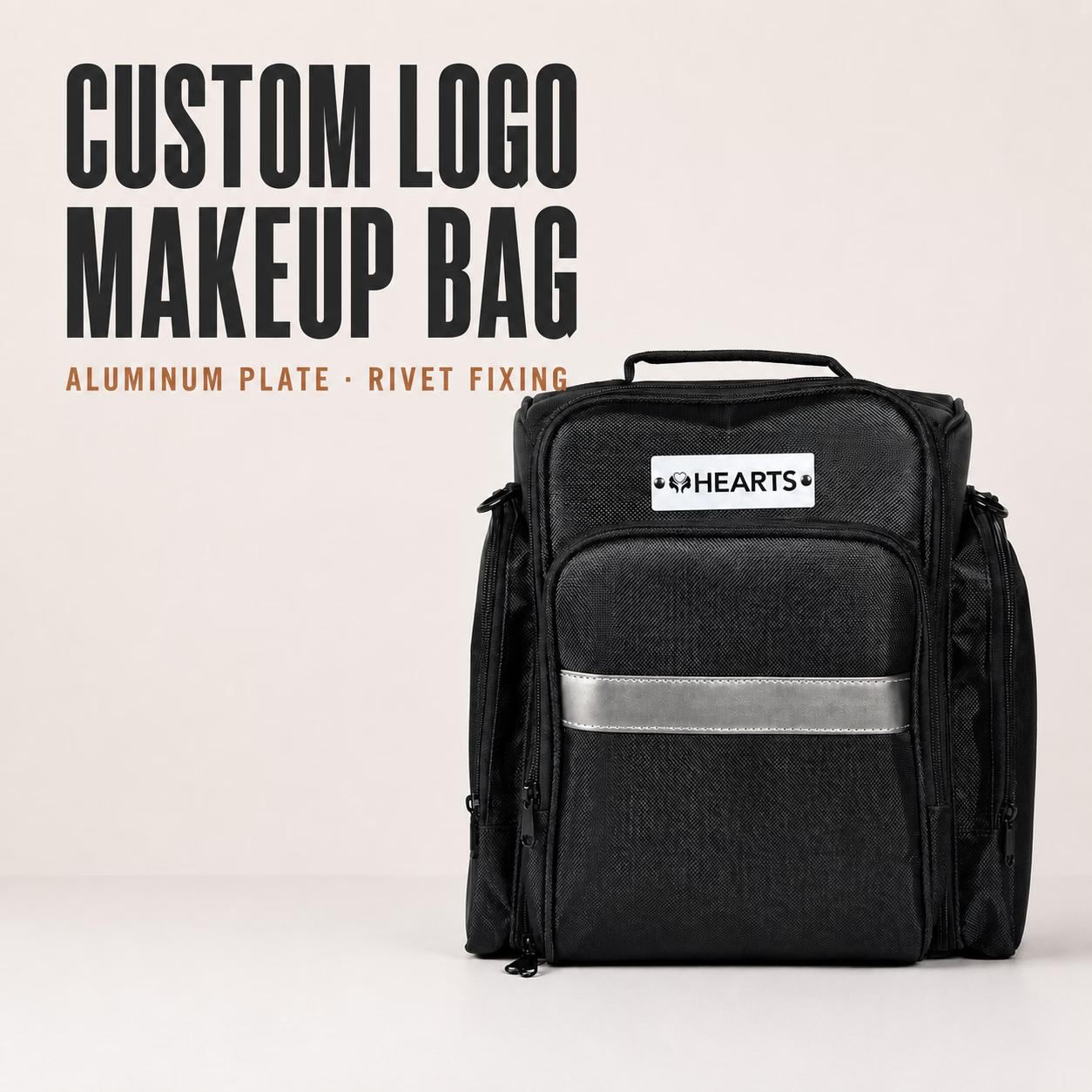
Color, logo/branding, and packaging are standard customization options; structural modifications are available for larger orders, subject to MOQ and lead-time discussion during the requirement stage.
Certification for Import Markets
Certain configurations — particularly those involving electronic components, such as the LED lighting and battery system in this case — already have relevant certification and test documentation on file, including CE and RoHS-type testing, with specifics varying by model. Buyers with market-specific certification requirements (EU, US, or otherwise) should raise this during the requirement communication stage so documentation can be confirmed or supplied for the applicable model. See the vanity case manufacturer quality process article for the actual test report and certification details already on file for this product.
Frequently Asked Questions
Is there a lower MOQ available for a first order, just to test the market?
MOQ is confirmed per project rather than fixed, and first-time or trial orders are a normal part of that conversation — raise this directly during the requirement communication stage rather than assuming the standard mass-production MOQ is the only option.
Can I get a physical sample before committing to a bulk purchase order?
Yes — sample approval is a standard, required stage in the process (step 3 above), not an optional add-on. Production doesn’t begin until the buyer has reviewed and approved a physical sample against appearance, structure, function, and finish.
What's the actual difference between OEM and ODM here — do I need to provide my own design?
OEM generally means manufacturing to your specification (your branding on an existing design), while ODM allows for deeper design-stage input, including structural modification. Which applies depends on how much you’re changing beyond color, logo, and packaging — raise your intended customization scope early so this gets classified correctly.
What happens if a shipment fails the pre-shipment quality inspection?
Quality inspection (step 6) happens before goods ship and before final payment is collected — the process is structured so a failed inspection is caught and addressed prior to shipment and prior to the buyer paying the remaining balance, not after goods have already left the factory.
Where to Go From Here
Once the numbers work for your program, the natural next step is verifying the manufacturer itself — vanity case manufacturer quality process covers the certification and QC documentation most buyers ask for before signing off on a PO.
Need the underlying build specs behind the comparison table above? Travel vanity case structure and materials and LED vanity case lighting system cover those in full.
Starting from scratch rather than mid-sourcing? The Travel Vanity Case OEM/ODM Guide is the better starting point before diving into procurement specifics.