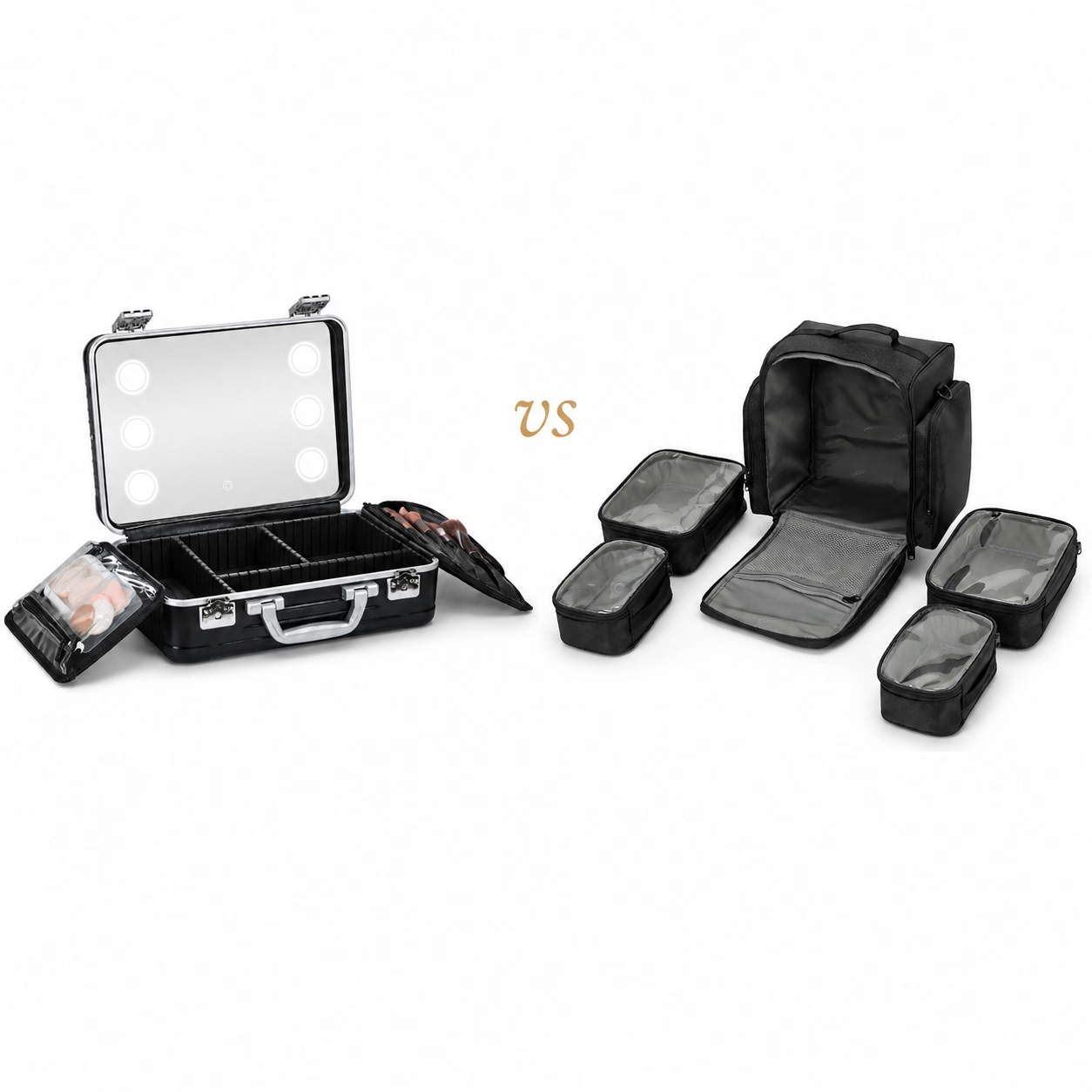

Buyers researching an “LED vanity case” are usually trying to answer one question underneath the marketing language: will this actually give me usable, accurate light, or is it a phone-flashlight strapped to a mirror? This article breaks down exactly what’s inside the PDW-12’s lighting system — mirror quality, lighting modes, battery performance, hinge mechanics, and the mirror’s magnetic detachment — so that answer is measurable rather than assumed. For the full product overview this article is part of, see the Travel Vanity Case OEM/ODM Guide.
Mirror Quality
Lighting System
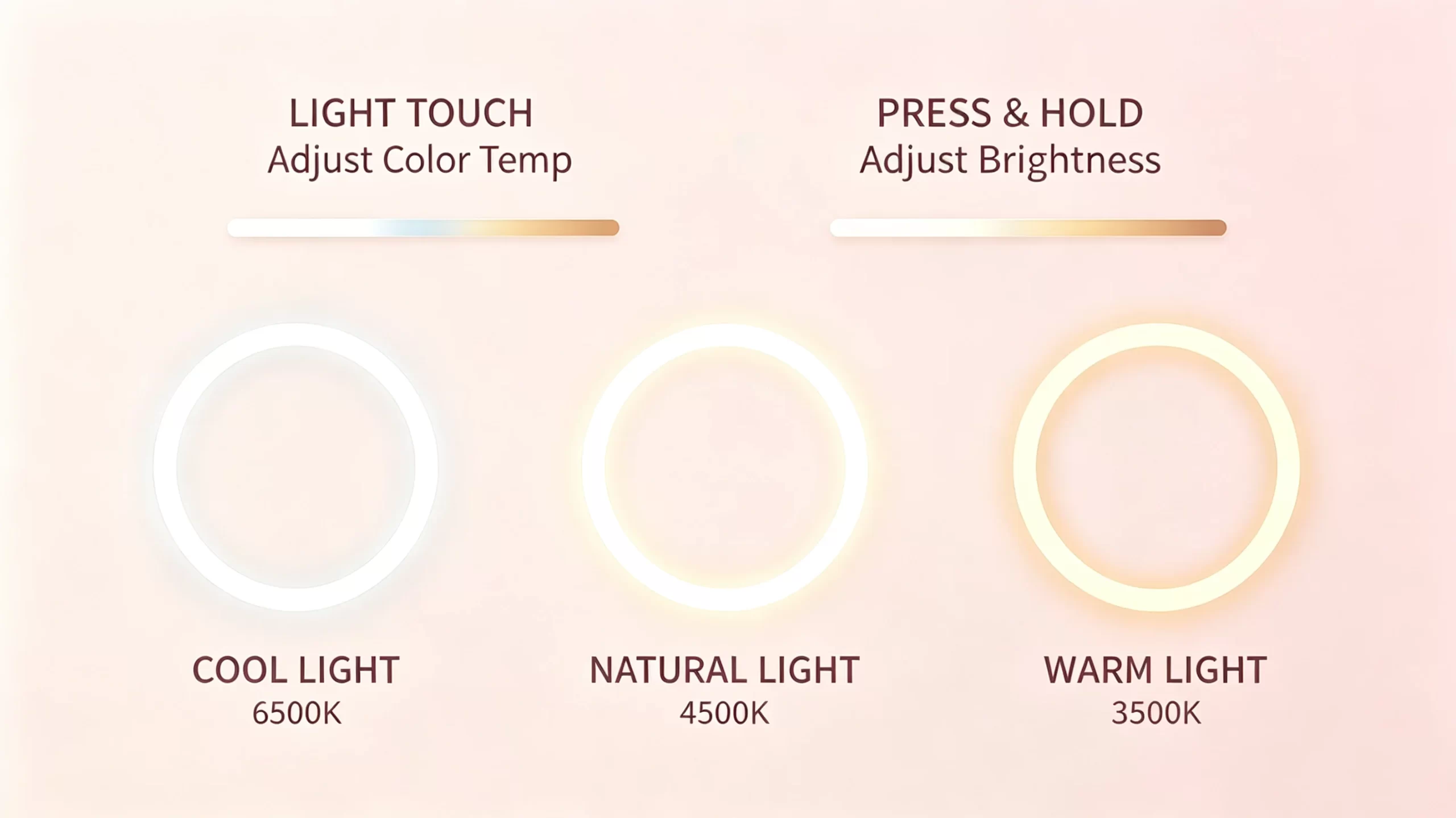
Three lighting modes are available, selected via touch control:
- Warm light — for evening or indoor ambient settings
- Natural light — the closest approximation to daylight, generally the most accurate setting for everyday makeup application
- Cool light — brighter, higher color-temperature light suited to well-lit environments or photography
Battery Life and Charging
For context on why battery capacity matters as a comparison point: many lower-cost competitor cases in this category use 2,000mAh batteries, which typically run under 8 hours before needing a recharge — a meaningful gap for anyone actually traveling with the product rather than using it exclusively at home.
Hinge and Angle Adjustment
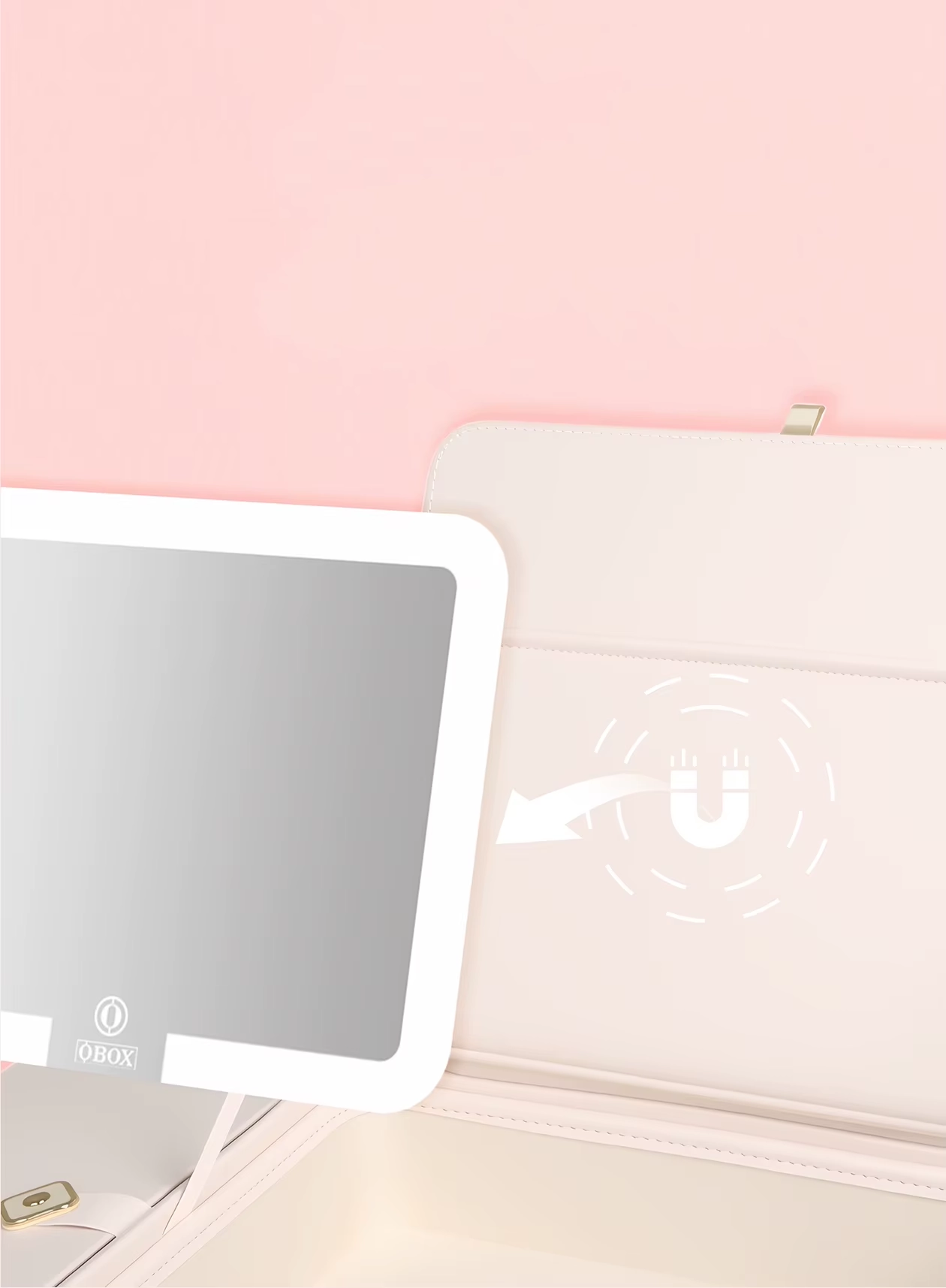
Magnetic Detachable Design
Touch Control
Practical Use Scenarios
The combination of accurate color rendering, adjustable color temperature, long battery runtime, and a stable full-range hinge is what makes this lighting system suitable across genuinely different environments — a dim hotel room, a bright bathroom vanity, an outdoor event, or a dorm room with poor overhead lighting — without needing a different product for each.
The Practical Upshot
None of these features work in isolation — that’s really the point of this breakdown. A 4K mirror doesn’t matter much without even lighting to actually see the color rendering; a long battery runtime doesn’t matter much if the hinge can’t hold a usable angle for the length of a trip. It’s the combination — accurate mirror, even ring lighting, adjustable color temperature, a battery that outlasts a multi-day trip, and a hinge that holds its position — that’s actually being evaluated here, not any single spec in isolation. That’s the standard worth holding any competing case to.
Frequently Asked Questions
Can the mirror be used on its own, without the case?
Yes. Once detached from its magnetic mount, the mirror functions as a standalone lighted hand mirror — it can be held, propped against a surface, or set down separately from the case body, with the same touch controls and lighting modes active.
What happens if the touch control gets wet — does it still work?
The touch-sensitive control is built into the mirror’s front surface and is designed to tolerate incidental splashes or damp fingers during normal makeup application. It isn’t rated for submersion, and heavy moisture directly on the control surface can cause it to misread a touch, the same limitation most capacitive touch controls share.
Does the hinge loosen over time with heavy travel use?
The metal-damped hinge is specifically built to avoid the loosening that plastic-hinge alternatives develop within a few months of regular use. It’s designed to hold its set angle consistently across extended, repeated use rather than gradually sagging.
Is the 3-mode lighting adjustable independently of brightness, or fixed per mode?
Independently. Brightness is stepless (continuously adjustable) within whichever of the three color modes — warm, natural, or cool — is currently selected, so mode and brightness aren’t locked together.
Where to Go From Here
If the mirror and battery specs check out for your use case, the next natural question is usually build quality — how the shell, hinge, and hardware hold up over time. That’s covered in travel vanity case structure and materials.
If you’re evaluating this for bulk purchase or private label, skip ahead to the OEM vanity case manufacturing guide for MOQ, pricing, and lead times.
And if you landed on this page directly rather than through the hub, the Travel Vanity Case OEM/ODM Guide ties all of this together in one place.