For buyers evaluating a manufacturer before committing to an order, the questions that actually matter are rarely about the product photos — they’re about factory capability, quality control process, and whether compliance documentation exists and can be produced on request. This article covers what’s verifiable about the manufacturer behind the PDW-12 travel vanity case. For the full product overview this article is part of, see the Travel Vanity Case OEM/ODM Guide.
Factory Background
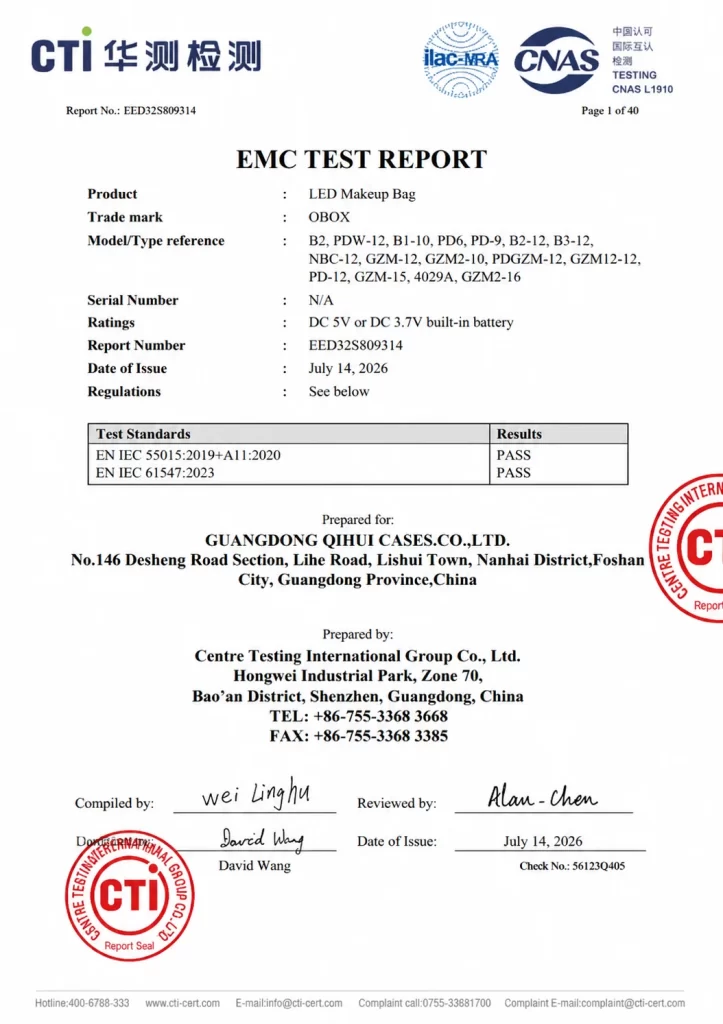
Independent Test Report
| Standard | Test item | Result |
|---|---|---|
| EN IEC 55015:2019+A11:2020 | Disturbance voltages (CE) | Pass |
| EN IEC 55015:2019+A11:2020 | Radiated disturbance (RE) | Pass |
| EN IEC 55015:2019+A11:2020 | Radiated disturbance, 9kHz–30MHz (ME) | Pass |
| EN IEC 61547:2023 | Electrostatic discharge (ESD) | Pass |
| EN IEC 61547:2023 | Continuous RF electromagnetic radiated field disturbances | Pass |
| EN IEC 61547:2023 | Electrical fast transients/burst (EFT/B) | Pass |
Testing was conducted across CTI’s shielding rooms and 3-meter semi-anechoic chamber using calibrated equipment (R&S receivers, ETS-LINDGREN chamber equipment, Schwarzbeck antennas), with equipment calibration traceable under ISO/IEC 17025 to international standards. Every measurement in the report carries a stated measurement uncertainty value, and the test conditions (temperature, humidity, pressure, test mode) are logged for each data set — standard practice for a legitimate accredited lab report, and a reasonable thing for any buyer to check for when reviewing a supplier’s documentation.
CE Verification of Conformity
RoHS Verification Report
Why This Level of Documentation Matters
A large share of listings in this product category are sold without any published test documentation, which puts the compliance risk entirely on the importer if a shipment is questioned at customs or a retail partner requests proof of CE or RoHS compliance. Having accredited third-party test reports and formal verification documents on file — each with a specific report number, issue date, and named testing lab — is a meaningfully different position than a supplier simply stating “CE/RoHS compliant” in a product listing without documentation to back it up.
Production and Quality Process
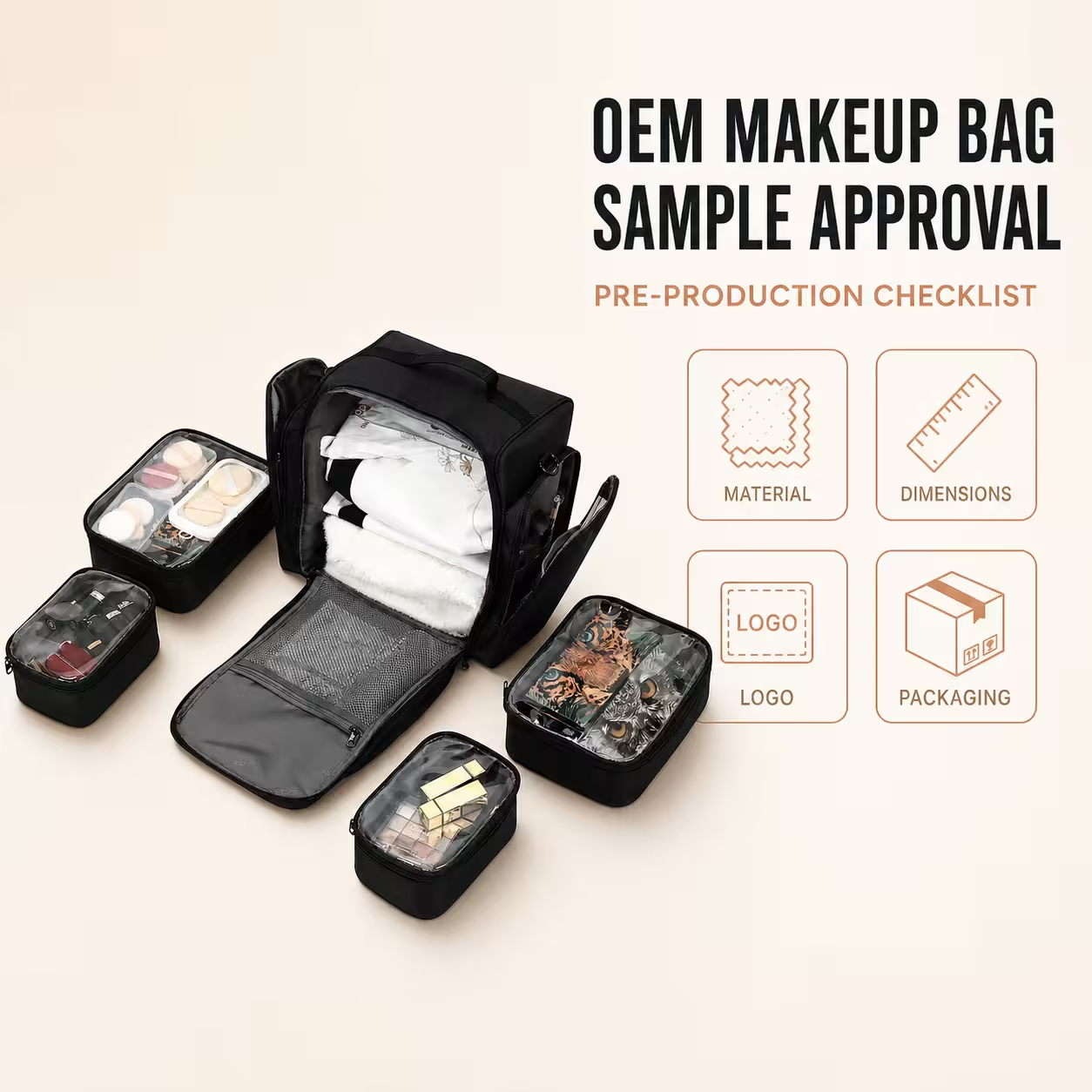
Beyond third-party lab testing, the standard OEM/ODM order flow includes a sample approval stage (buyer reviews appearance, structure, function, and finish before mass production begins) and a pre-shipment quality inspection stage (functional testing and inspection conducted after production, before goods ship). The full step-by-step process is detailed in the OEM vanity case manufacturing guide.
Real-World Consumer Reception
Build Quality, In Practical Terms
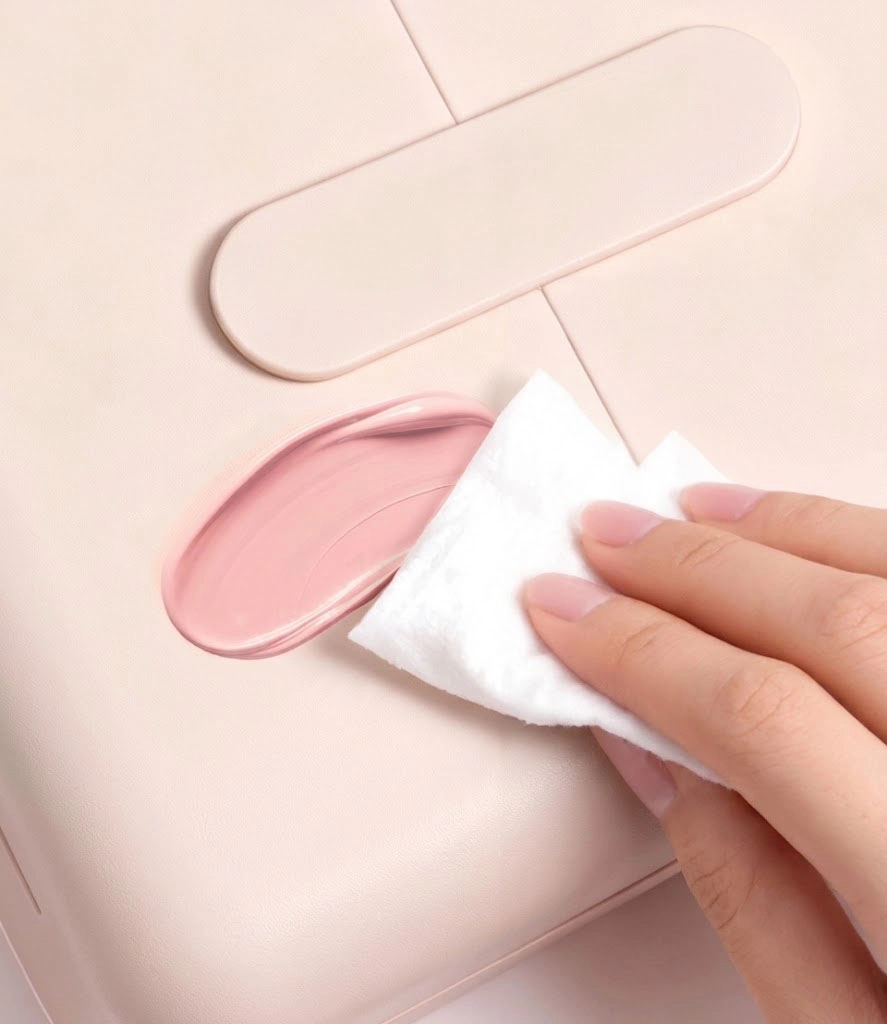
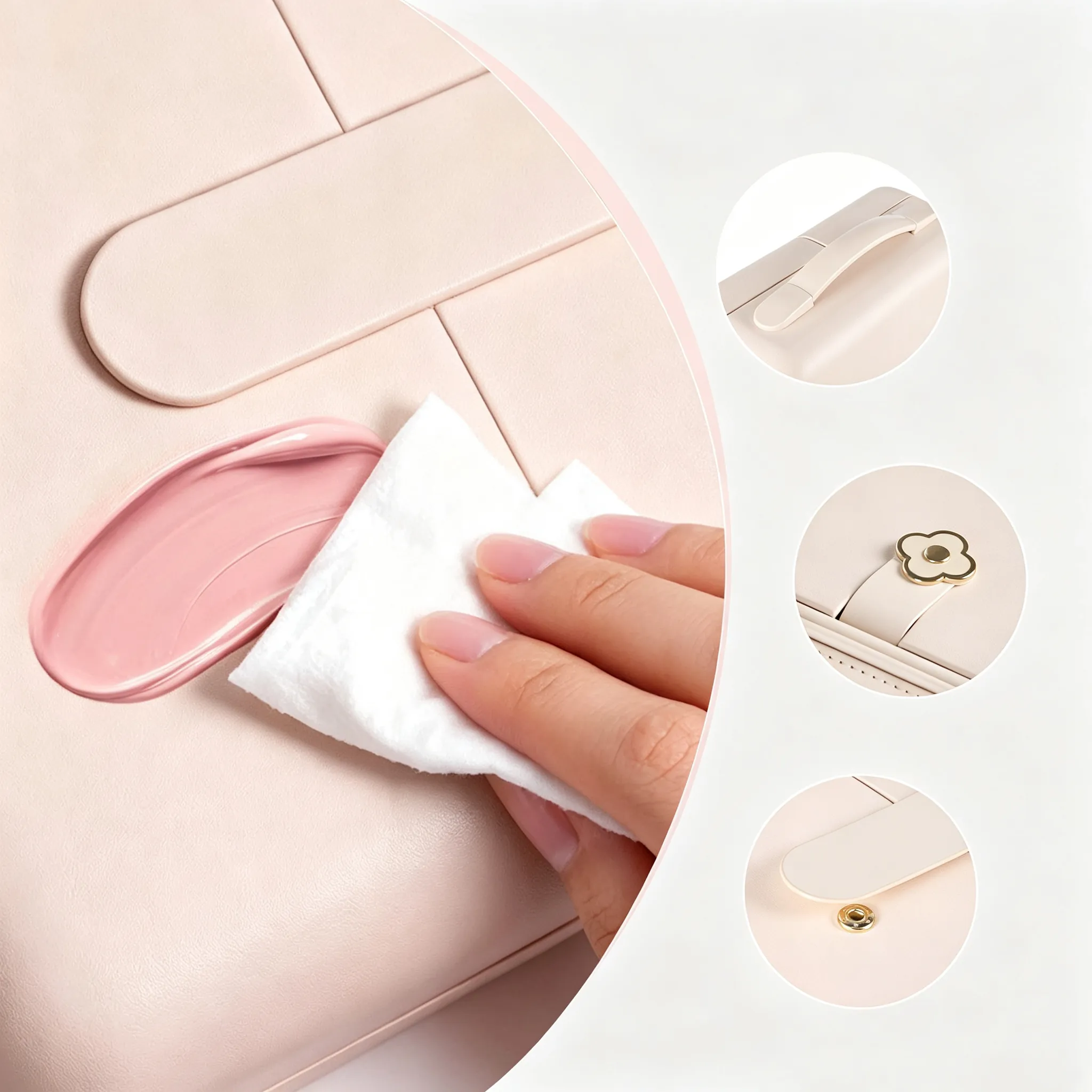
Beyond the lab report, the product’s physical construction reflects consistent attention to finish detail: the metal magnetic clasp is manufactured without burrs, the case body has even, consistent seaming, the carry handle is integrated as a single molded piece rather than an attached seam, and the matte exterior finish avoids the visibly cheap plastic sheen common in lower-cost alternatives. These are the kind of finish details that are difficult to fake in bulk production and are generally a reliable indicator of overall manufacturing discipline across a full order run, not just a hero sample.
Is This Product Suitable as a Gift Item?
For retailers building a gifting assortment: the case combines a decorative, giftable exterior (soft pink matte finish, no additional gift wrapping required) with genuine daily utility (lighting, storage, and a battery that holds up under travel use) — a combination that tends to perform better in gifting categories than purely decorative items, since it sees repeat use rather than being set aside after the initial unboxing. It suits dorm rooms, daily commute routines, business travel, and general gifting occasions (birthdays, holidays, anniversaries) similarly well, which broadens its retail applicability across seasonal and evergreen assortments alike.
Frequently Asked Questions
Can the CTI report and CE Verification of Conformity actually be verified, or do I just have to trust the report number?
Both documents carry a report number (EED32S809314 for EMC, A2260385513101 for RoHS), lab authorized signatory, and issue date, and CTI is an ISO/IEC 17025-accredited lab — meaning the documentation itself is independently checkable rather than a self-issued claim. Buyers can request the full PDF report directly from the supplier to review the underlying test data, not just the pass/fail summary.
Does the RoHS report's two "Over Limit" lead readings mean this product isn't actually compliant?
No — both components fall under standard, legally defined RoHS exemptions (copper alloy with up to 4% lead, and high-melting-temperature solder), which are recognized categories under EU Directive 2011/65/EU, not compliance gaps. The report’s overall conclusion is a clean PASS specifically because these fall within permitted exemptions.
Does certification testing cover every color and model variant, or just one sample?
Per the EMC test report, all listed models (including PDW-12) share the same electrical design, PCB, and layout — only external dimensions and naming differ by model for marketing purposes. The report explicitly states its results apply across that model range, not solely to the one unit physically tested.
What's the difference between a supplier saying "CE compliant" and having an actual Verification of Conformity on file?
A verbal or listing-page claim isn’t independently checkable. A Verification of Conformity is a specific document, tied to a report number and testing lab, that a customs authority or retail compliance team can request and validate — the distinction matters most at the point of import, not at the point of purchase.
Where to Go From Here
Certification confirms the manufacturer meets the baseline — travel vanity case structure and materials shows what that manufacturing discipline actually produces at the product level.
Ready to move from evaluation to sourcing? The OEM vanity case manufacturing guide covers MOQ, lead times, and the full ordering process.
For the complete product overview this article is part of, see the Travel Vanity Case OEM/ODM Guide.