Before choosing a chair, decide what your team needs at the working position. Does the service require a headrest? Do tools need a dedicated tray attached to the chair? Does the chair need to fold around specific storage or handling requirements?
These questions lead to different configurations. A removable headrest, a folding tool tray and a folding chair frame describe separate features. One does not imply the others, and a model with more accessories is not automatically the right choice for every project.
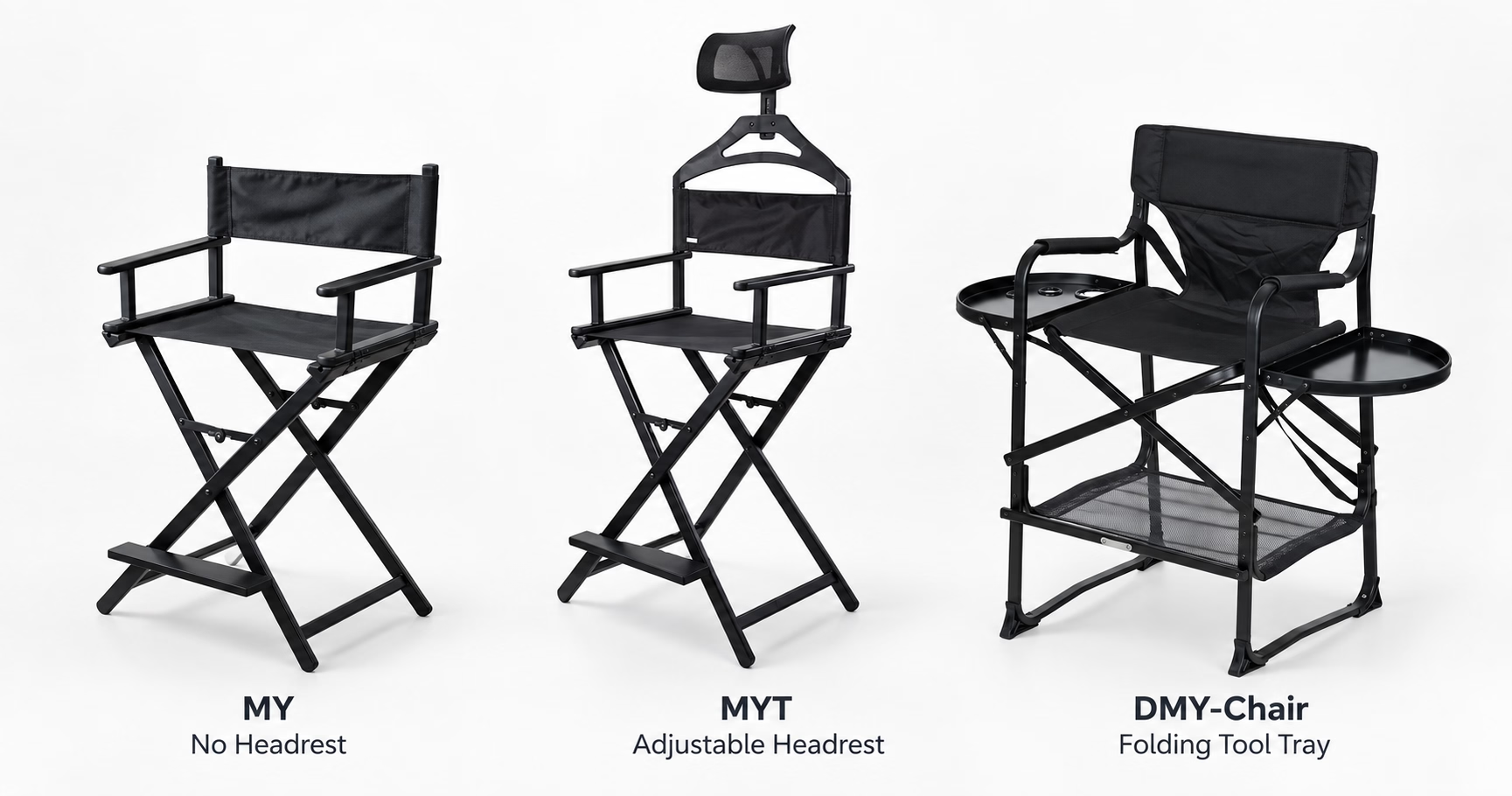
This guide uses three Obeautycase models—MY, MYT and DMY-Chair—to explain those decisions. The aim is to help studios, professional teams and equipment buyers define a configuration before requesting a sample or placing a bulk order.
Compare Three Folding Makeup Chair Configurations
Start with the feature that changes how you intend to use the chair. The following comparison highlights configuration differences rather than reproducing each product’s full specification.
| Model | Confirmed configuration | Decision to consider |
|---|---|---|
| MY | Aluminum-alloy X-frame with fixed armrests, an integrated front footrest and no headrest | Does your working setup call for a chair without a headrest? |
| MYT | Aluminum-alloy X-frame with a removable, vertically adjustable headrest and a central mesh section | Is a headrest part of your required configuration? |
| DMY-Chair | All-aluminum-alloy X-frame with a fixed, riveted, folding perforated tool tray | Do you need an attached tool tray, and does its layout match your intended tools? |
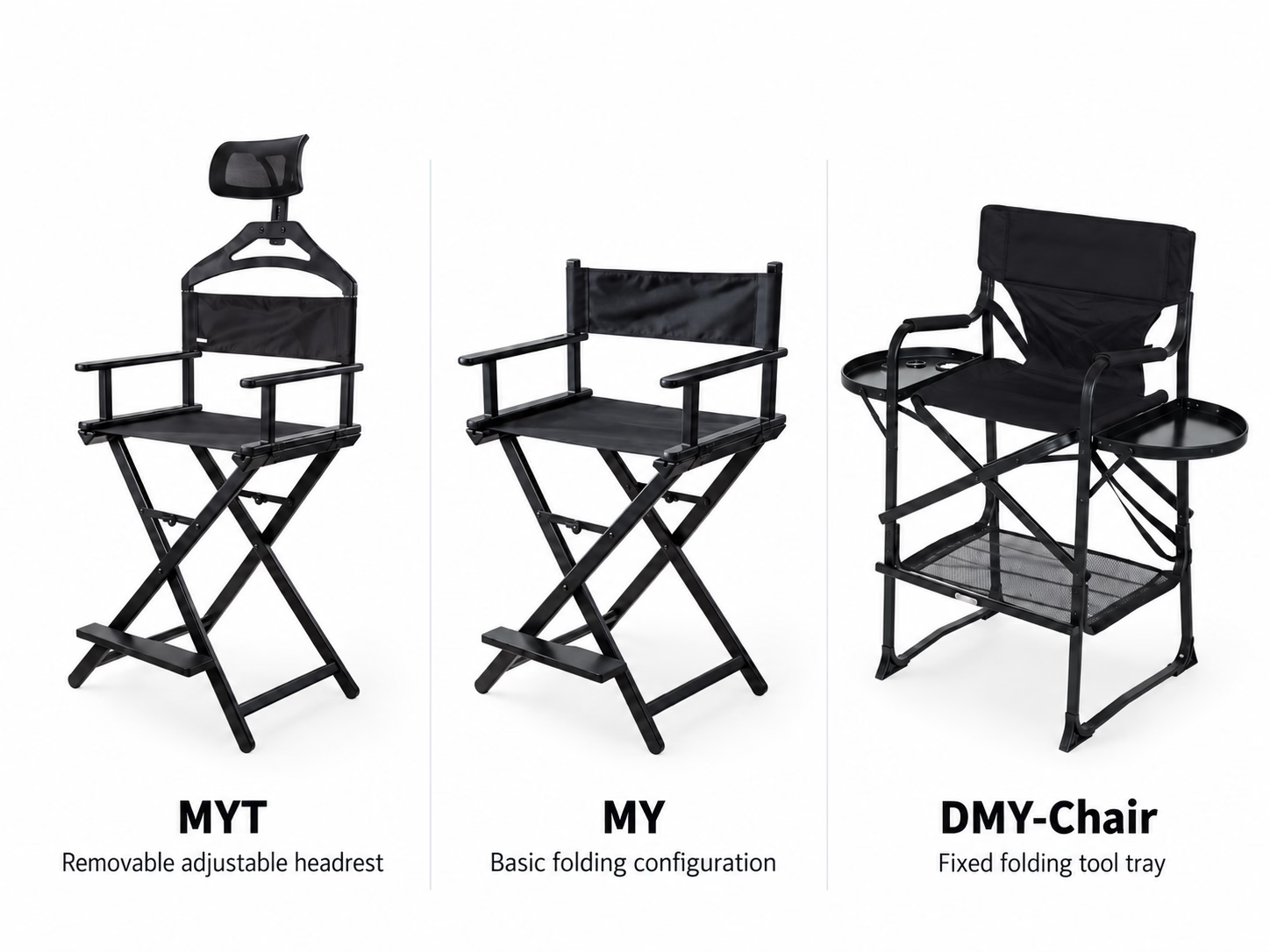
All three use mechanical folding structures. MY and DMY-Chair have Oxford fabric seating and backrests; MYT specifies 1680D Oxford cloth.
Treat these as separate purchase specifications. Do not assume an accessory documented for one model is supplied with another, or that project customization makes every combination available. Record the required configuration and have it confirmed for the selected model.
Decide Whether You Need a Headrest
A headrest requirement provides a clear starting point when comparing MY and MYT.
MY is the non-headrest configuration. It has fixed armrests and an integrated front footrest. If your specification does not call for a headrest, this gives you a defined configuration to review without adding an unneeded feature to the enquiry.
MYT has a removable headrest that can be adjusted vertically. Its headrest includes a central mesh section.
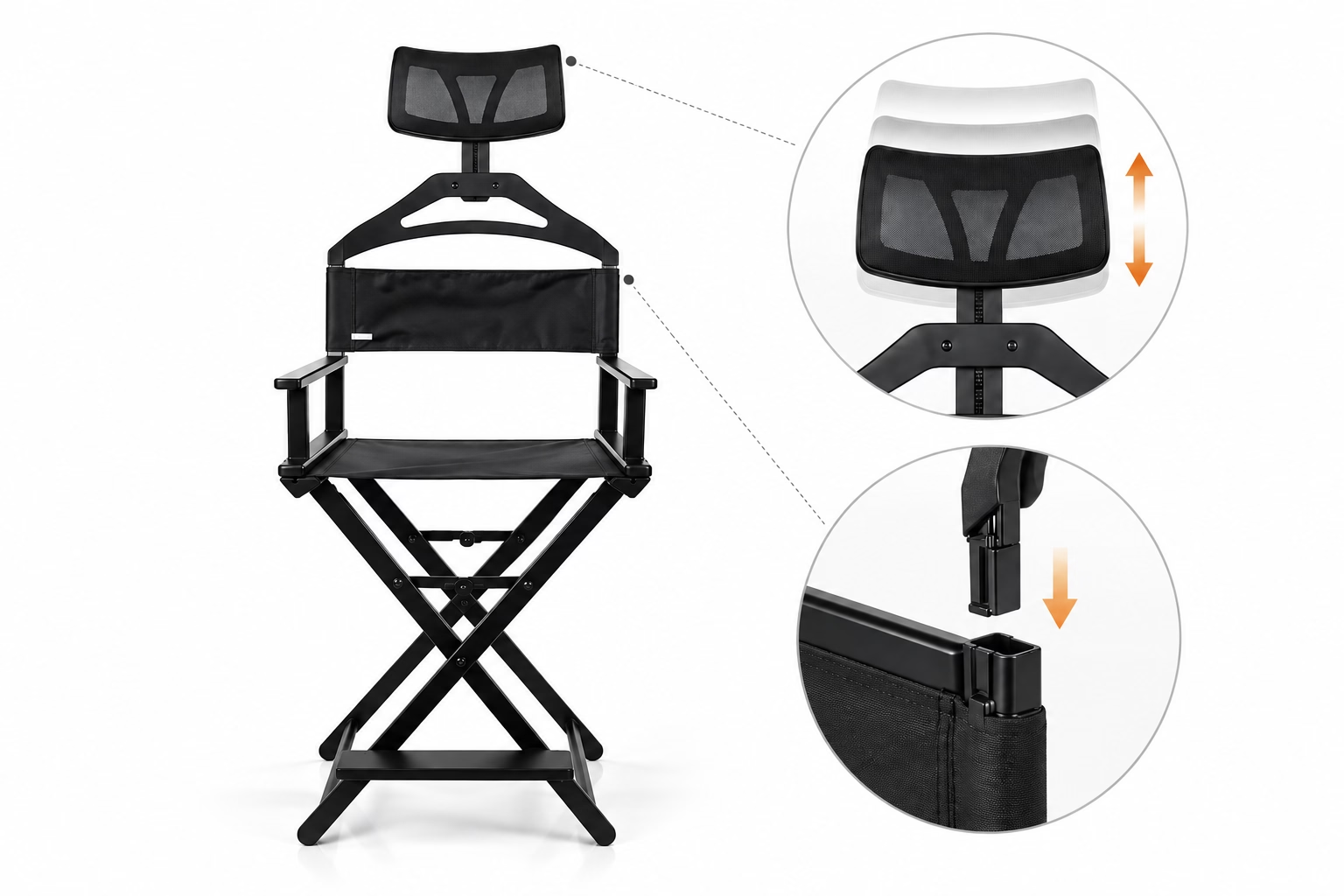
Those descriptions have specific meanings:
- Removable means the headrest can be detached.
- Vertically adjustable refers to the headrest’s up-and-down adjustment.
- Neither statement confirms that the seat height or the chair frame height is adjustable.
When reviewing a sample, assess the headrest in the intended working setup. Confirm its available positions and attachment method rather than assuming that “adjustable” covers every movement your team may require.
Decide Whether You Need a Tool Tray
For a buyer whose requirement centers on tool placement, DMY-Chair provides a different configuration: a perforated tool tray attached to the chair with riveted hardware.
The tray folds, but it is not removable.
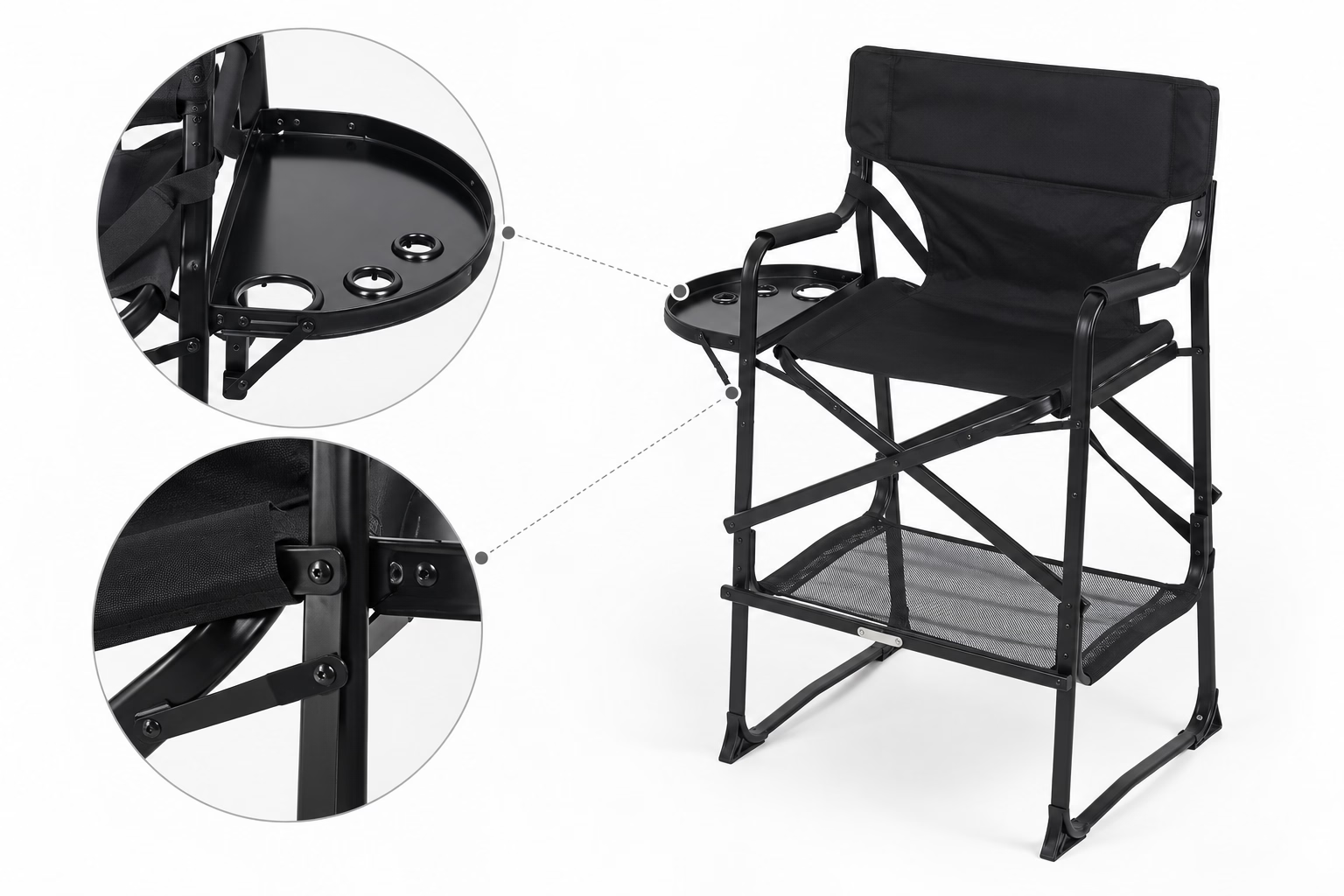
This distinction matters when writing a purchase specification. A request for a detachable tray would not describe the confirmed standard DMY-Chair configuration. Likewise, an illustration showing the tray folded should not be interpreted as evidence that it can be taken off the chair.
Review the tray against the actual tools used by your team. Check the openings, the tool shapes and the intended arrangement during sample evaluation. Do not assume that every tool fits because the tray has multiple openings.
The decision is therefore more specific than whether a chair “has storage.” Decide whether you want tools positioned on an attached tray and whether a fixed folding attachment meets your requirements.
A headrest and a tool tray answer different needs. Choose from the confirmed configurations rather than treating them as interchangeable accessories.
Check the Folding Structure, Weight and Handling Requirements
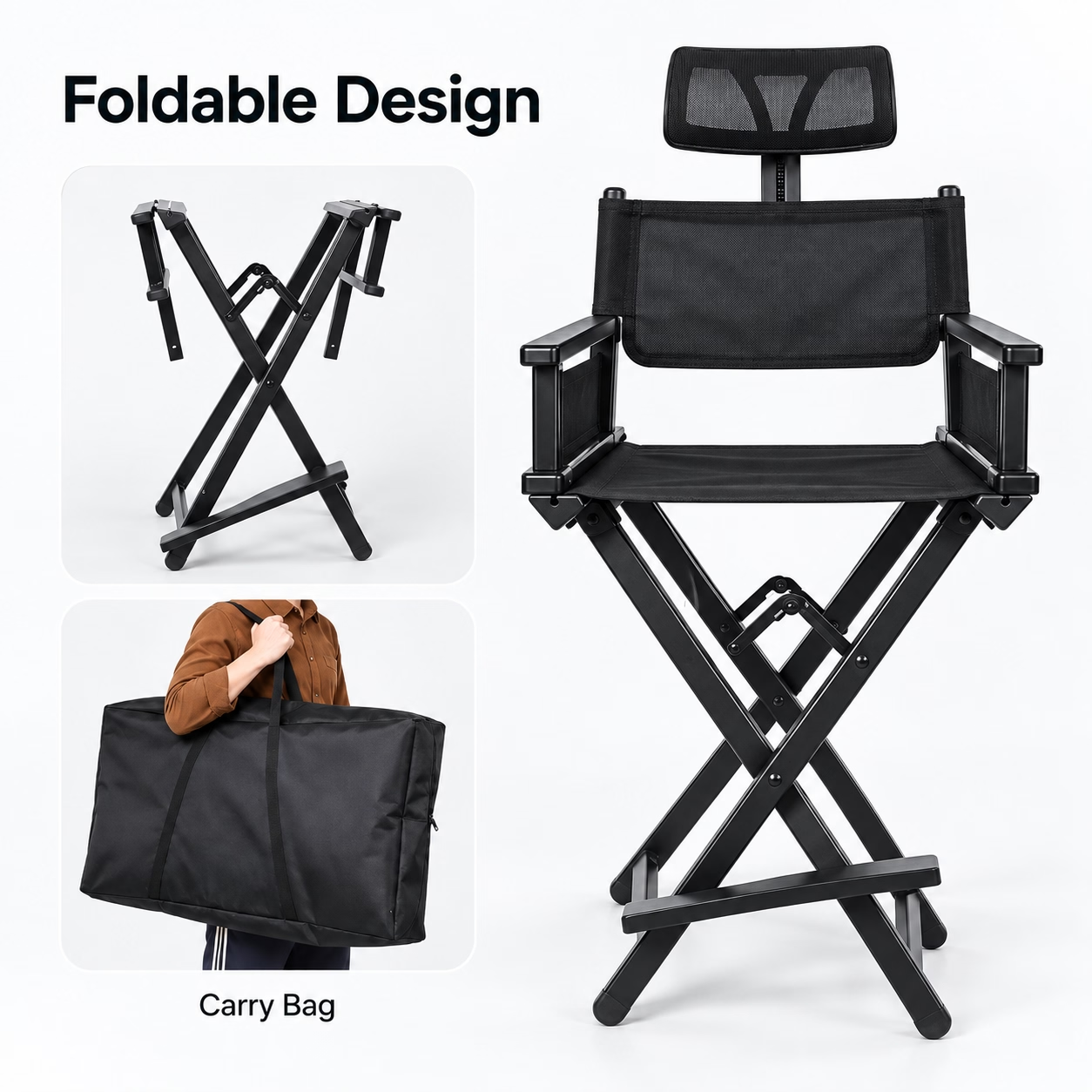
MY, MYT and DMY-Chair each have an X-shaped mechanical folding structure. That establishes the folding format, but it does not establish identical folded dimensions, setup procedures or handling requirements.
Record the agreed accessories in the purchase specification so the quotation, sample and order refer to the same supplied configuration.
The confirmed net weights are:
- MY: 4.15 kg
- MYT: 5.9 kg
- DMY-Chair: 5.8 kg
Use these as product-weight references. They do not describe packed shipping weight or establish how convenient a chair will be for a particular team to move.
Before ordering, ask for the measurements and configuration needed for your own handling plan. If a vehicle compartment, storage area or equipment route creates a specific limit, provide that requirement during the enquiry. A folding frame alone does not confirm that the chair will fit.
During sample review, examine the folding process and the position of attached components. Record any requirement that affects the chosen configuration instead of relying on a general description such as “portable.”
Read Product Dimensions and Packing Data Correctly
Several different measurements can appear in a chair specification. They should remain separate:
| Measurement | What it describes |
|---|---|
| Product dimensions | The chair in the stated condition, such as its expanded configuration |
| Seat height | The measurement to the seat; it cannot be inferred from overall chair height |
| Folded dimensions | The chair in its folded condition, with the included components identified |
| Carton dimensions | The shipping carton, which may contain more than one chair |
For example, MYT’s approved overall item dimensions are approximately 580 × 430 × 1410 mm. Its carton measures 94 × 34 × 53 cm and contains two chairs.
The carton measurement is not the MYT product size. It should not be divided by two to estimate an individual chair’s dimensions, nor used as a substitute for a confirmed folded measurement.
Keep the dimension labels supplied for each model. Where an axis order has not been confirmed, do not add length, width and height labels based on appearance alone. If one particular measurement determines whether the chair fits your workspace, request that measurement directly.
This also prevents an overall height from being mistaken for the client’s seated working height. A procurement decision that depends on seat height needs a confirmed seat-height measurement.
Confirm the Configuration Before a Bulk Order
Once the configuration is selected, turn it into a short purchase brief. The brief should identify what is required without assuming that every requested change is already included.
For MY, MYT and DMY-Chair, the confirmed MOQ is 100 units per model. Sample lead time is approximately 15 days, and bulk lead time is approximately 25–35 days. Use these as planning references and confirm the final schedule for the order.
OEM/ODM requirements may cover logo, color, material, packaging and configuration, subject to project confirmation.
The standard frame colors are Black, Pink, Rose Gold and Silver for MY and MYT, and Black and Silver for DMY-Chair. These are frame colors; they do not establish matching fabric-color options.
Include the following in your enquiry:
| Item | Information to provide or confirm |
|---|---|
| Model | MY, MYT or DMY-Chair |
| Configuration | Required headrest or tool-tray arrangement, including whether removal or adjustment is necessary |
| Quantity | Intended order quantity and any requested model or color split |
| Customization | Logo, frame color, material or configuration requests |
| Accessories | The agreed supplied accessory list for the selected model |
| Packaging | Packing requirements and any buyer-specific labeling instructions |
| Target market | Destination and any requirements that need review before order confirmation |
| Sample | The exact configuration to evaluate and the details requiring approval |
| Timing | Required delivery window and the final confirmed production schedule |
Do not assume that a requested customization leaves the quotation and schedule unchanged. Have those commercial conditions confirmed with the project details.
Use the sample to check the features that drove the selection. For MYT, that includes the headrest arrangement. For DMY-Chair, it includes the fixed folding tray and its suitability for your intended tools. Record the accepted configuration before confirming the bulk order.
Procurement FAQ
Can I customize the headrest or tool-tray configuration?
OEM/ODM configuration changes can be discussed, but feasibility depends on the selected model and project requirements. Confirm the requested change before treating it as available or including it in the order specification.
Can different chair models be mixed to meet the 100-unit MOQ?
Do not assume so. The confirmed MOQ is 100 units for MY, MYT and DMY-Chair individually. Any mixed-model order conditions must be confirmed for the specific project.
Are carrying bags included with all three models?
MYT and DMY-Chair include carrying bags as standard. MY’s carrying-bag status is not currently confirmed; do not assume that one is included, excluded or available as an option. Confirm the required accessory arrangement before ordering.
Choose the Configuration, Then Confirm the Order
The useful starting point is the required working configuration: a non-headrest chair, a removable and vertically adjustable headrest, or a fixed folding tool tray.
Review the relevant model page for its specifications, or browse the Salon Chair range to compare the available products.
When ready to enquire, send your project requirements with the model, configuration, quantity, customization, packaging and target market. This gives the team a clear basis for confirming the product and purchasing conditions.