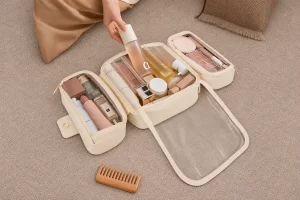
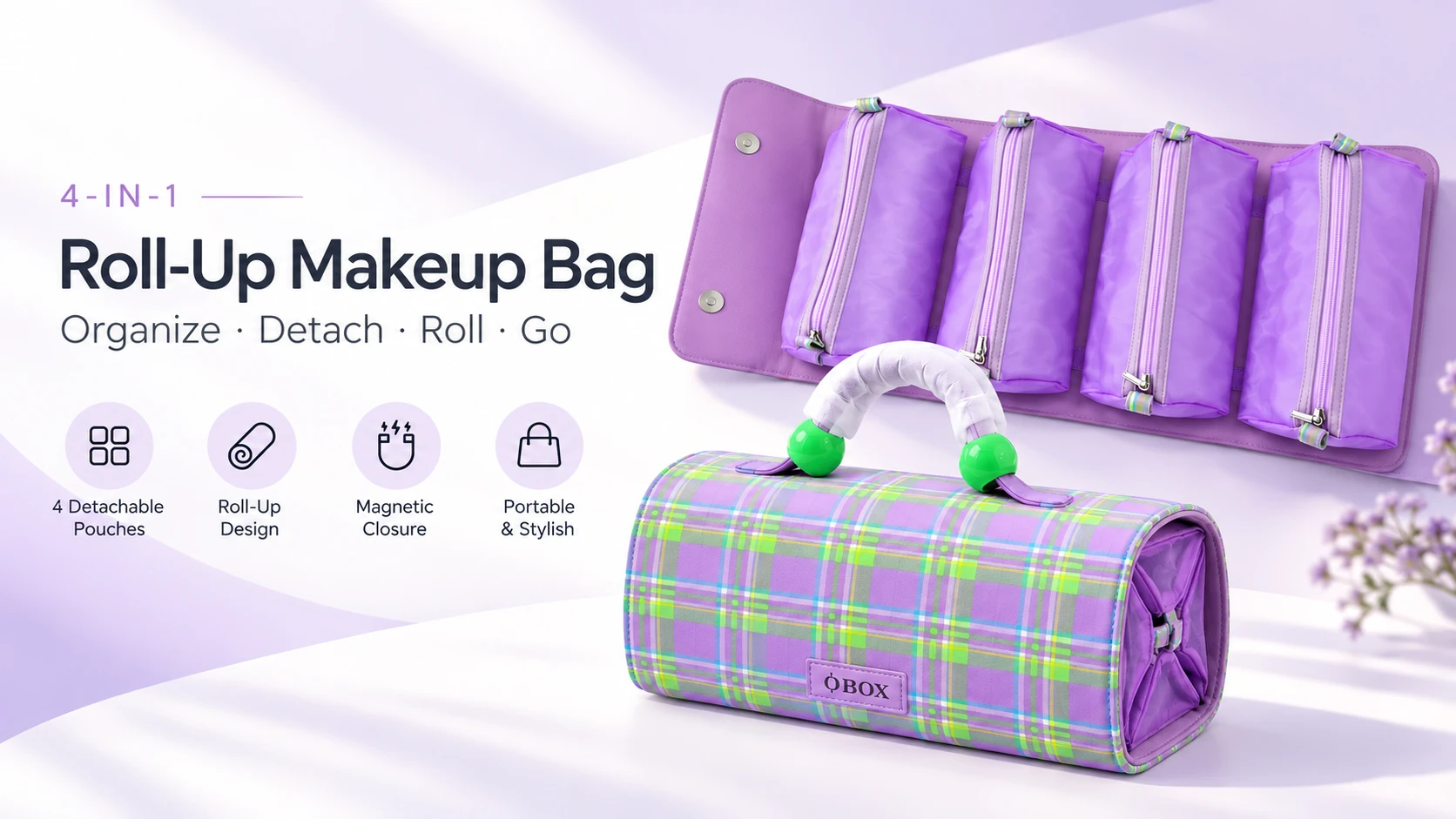
For a beauty brand or kit supplier, choosing a roll-up makeup bag involves more than checking whether individual products fit inside its pouches. The complete assortment also needs to work when the organizer is rolled closed, carried and opened for use.
JuanJuanBag provides a concrete example: four independently zippered pouches attach to a backing panel with hook-and-loop fasteners, while magnetic snaps close the rolled bag. This guide explains how to assess that structure against your intended product assortment, from pouch access to sample approval.
1. Understand How the Four Detachable Pouches Work
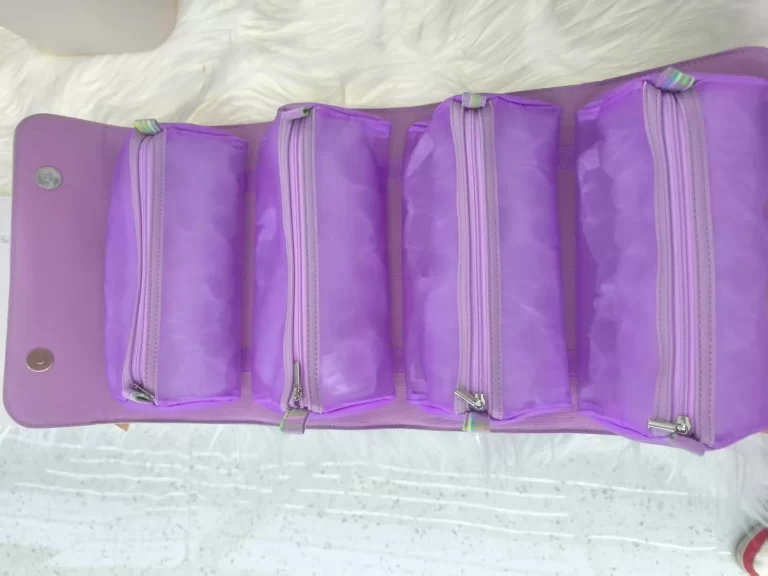
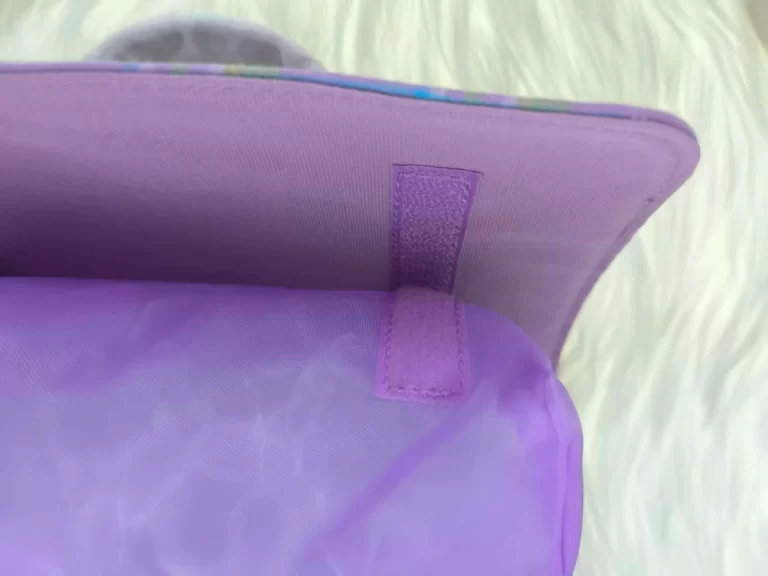
All four pouches are removable. Each has its own zipper and attaches to the backing panel through hook-and-loop fasteners. The pouches are not permanently sewn into four fixed-purpose storage zones.
For buyers, this means the assortment can be organized around the products being supplied. Grouping items by size, frequency of use or kit category are possible approaches; none of these arrangements is a prescribed compartment function.
During sample evaluation, remove and reattach each pouch, then open its zipper while it is attached. This checks two different parts of the experience: taking a pouch away from the organizer and accessing its contents without removing it.
The JuanJuanBag product page provides the model specifications and purchasing information. For assortment planning, the important next step is to examine the pouch shape and opening rather than relying on the compartment count alone.
2. Separate Structural Dimensions from Product Fit
Structural measurements are not usable internal space
Each pouch has an approximately isosceles-triangular end profile. The measured sides are approximately 7 cm each, with a base of approximately 11 cm. These figures describe the pouch structure; they are not confirmed internal clearance measurements.
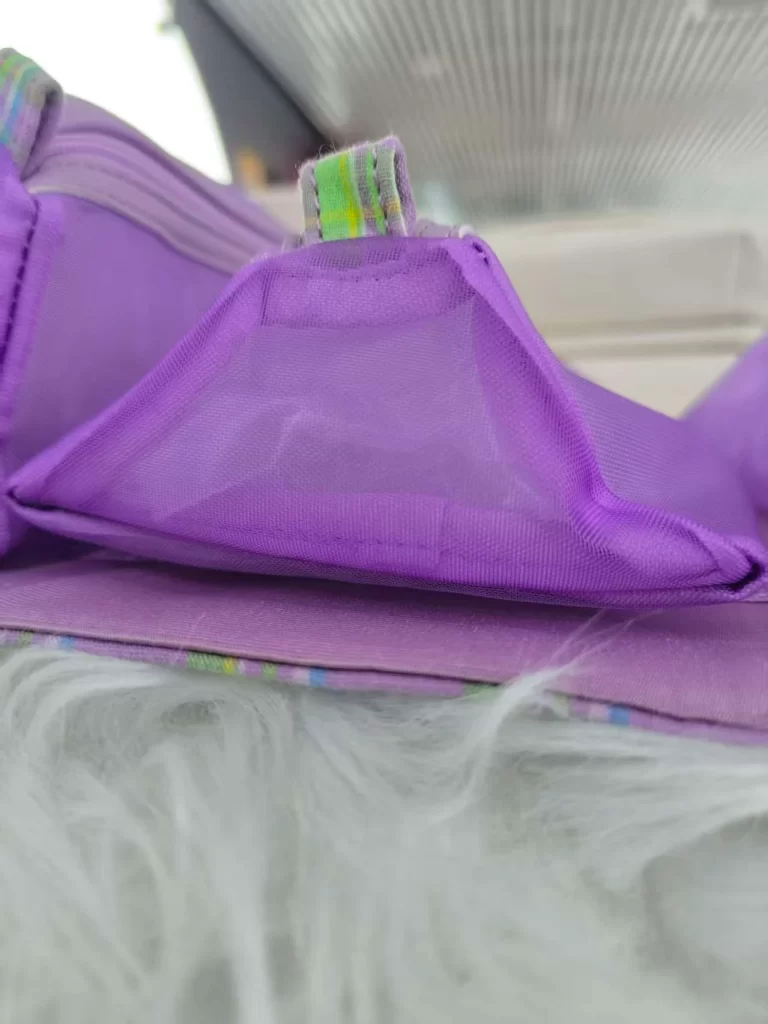
A triangular profile also means that available space changes across the section. An item that fits near the base may occupy the narrower upper area differently. Buyers should therefore assess the complete shape of a bottle, compact or tool, including its cap or projecting parts, rather than comparing a single dimension.
The organizer measures 57 × 25 cm when fully unfolded. That describes the organizer’s overall footprint, not the combined storage capacity of its pouches.
Zipper length is a separate measurement
Each pouch has a zipper approximately 20 cm long. This does not establish a 20 cm maximum item length or guarantee that an equally long rigid object will pass through the opening.
Use the intended products to check insertion, removal and zipper closure. Record any item that needs awkward positioning or prevents normal closure. This produces a useful assortment decision without converting structural measurements into an unsupported capacity claim.
3. Check the Complete Roll and Magnetic Closure
Each pouch closes with a zipper, but the complete bag closes with magnetic snaps. These are separate checks: a successfully zipped pouch does not, by itself, demonstrate that every loaded combination will roll into the required shape.
Use a straightforward sample-check sequence:
Place the intended assortment into the four pouches and close each zipper normally.
Reattach any removed pouches to the backing panel.
Roll the organizer up, in the same general motion as rolling a towel.
Check that the magnetic snap components meet and fasten without forcing the contents into a different shape.
Unroll the bag and confirm that the intended items remain straightforward to access.
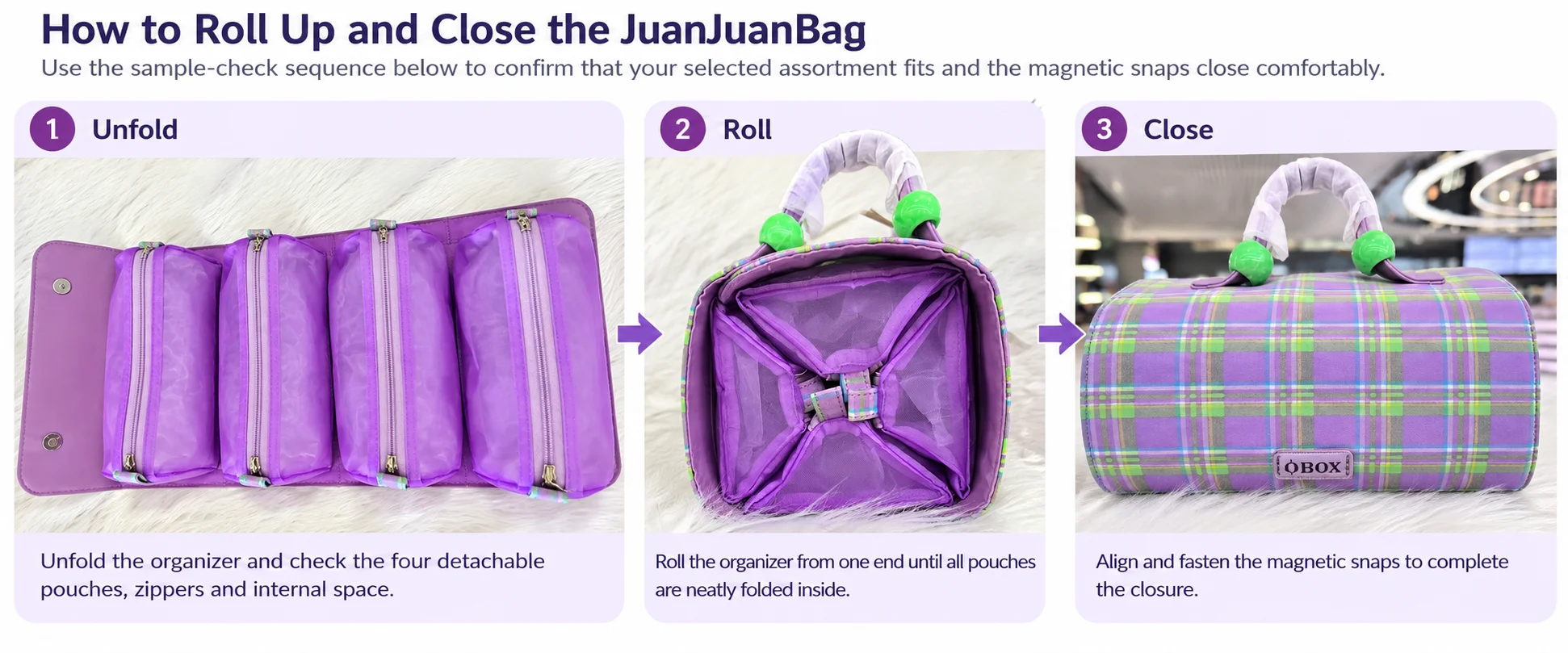
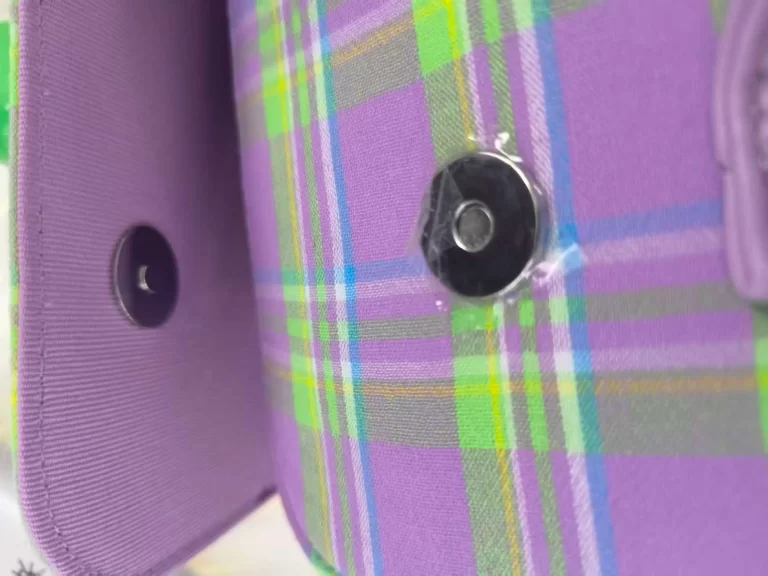
If the assembled bag does not close comfortably, review the product distribution and the shape of the items in each pouch. The purpose is to approve a workable assortment, rather than to fit the greatest possible number of items.
The measured closed body is 25 × 15 × 13 cm, excluding the handle height. Use this as a reference for the standard bag, while evaluating the actual closure with your proposed contents. The sample record should identify the assortment used so that a later product substitution can be checked against the same arrangement.
4. Assess Hanging Access and Hand Carrying
When unfolded, JuanJuanBag can hang from its own handle on a separate hook. A hook is not included with the product. All four attached pouches can be opened and accessed in the hanging position; when closed, the bag can be carried by its handles.
For a buyer, hanging access is a practical usability check. With the proposed assortment in place, check whether the zipper pulls are easy to reach and whether individual items can be removed and returned conveniently.
Also consider the intended setting. The suitability of a particular wall hook or rail depends on that installation, so it should be assessed separately from the bag’s storage arrangement. The handle’s measured vertical height is 11 cm; this is a dimensional reference, not a load rating.
A useful sample review follows the complete routine: open the bag, hang it, retrieve an item, return it, then roll and close the organizer again.
5. Record the Configuration Before OEM Sample Approval
JuanJuanBag supports customization of logos, accessories and materials. For an OEM project, distinguish the standard configuration from the specific changes requested for the order.
Keep the approval record focused on decisions that affect use:
- The four detachable pouches, their hook-and-loop attachments and individual zippers.
- Structural measurements, zipper lengths and any separately checked internal clearances.
- The actual product assortment used to evaluate fit and rolled closure.
- Magnetic snap alignment with that assortment inside.
- Hanging access and handle arrangement.
- Approved material, accessory and branding changes.
If a customization changes the pouch construction, backing or closure components, repeat the relevant fit and closure checks on the revised sample. Confirm any implications for MOQ and lead time with the supplier rather than carrying assumptions over from the standard version.
Use the OEM Makeup Bag Sample Approval Checklist for the broader documentation and approval process. For this organizer, the central purchasing decision is specific: does the agreed assortment work as four accessible pouches and as one comfortably closed roll-up bag?