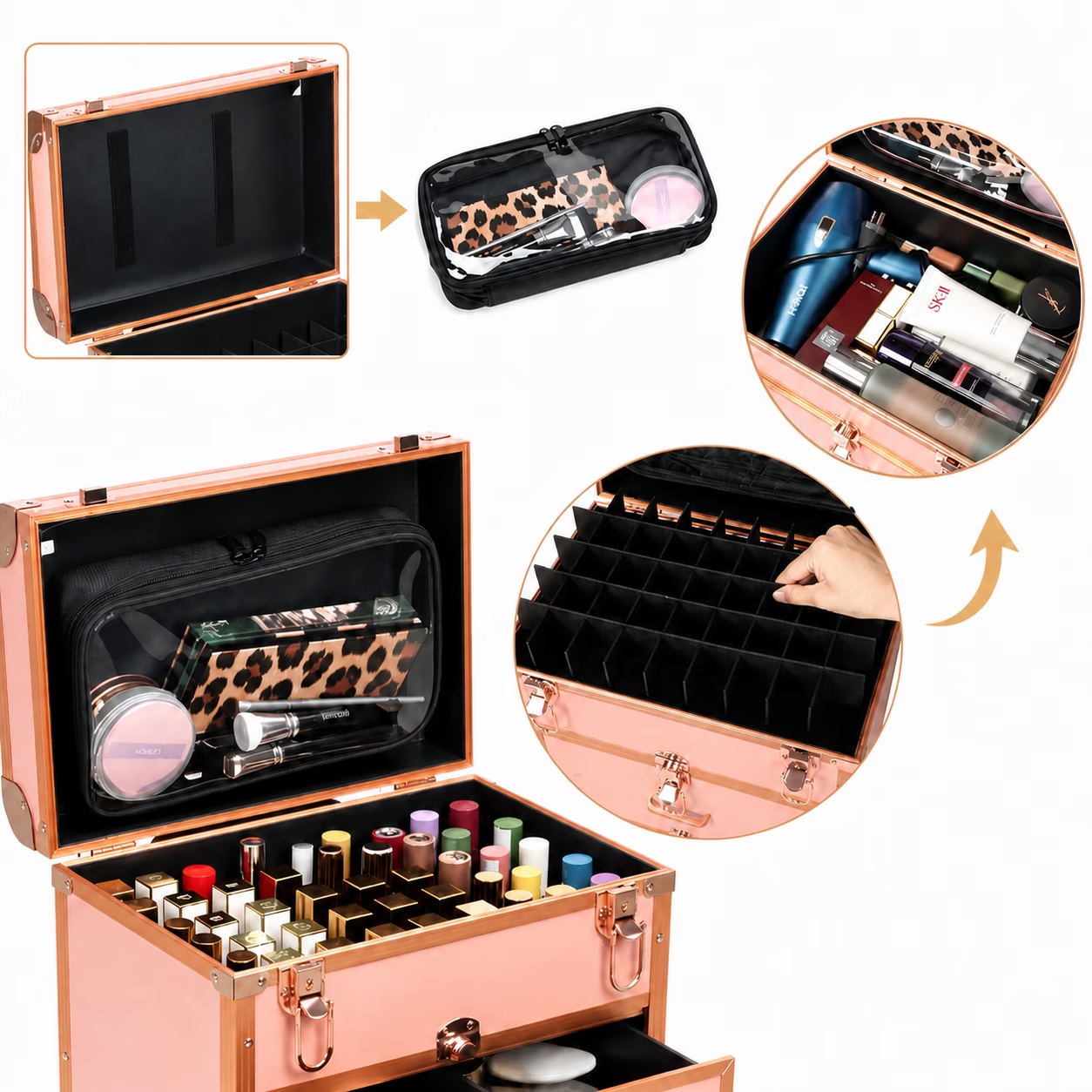
Quick answer
How to pack a rolling makeup case safely depends on weight distribution, access and product protection. Place the heaviest stable items low and close to the wheel base, keep liquids upright, reserve the easiest-to-reach tray for daily-use products, and leave enough room for dividers and closures to work correctly. Do not judge capacity by empty space alone. The packed case must remain stable when turning, the handle must not flex excessively, and the drawers or trays must close without pressure.
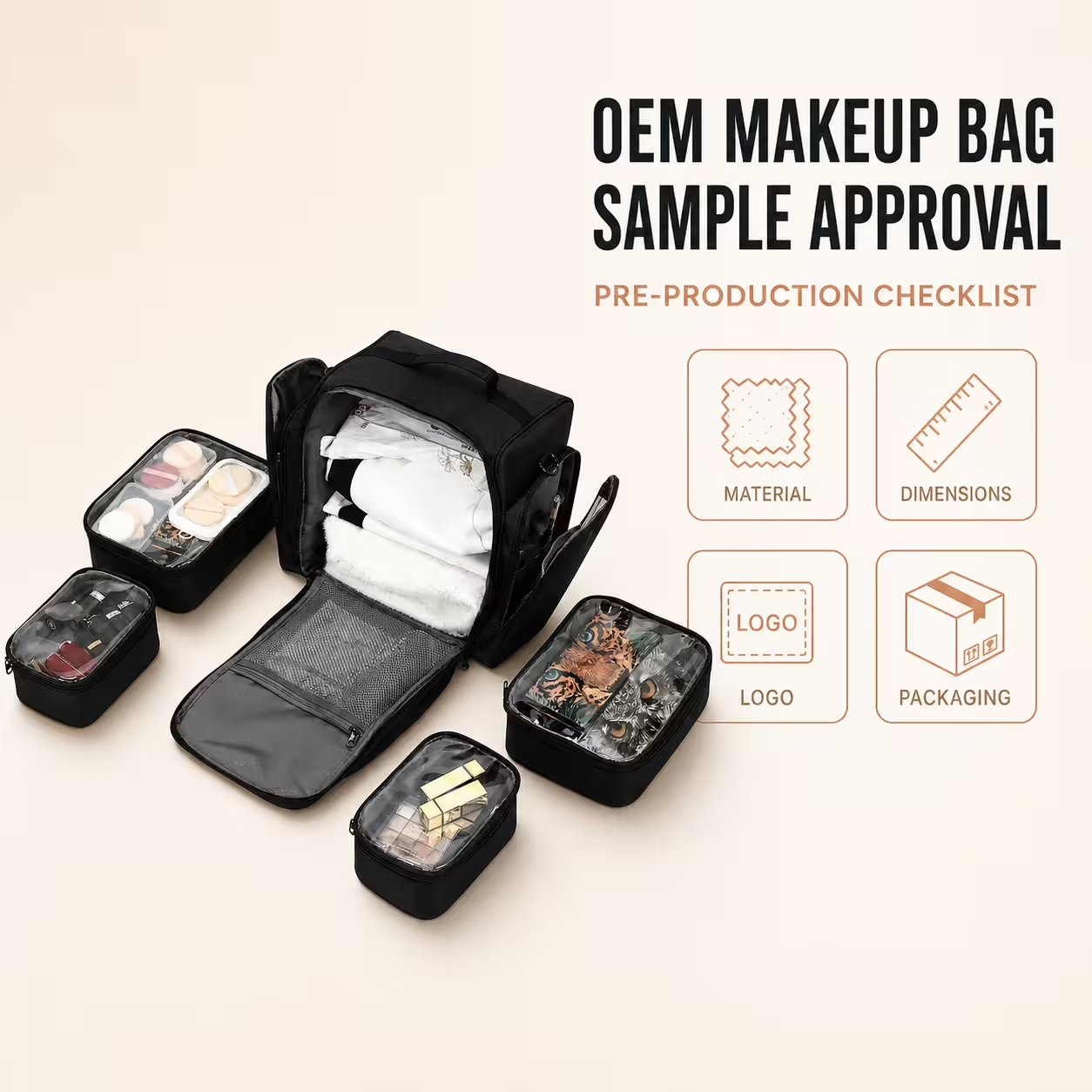
For B2B buyers, packing is also a product-development test. Use a representative kit when approving a sample, checking how the case behaves at the recommended contents weight and confirming whether the storage layout fits the target customer’s workflow.
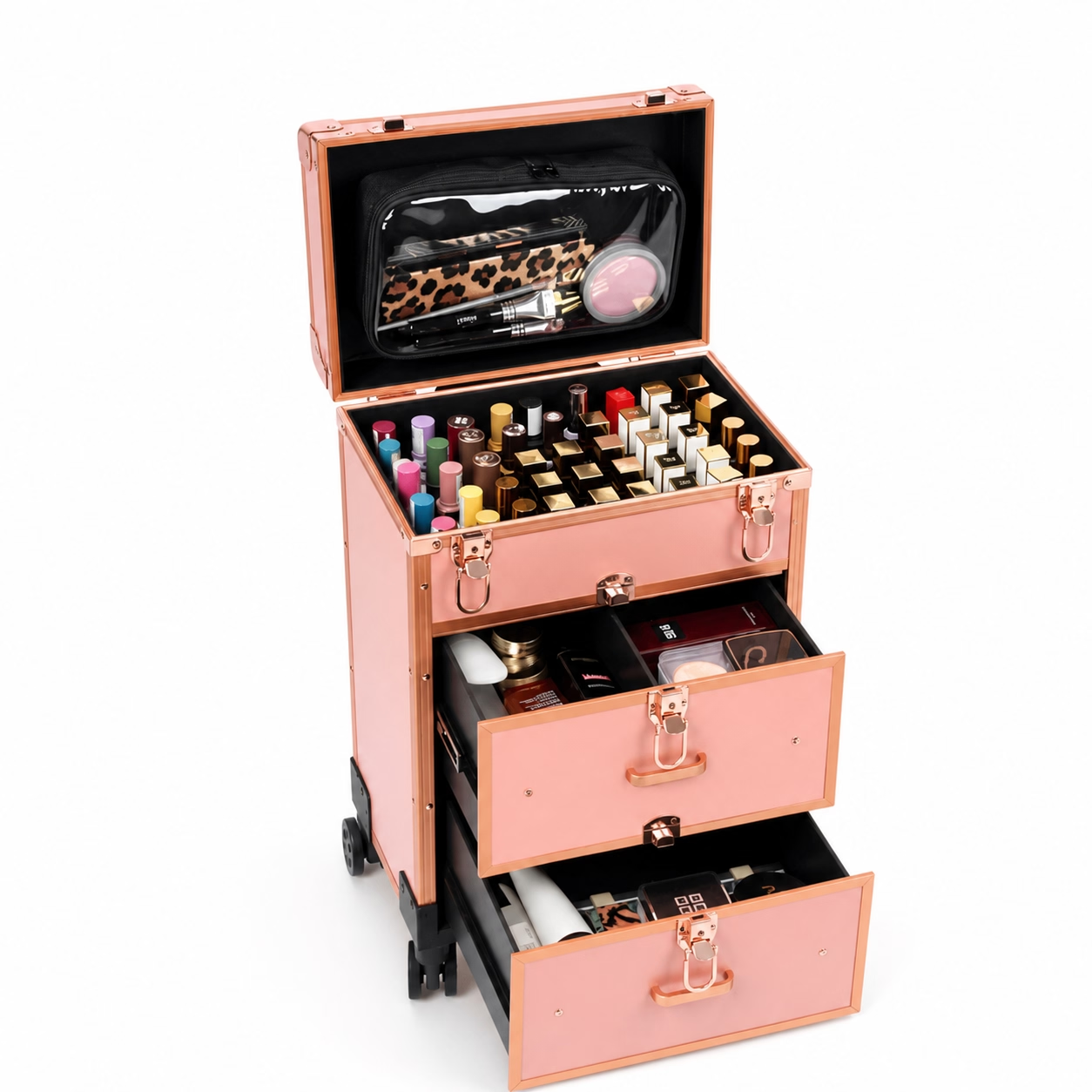
Why packing method matters
A rolling makeup case is a mobile storage system. Its performance changes when the contents move away from the wheel base, collect in one drawer or press against the lid. Poor packing can cause:
– wheel tracking to drift during turns;
– the telescopic handle to feel unstable;
– drawers to bind or sit unevenly;
– bottles and palettes to strike one another;
– latches and hinges to receive unnecessary pressure;
– the case to tip when stationary on an uneven surface.
The correct layout depends on the product mix, not only on the external size of the case. A kit of bottles, palettes and metal tools needs a different arrangement from a lightweight bridal or classroom kit.
Step 1: Sort the kit before loading the case
Before placing anything inside, divide products into practical groups:
1. liquids and bottles;
2. palettes, compacts and flat products;
3. brushes and long tools;
4. electrical tools and cables;
5. disposable supplies and cleaning items;
6. products needed during the first few minutes of a service;
7. backup stock that can stay in a lower drawer or main compartment.
This first sort prevents the common mistake of filling the most visible compartment first and then forcing heavy items into an unsuitable space.
Step 2: Put heavy items low and near the wheel base
The lowest stable compartment should carry the densest part of the kit. Place larger bottles, metal tools, backup products and other heavy items low in the case and as close to the wheel side as the layout allows. This keeps the centre of gravity lower and reduces the effort required to pull the case.
Do not place every heavy item in one corner. Spread the load across the available width, use dividers to stop movement and keep the case balanced from left to right. If one drawer is much heavier than the others, check whether it opens smoothly and whether the case remains stable with the drawer extended.
Step 3: Use dividers to prevent movement
Dividers are not only for appearance. They reduce contact between bottles, palettes and tools while the case is rolled. Set the divider width to the actual products rather than leaving large empty gaps that allow items to slide.
Use a separate section for:
– glass or pump bottles;
– pressed powders and palettes;
– brushes with delicate bristles;
– metal tools that could scratch other products;
– small items that would otherwise fall between larger products.
For OEM projects, divider size and quantity should be recorded in the approved specification. A buyer should not assume that a sample divider layout will be reproduced if it is not included in the purchase agreement.
Step 4: Keep liquids upright and protected
Liquids should remain upright whenever the storage layout permits. Close caps, wipe the outside of containers and place leak-sensitive products in a sealed pouch or secondary container. Do not rely on the case lining alone to contain a leak.
Leave clearance around bottle caps and pump heads. If the lid or drawer must be pressed closed, the compartment is overpacked. Pressure on a bottle can also transfer to the drawer front, latch or hinge.
Step 5: Reserve the top section for quick access
The top compartment or removable tray is usually best for products used repeatedly during a service. Depending on the kit, this may include:
– daily-use palettes;
– brushes;
– primers and foundation shades;
– small accessories;
– sanitising wipes and disposable tools.
The quick-access section should not become the heaviest section. If the top tray is overloaded, the case can feel top-heavy when the lid is open or when the handle is extended.
Step 6: Pack electrical tools separately
Hair dryers, curling irons, lamps and other electrical tools should be separated from liquids and delicate cosmetics. Allow the tool to cool before packing it. Wrap cables without tight kinks and keep plugs from pressing against cosmetic containers.
If a case is intended for electrical accessories, confirm the compartment height and ventilation requirements before selecting the layout. A storage compartment that fits a tool by length may still be too shallow once the cable and plug are included.
How to pack a 3488 rolling makeup case
The 3488 is a drawer-oriented reference configuration with an empty weight of approximately 7.5 kg and a recommended contents weight of approximately 25–30 kg. The recommended contents weight is for this configuration; it is not a universal capacity for every rolling makeup case.
A practical arrangement is:
– use the lower drawer for dense backup stock and stable bottles;
– use the divided drawer for smaller products that need separation;
– use the upper compartment for palettes, brushes and the daily-use kit;
– keep metal tools and electrical accessories in dedicated sections;
– test the case with the intended contents before approving a bulk order.
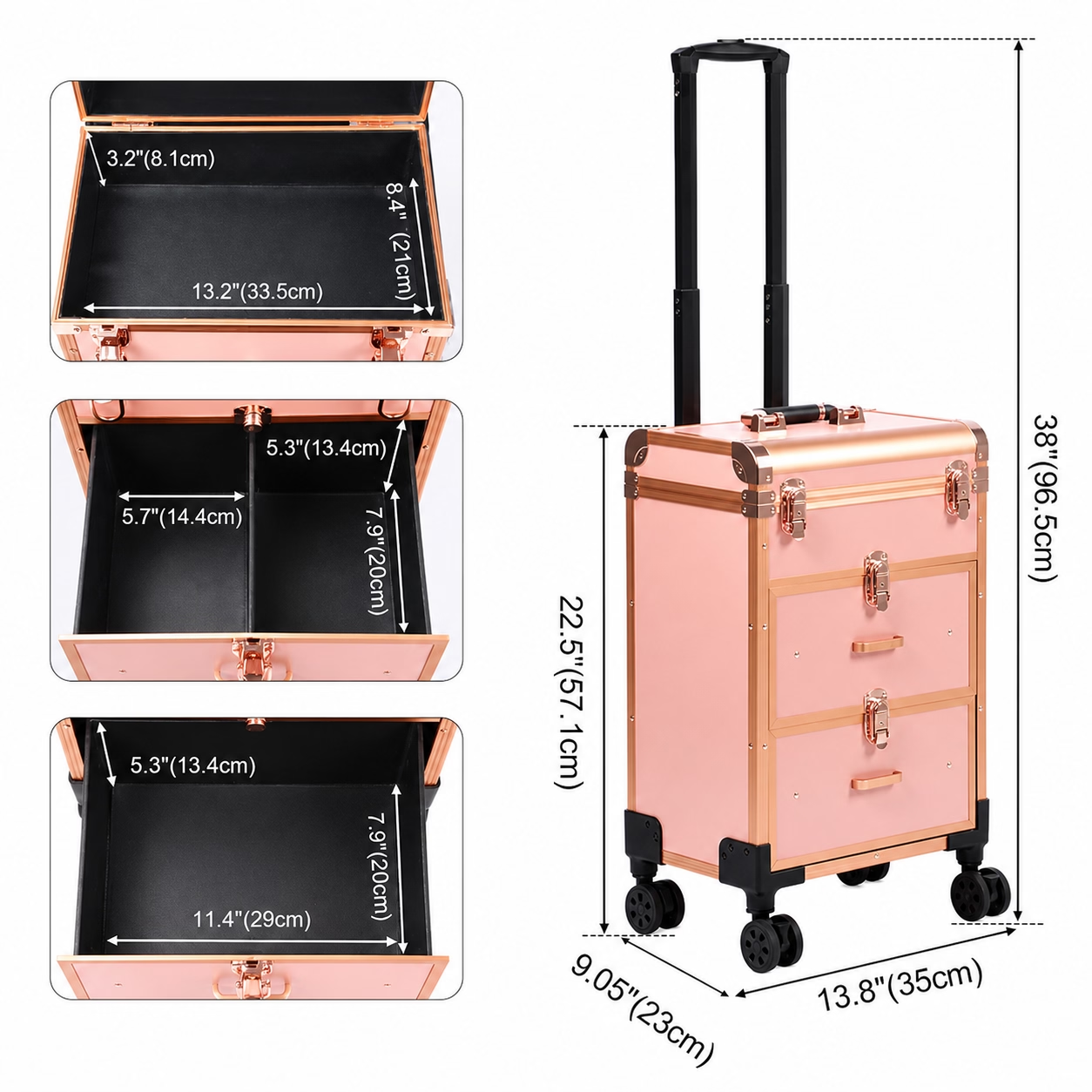
The two compartments in the split drawer are approximately 14.4 × 20 × 13.4 cm each, while the lower full-width drawer is approximately 29 × 20 × 13.4 cm. These are internal reference dimensions. Confirm final production tolerances and divider placement with the approved sample.
For more storage and construction details, see the large-capacity rolling makeup case with drawers.
How to pack a 3599 rolling makeup case
The 3599 is a modular reference configuration with an empty weight of approximately 5.5 kg and a recommended contents weight of approximately 20–25 kg. Its supplied storage measurements describe:
– a main storage body of approximately 36 × 21.5 × 36 cm;
– an A storage box of approximately 16.5 × 19 × 9 cm with removable dividers;
– three shallow B-module boxes, each approximately 16.5 × 19 × 2.5 cm.
Confirm whether the quoted storage measurements are usable internal dimensions, and confirm production tolerances and divider placement on the approved sample.
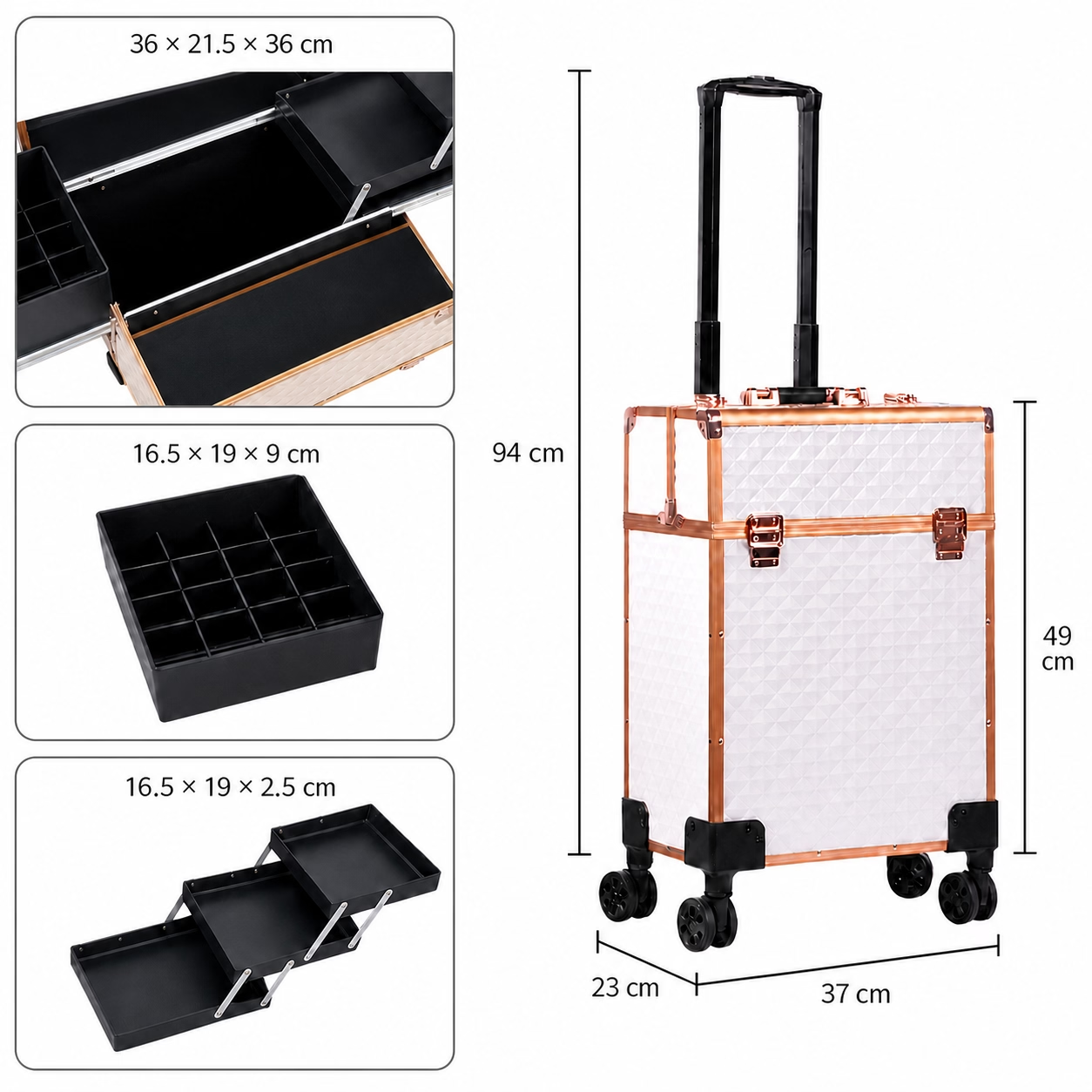
The main storage body is suitable for larger products and equipment. The A box works well for grouped cosmetics or nail products, while the three shallow boxes can separate small, flat or frequently used items.
Because the upper modules open outward, pack the case so that the extended sections remain balanced. Avoid putting all dense products in one shallow tray. Use the main body for heavier items and the upper modules for lighter products that benefit from visibility and quick access.
For the model’s layout and dimensions, see the 3599 rolling makeup case. You can also compare the two formats in our 3488 vs 3599 rolling makeup case comparison.
How to test a packed rolling makeup case
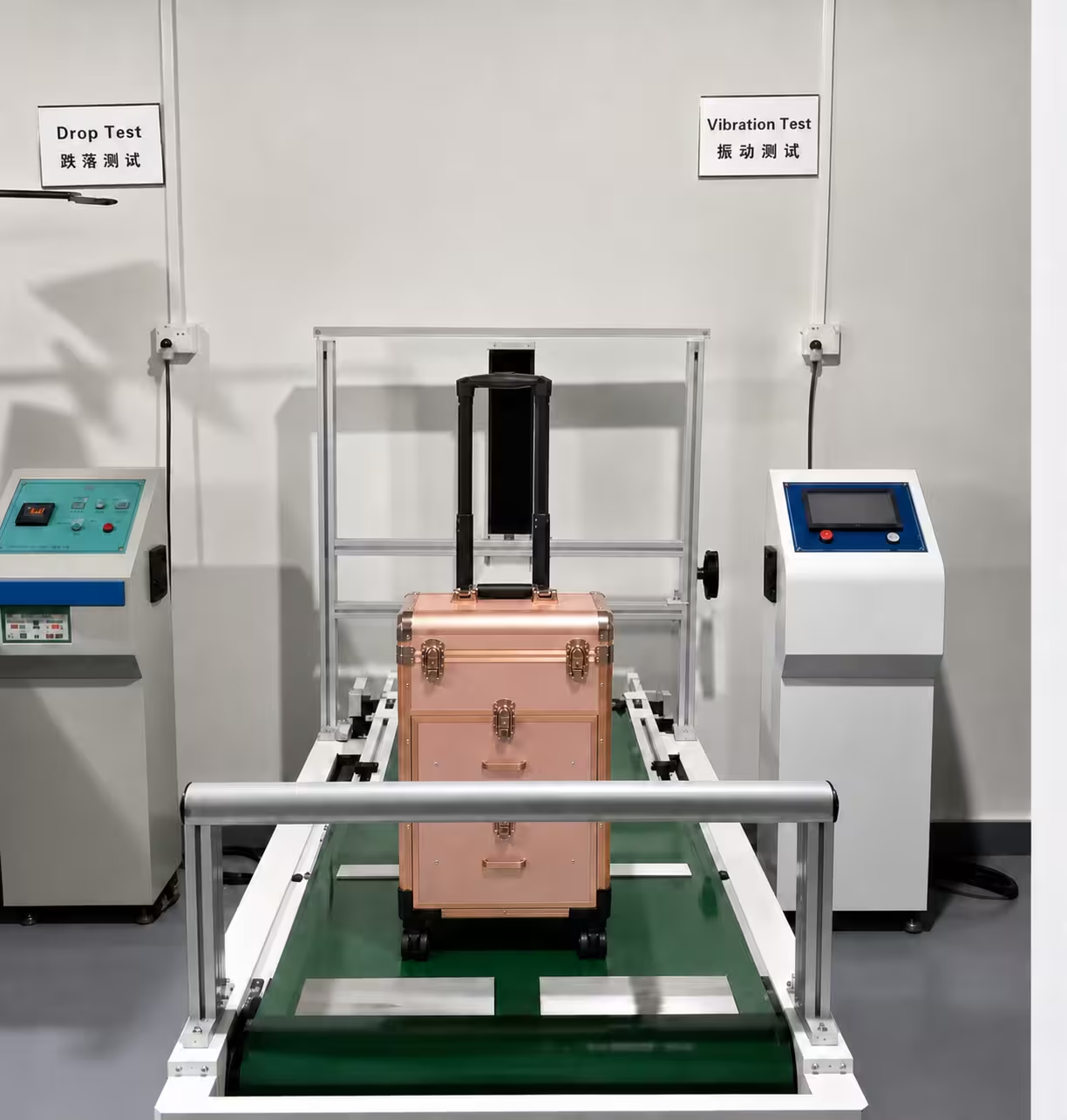
An empty case does not show how it will behave during daily work. Test the approved sample with a representative kit and record the result.
Loaded movement test
Roll the case over the surfaces used by the target customer, such as tile, smooth concrete, carpet or a slightly uneven floor. Record any wheel drift, binding or unusual effort during turns, and check whether the case remains stable when the handle is extended. Use the approved sample as the reference unless the purchase specification defines a separate acceptance limit.
Drawer and closure test
Open each drawer or tray while the case is loaded. Check for binding, uneven gaps, latch pressure and interference with adjacent modules. Close the case without pushing against the contents.
Handle and wheel check
Inspect handle flex, wheel alignment, swivel movement and brake operation under the packed load. Record any visible change from the approved sample. A supplier may have separate wheel or handle testing data for another product, but those figures should not automatically be treated as product-specific certification for the 3488 or 3599.
Balance and tipping check
Park the case with the handle extended and with one drawer or module open. Record whether the case remains stable in that working position. If the approved sample cannot meet the buyer’s agreed stability requirement, move heavy products lower or reduce the load in the extended section.
Packing guidance for OEM and wholesale buyers
When developing a private-label case, ask the supplier to test a realistic kit rather than a theoretical maximum. Include the products, electrical tools and packaging that the end customer will actually use.
Record the following in the product specification:
– external and internal dimensions;
– empty weight and recommended contents weight;
– divider dimensions and quantity;
– tray and drawer opening clearances;
– wheel and handle configuration;
– sample packing layout;
– inspection points for loaded movement and closure alignment;
– packaging protection for the packed case.
The materials and storage structure also affect packing results. For a component-level explanation of MDF, ABS, aluminum and fireproof board, read our rolling makeup case materials guide.
Common packing mistakes
Choosing the largest compartment for every product
Large space is not automatically useful. Without dividers, small products move during transport and become difficult to locate.
Loading by appearance instead of weight
A visually neat top tray can still make the case top-heavy. Pack by density first, then refine the layout for access.
Treating recommended weight as a universal rating
The safe contents weight depends on the complete shell, frame, drawers, wheels, handle and hardware. Always use the model-specific recommendation and approved sample.
Closing the case under pressure
If a drawer, latch or lid needs force to close, remove or reposition products. Repeated pressure can affect alignment and hardware life.
Final recommendation
The best packing layout is the one that keeps the case balanced, protects the products and matches the customer’s working sequence. For OEM and wholesale projects, treat packing as part of product validation: load the sample realistically, record the recommended weight and confirm that every compartment works under normal use.
Frequently asked questions
How should I pack a rolling makeup case for daily professional work?
Place heavy products low and near the wheel base, keep liquids upright, use dividers to stop movement and reserve the top section for products used most often. Test the packed case on the surfaces where it will be used.
How much weight can I put in a rolling makeup case?
Use the supplier’s model-specific recommended contents weight. The reference 3488 configuration is intended for approximately 25–30 kg of contents, while the 3599 is intended for approximately 20–25 kg. These figures should not be transferred to another design without confirmation.
Should makeup palettes or bottles go in the bottom drawer?
Dense bottles and backup stock generally belong low in the case. Palettes can go in a divided drawer or upper section if they are protected from movement and do not make the case top-heavy.
How do I pack a rolling makeup case for wholesale evaluation?
Use a representative customer kit, record the packed weight and document the position of each product group. Then test rolling, turning, handle flex, drawer movement, closures and stability before approving the sample.
Can I customize the divider layout for an OEM order?
Divider dimensions and quantity can usually be discussed as part of the OEM specification. Confirm the layout on the approved sample and record any changes before bulk production.