Quick answer
Rolling makeup case materials should match the job the case must perform. MDF-based panels create a rigid, furniture-like structure; ABS keeps storage modules light and impact-resistant; aluminum reinforces edges and load-bearing points; and fireproof-board laminates provide a finished surface over a structured core. For an OEM order, do not compare one material name in isolation. Confirm the full construction: shell or panel, frame, trays, lining, hardware, wheels and the approved production sample.
Why material selection matters in a rolling makeup case
A rolling makeup case is a mobile storage system, not only a container. It is pulled over floors, lifted into vehicles, opened repeatedly and loaded with products that may be dense, fragile or liquid. The material combination affects:
– empty weight and shipping cost;
– resistance to impact, compression and surface scratches;
– drawer and tray stability;
– edge protection and hardware attachment;
– cleaning and maintenance;
– perceived quality in a retail or professional setting;
– the difficulty and cost of OEM customization.
The same material can perform differently when its thickness, density, lamination, fasteners and support structure change. A supplier quotation should therefore identify the material for each component instead of using a broad phrase such as “premium hard case.”
Main rolling makeup case materials compared
This table is a starting point for a specification sheet. The final choice should be confirmed against the intended packed load, shipping method, target price and working environment.
MDF and density board: rigid panel construction
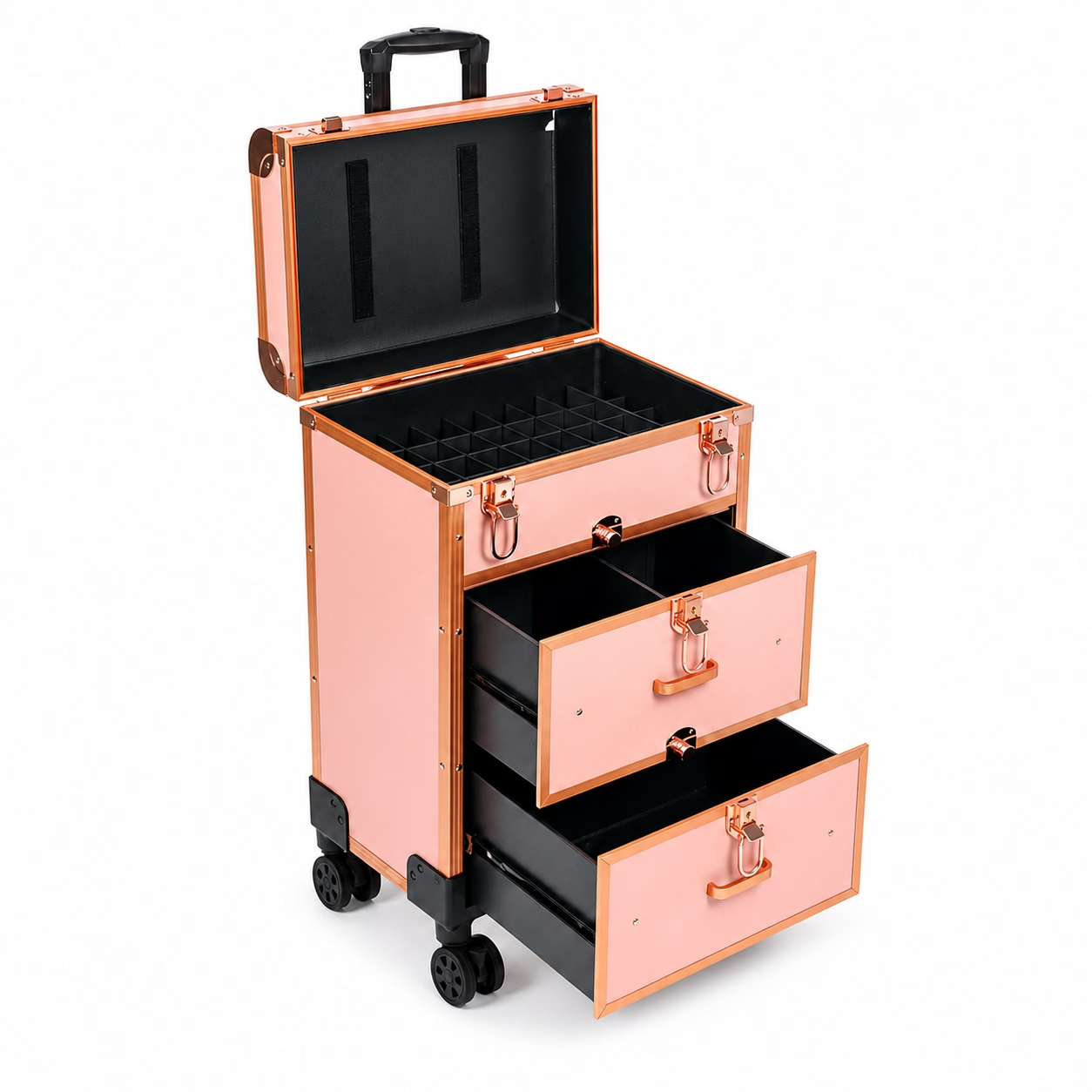
MDF or density board is a manufactured wood-fiber panel used when a case needs a stable, flat structure. It can accept a laminated or coated surface and gives drawer fronts and large panels a consistent shape.
Strengths
– supports broad, flat panels without the hollow feel of very thin plastic;
– provides a solid base for laminated decorative or fire-resistant board surfaces;
– works well for drawer faces, case walls and structured storage modules;
– allows a consistent exterior finish across a production batch.
Points to confirm
Ask the supplier to specify the board thickness, core density, edge treatment and laminate. The board should be protected from direct water exposure, especially around drawer joints, hardware holes and exposed edges. A hard case should not automatically be described as fully waterproof unless the exact configuration has a documented water-resistance test.
For a professional rolling case, MDF is normally part of a system that also includes an aluminum frame, corner protection, lining and reinforced hardware. The board alone does not determine the case’s loaded performance.
ABS: lightweight storage modules and trays
ABS is a thermoplastic commonly used for molded or formed storage components. In a rolling makeup case, ABS can be useful where the buyer wants removable trays or boxes that are light enough to lift away from the main case.
ABS storage parts can be wiped clean and are less likely to absorb liquid than fabric organizers. Their performance depends on wall thickness, ribbing, hinge points and how the module is supported when the case is loaded.
For an OEM quotation, confirm whether “ABS” refers to the tray, drawer box, removable module or the complete outer shell. These are different constructions and should not be treated as interchangeable.
Aluminum alloy: frame and load-path reinforcement
Aluminum alloy is often used for frame profiles, edge rails, telescopic handle tubes and other structural parts. It can improve alignment around the case perimeter and provide attachment points for locks, corners and panels.
The alloy grade, profile shape, wall thickness and connection method matter more than the word “aluminum” alone. Ask whether the frame is anodized, how corners are joined and how the handle mounts transfer load into the case body.
An aluminum frame does not make every part of a case aluminum. A product may use an aluminum frame with MDF panels, ABS trays and a fabric or velvet lining. The quotation should list each component separately.
Fireproof board: surface and panel specification
Fireproof board is commonly used as a laminated surface over a board core. In a rolling makeup case, it can provide a clean, consistent exterior finish and support a more furniture-like appearance.
Buyers should ask what “fireproof” means in the supplier’s specification. Confirm the board type, laminate construction, test reference if one is claimed, edge treatment and whether the claim applies to the complete case or only to the panel material. Do not convert a material description into a whole-product fire rating without supporting documentation.
3488 and 3599 material references
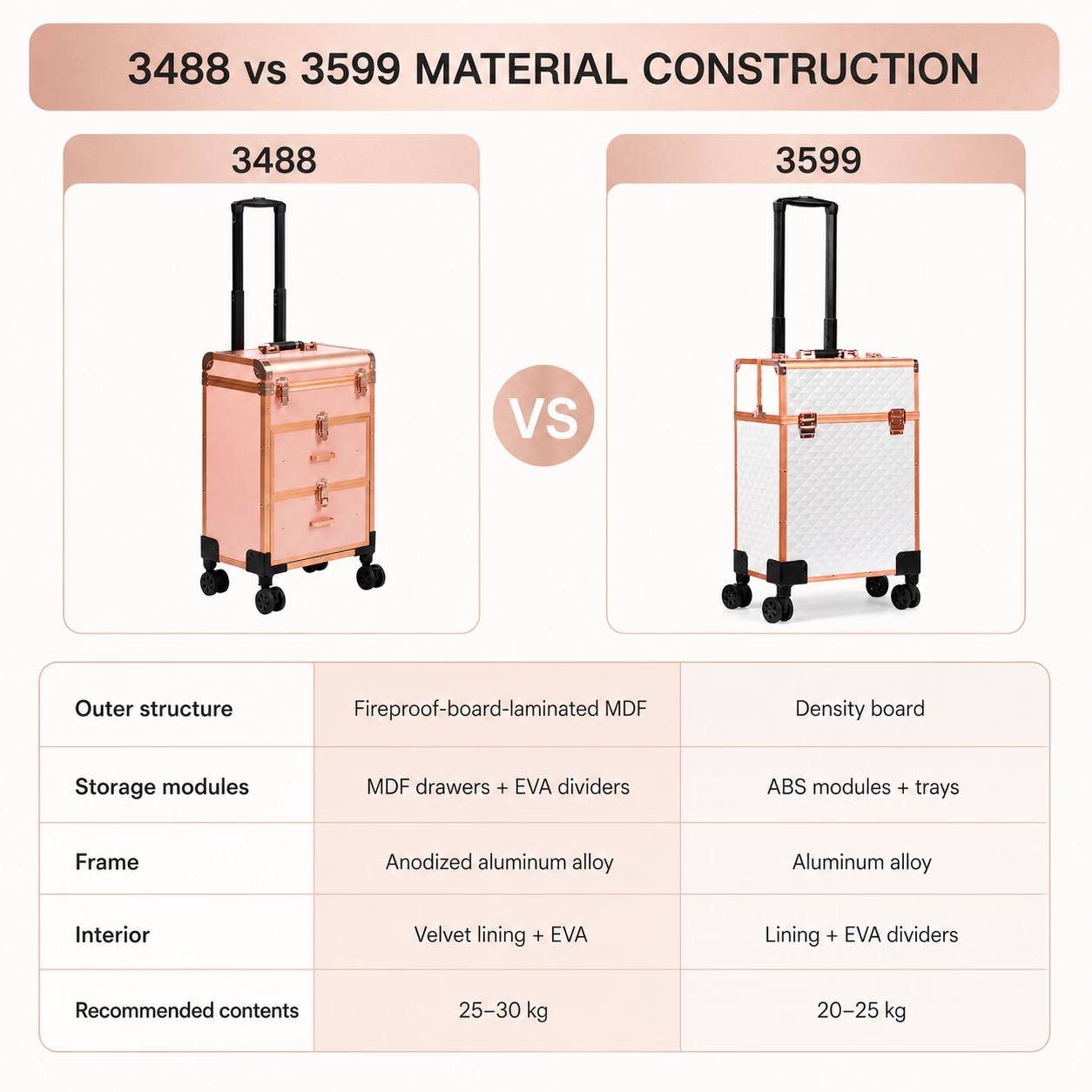
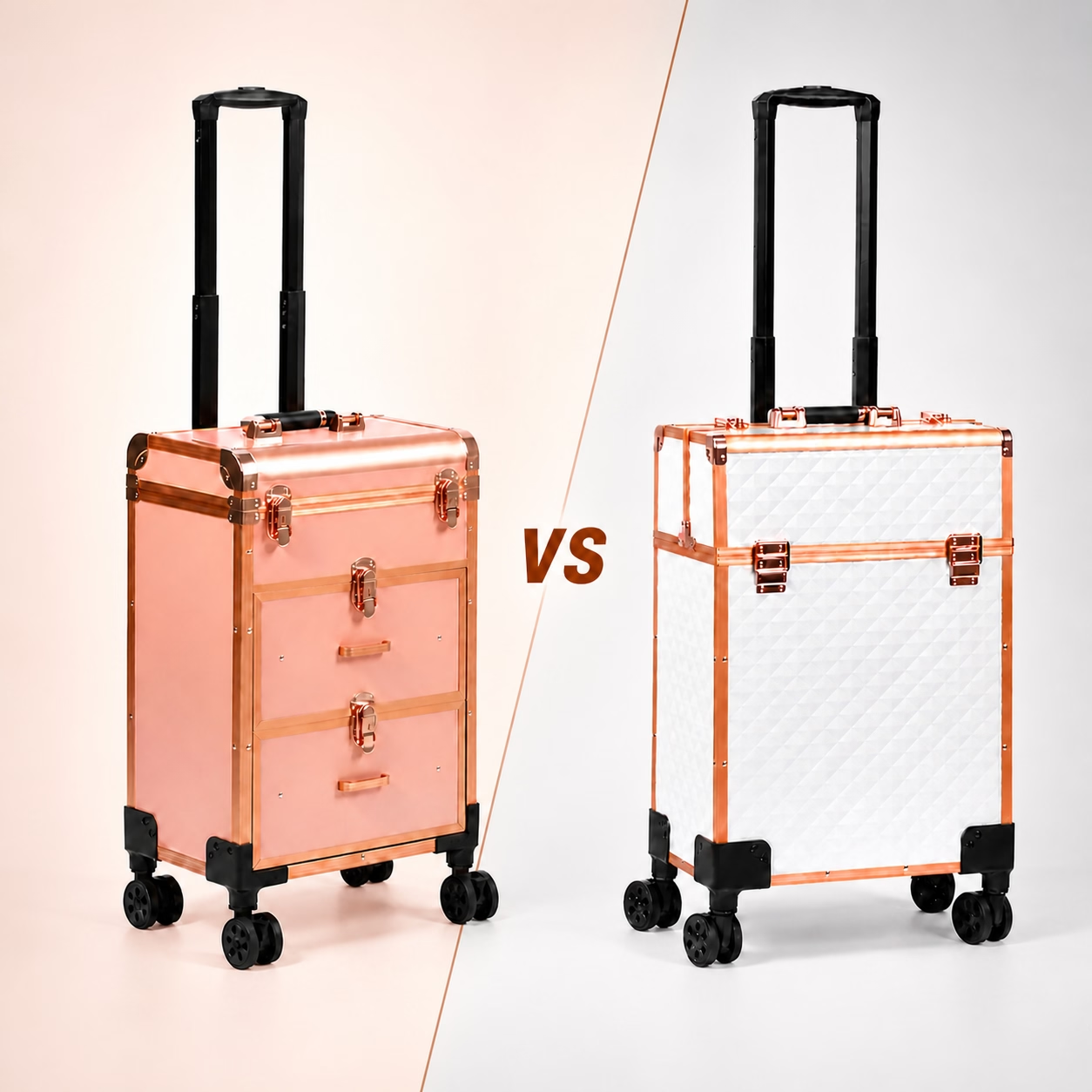
The two reference models use different storage approaches and should not be described as having identical construction.
3488 material reference
The 3488 reference configuration uses:
– fireproof-board-laminated MDF for the structured case and drawer panels;
– an anodized aluminum alloy frame profile;
– reinforced aluminum tubes with ABS engineering-plastic handle components;
– black scratch-resistant velvet lining and EVA foam dividers;
– electroplated steel or zinc-alloy locks and corner hardware;
– TPE caster wheels with 360-degree swivel movement, dual bearings and brakes, subject to the approved production configuration.
The 3488 is a drawer-oriented format. Its material choice should be evaluated together with drawer alignment, divider support, wheel tracking and the recommended 25–30 kg contents weight.
For more dimensions and storage information, see the large-capacity rolling makeup case with drawers.
3599 material reference
The 3599 reference configuration uses:
– density board for the outer case structure;
– an aluminum alloy frame;
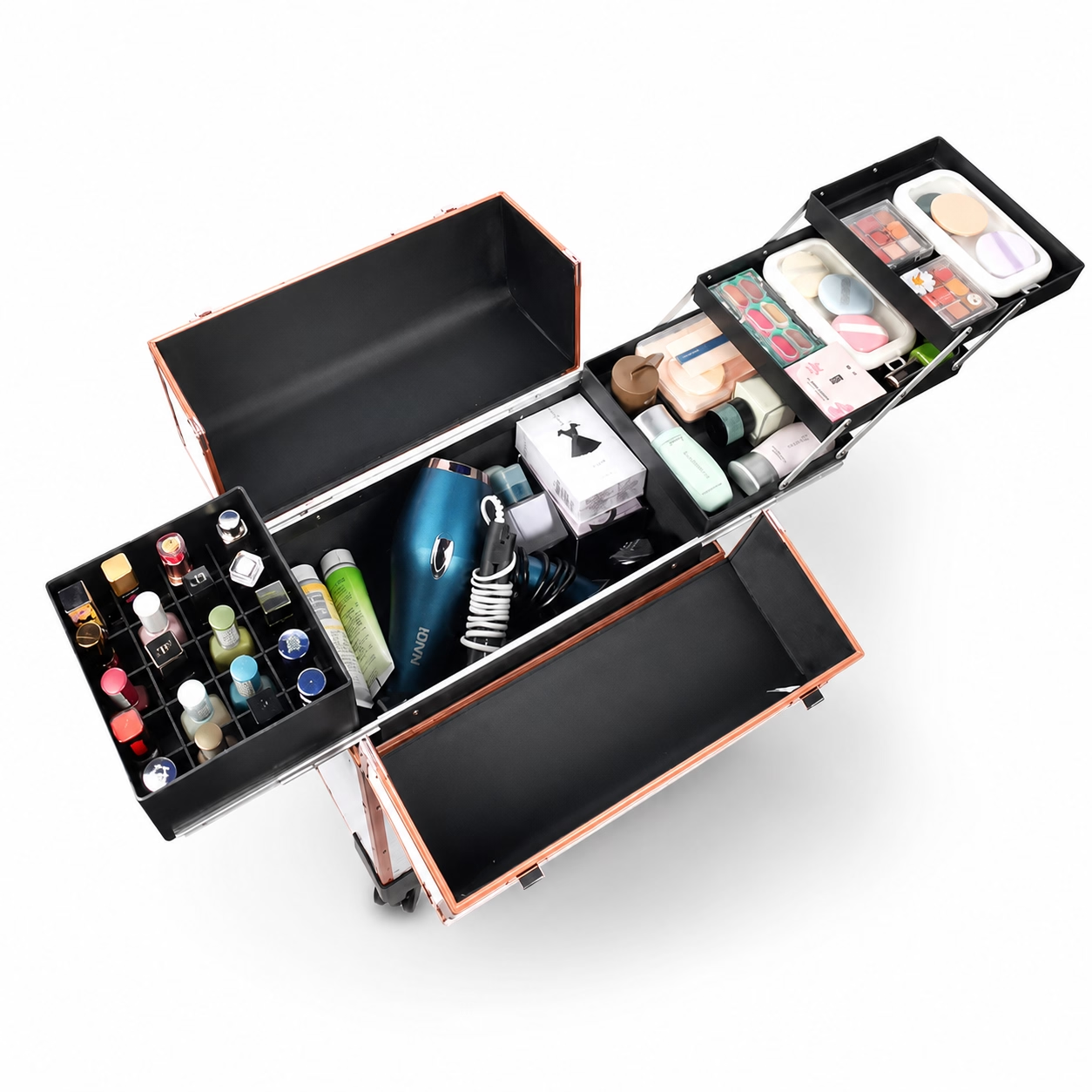
– ABS storage modules and trays;
– lining and EVA divider elements for interior organization;
– the same commonly used TPE wheel system with 360-degree rotation, dual bearings and brakes, subject to the final approved sample;
– an empty weight of approximately 5.5 kg and a recommended contents weight of approximately 20–25 kg.
The 3599 places more emphasis on lightweight, separated modules. Buyers should confirm the exact board grade, ABS module thickness, tray supports, hardware finish and wheel assembly in the production specification.
For the model’s layout and dimensions, see the 3599 rolling makeup case. For a direct format comparison, read our 3488 vs 3599 rolling makeup case comparison.
How materials affect OEM decisions
Material selection affects more than the factory bill of materials. It can change:
– sample cost and engineering time;
– carton size, protective packaging and shipping weight;
– logo application and color matching;
– divider and tray tooling;
– acceptable surface tolerances;
– spare-part compatibility;
– quality-control checkpoints.
A logo printed on a panel is a different production task from changing the board finish, ABS tray geometry or frame color. Ask the supplier to separate standard options from changes that require engineering review.
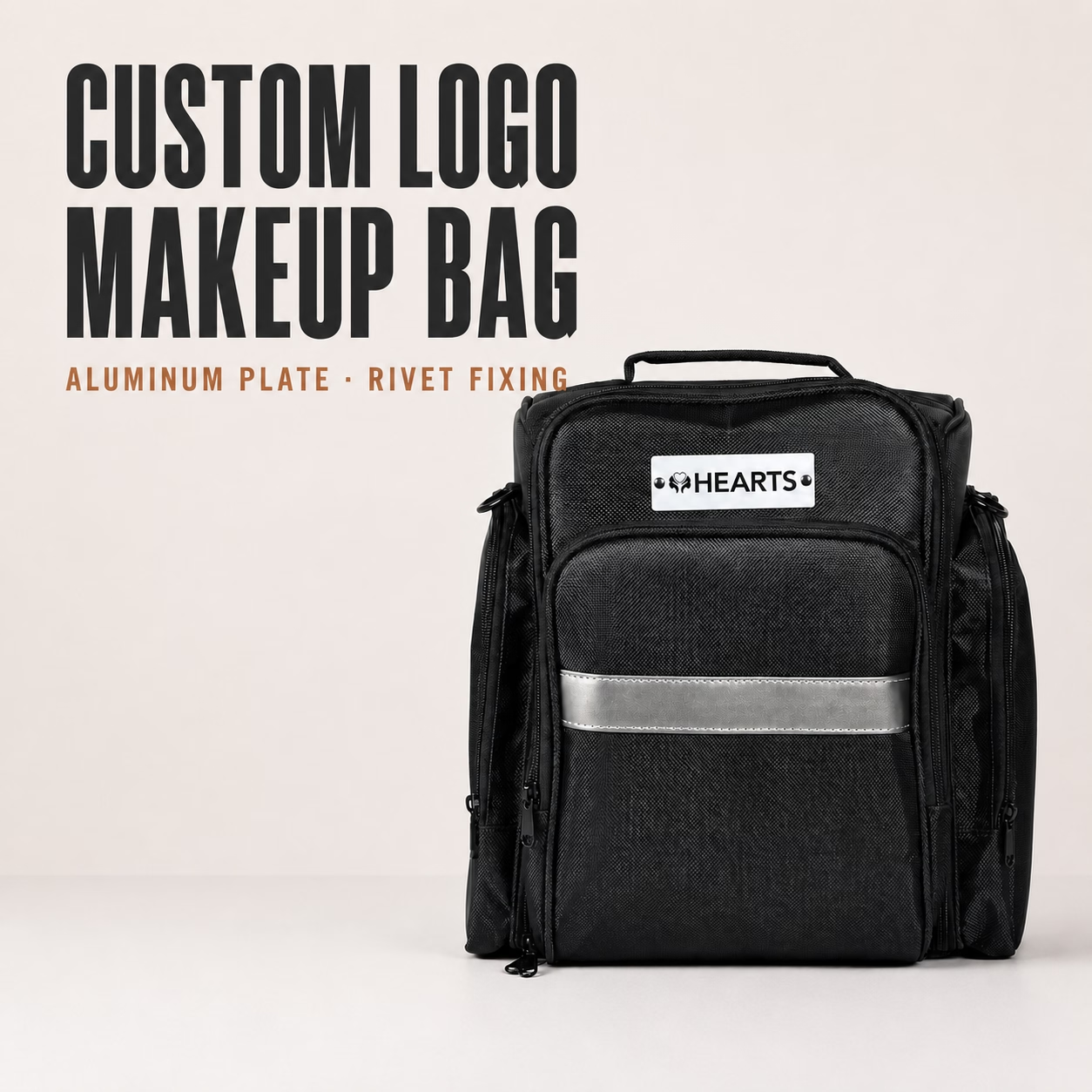
The current reference program supports logo, color, lining, divider, tray, packaging and carton-marking customization. The reference MOQ is 100 units, sample lead time is approximately 15 days, and bulk or customized production is approximately 25–35 days depending on approval and customization scope.
What to request from a rolling makeup case supplier
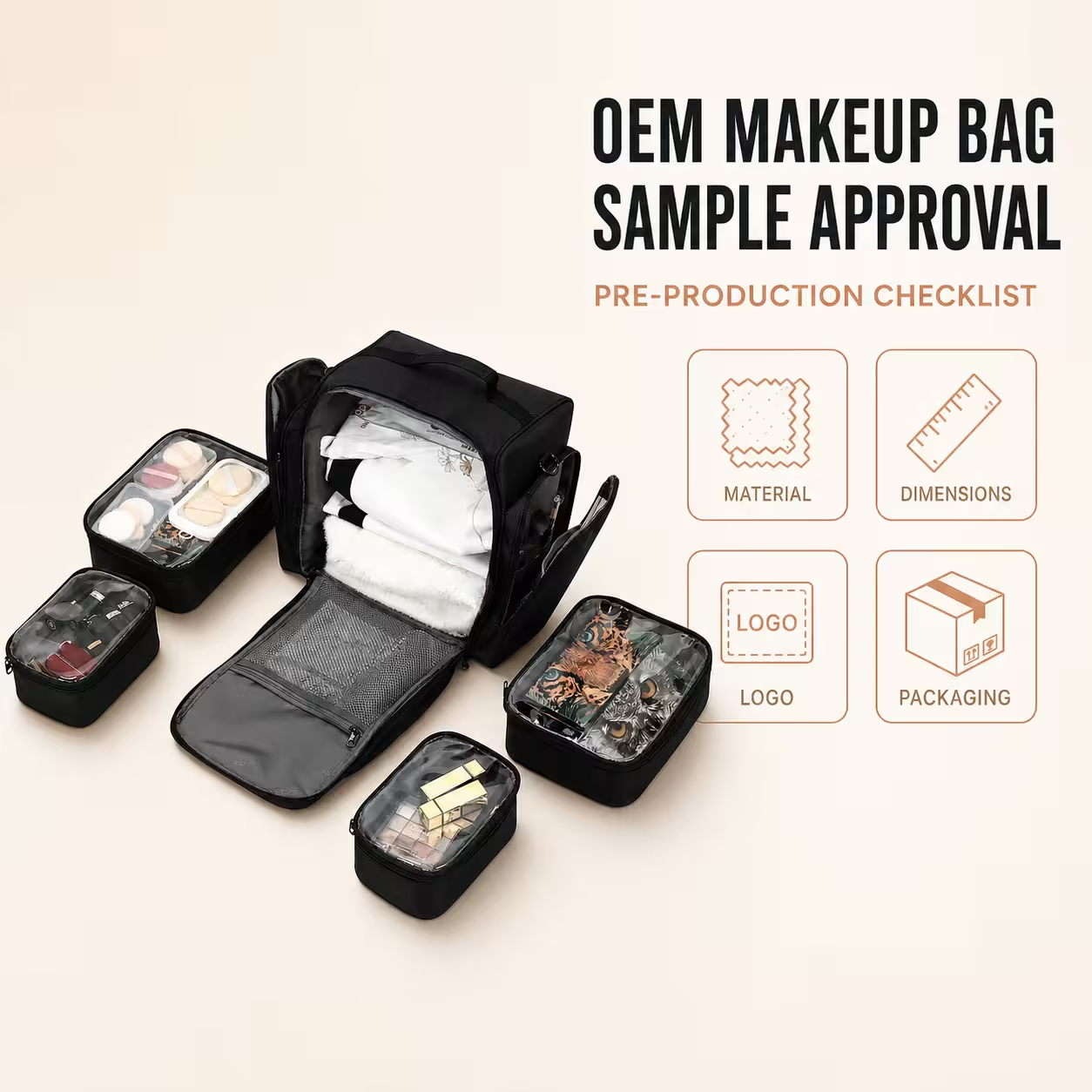
Before approving a sample, request a component-level material sheet containing:
1. shell or panel material and thickness;
2. core-board density and laminate or surface finish;
3. frame alloy, profile and finish;
4. tray and storage-module material;
5. lining and divider material;
6. lock, corner and handle materials;
7. wheel compound, hardness reference, bearings and brake design;
8. empty weight, recommended contents weight and external dimensions;
9. sample approval standard and inspection method;
10. warranty, spare parts and replacement procedure.
The approved sample should serve as the reference standard for bulk production. If any material, color, divider layout, or hardware changes are made after approval, the changes should be documented in writing before production begins.
Record the approved construction together with the other custom rolling makeup case specification details before the sample is released for bulk production.
Materials should be tested as a complete system
A material list cannot replace a loaded sample test. A buyer should check the complete case with representative products and tools. Review wheel tracking, turning, handle flex, drawer movement, latch alignment, surface scratches and stability when stationary.
The supplier’s separate trolley-case testing article reports wheel abrasion and pull-rod fatigue for a different tested product. Those figures can provide engineering context, but they should not be presented as a product-specific certification for every 3488 or 3599 order. Confirm which tests apply to the approved configuration.
For broader supplier checks, see the rolling makeup case supplier guide.
Final recommendation
For a rolling makeup case OEM project, choose the construction that matches the customer’s packed load, working environment and price position. The 3488 is a structured, drawer-oriented reference with fireproof-board-laminated MDF panels and an aluminum frame. The 3599 uses a lighter modular approach with density-board structure, aluminum framing and ABS storage modules.
The safest purchasing decision is based on a component-level specification, a physical sample and a documented inspection standard. If you need a material or storage configuration matched to your target market, provide the expected kit, sales channel and customization list so the supplier can recommend an appropriate construction.
Frequently asked questions
Which material is best for a professional rolling makeup case?
There is no single best material. A well-matched combination often performs better than one material used everywhere. MDF or density board can provide rigid panels, ABS can reduce the weight of removable modules, and aluminum can reinforce the frame and edges.
Is an ABS makeup case lighter than an MDF makeup case?
ABS storage modules are often lighter than comparable board modules, but total weight depends on wall thickness, frame, hardware, wheels and interior fittings. Compare the complete empty-case weight rather than the material name alone.
Is a fireproof-board makeup case completely fireproof?
Not automatically. “Fireproof board” may describe a laminated panel material. Ask for the exact material specification and test documentation before making a whole-product fire-resistance claim.
Are aluminum frame makeup cases waterproof?
An aluminum frame can improve edge structure, but it does not seal the case. Water can enter through seams, drawers, locks, handle openings and wheel areas. Treat the case as splash-resistant unless the exact model has a documented water-resistance test.
What material information should an OEM buyer put in the purchase agreement?
List the approved material for every component, including the core panel, laminate, frame, trays, lining, dividers, locks, corners, handle and wheels. Add dimensions, tolerances, colors, test items, packaging and the process for approving substitutions.