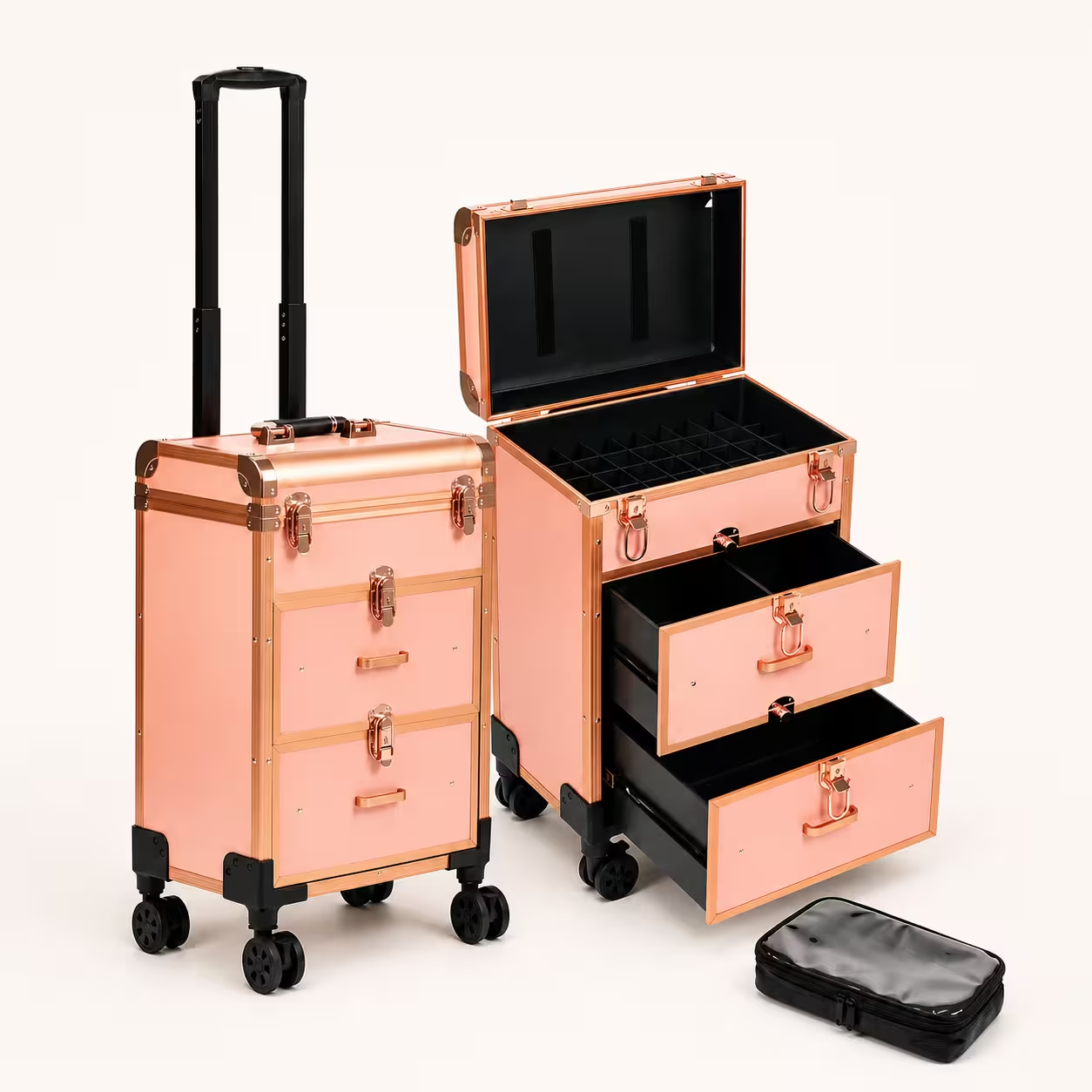
Choosing a trolley makeup case is a practical purchasing decision for makeup artists, salons, beauty schools, distributors and private-label brands. This guide explains how to compare size, wheels, materials, storage, sampling and OEM options before placing an order.
What is a trolley makeup case?
A trolley makeup case, also called a rolling makeup case, professional makeup luggage or a makeup train case with wheels, is designed to transport cosmetics, brushes, hair tools, skincare products and salon accessories between locations. Unlike an ordinary suitcase, it is built around access and organization: trays, dividers, brush holders and removable compartments allow a professional to find products while working.
For a buyer, the important question is not simply whether a case looks attractive. The real question is whether the case will remain useful after it is fully loaded, rolled through daily work and opened hundreds of times. A good purchasing decision must consider capacity, weight distribution, wheel durability, handle stability, cleaning, packaging and the supplier’s ability to reproduce the approved sample.
This guide is written for four types of buyers:
– makeup artists and hairstylists who work on location;
– salons, bridal teams and backstage crews;
– beauty schools and training centres;
– distributors and private-label brands buying in volume.
Start with the working scenario, not the product photo
The same trolley case can perform very differently in different environments. Before comparing models, define where and how it will be used.
| Working scenario | Main priority | Features to prioritize |
|---|---|---|
| Freelance artist | Easy transport and fast access | Moderate capacity, quiet wheels, removable trays |
| Bridal or event team | Capacity and product separation | Multiple sections, dividers, strong handle |
| Backstage or production crew | Impact protection and stability | Reinforced corners, secure locks, rugged wheels |
| Beauty school | Easy cleaning and inventory control | Wipe-clean lining, modular storage, labels |
| Retail or private label | Presentation and repeatability | Consistent finish, packaging, logo and color options |
If the buyer cannot describe the use case, it is easy to choose a case that is too large, too heavy or badly organized. Ask the factory to recommend a configuration only after the target user and product inventory are clear.
How to choose the right size
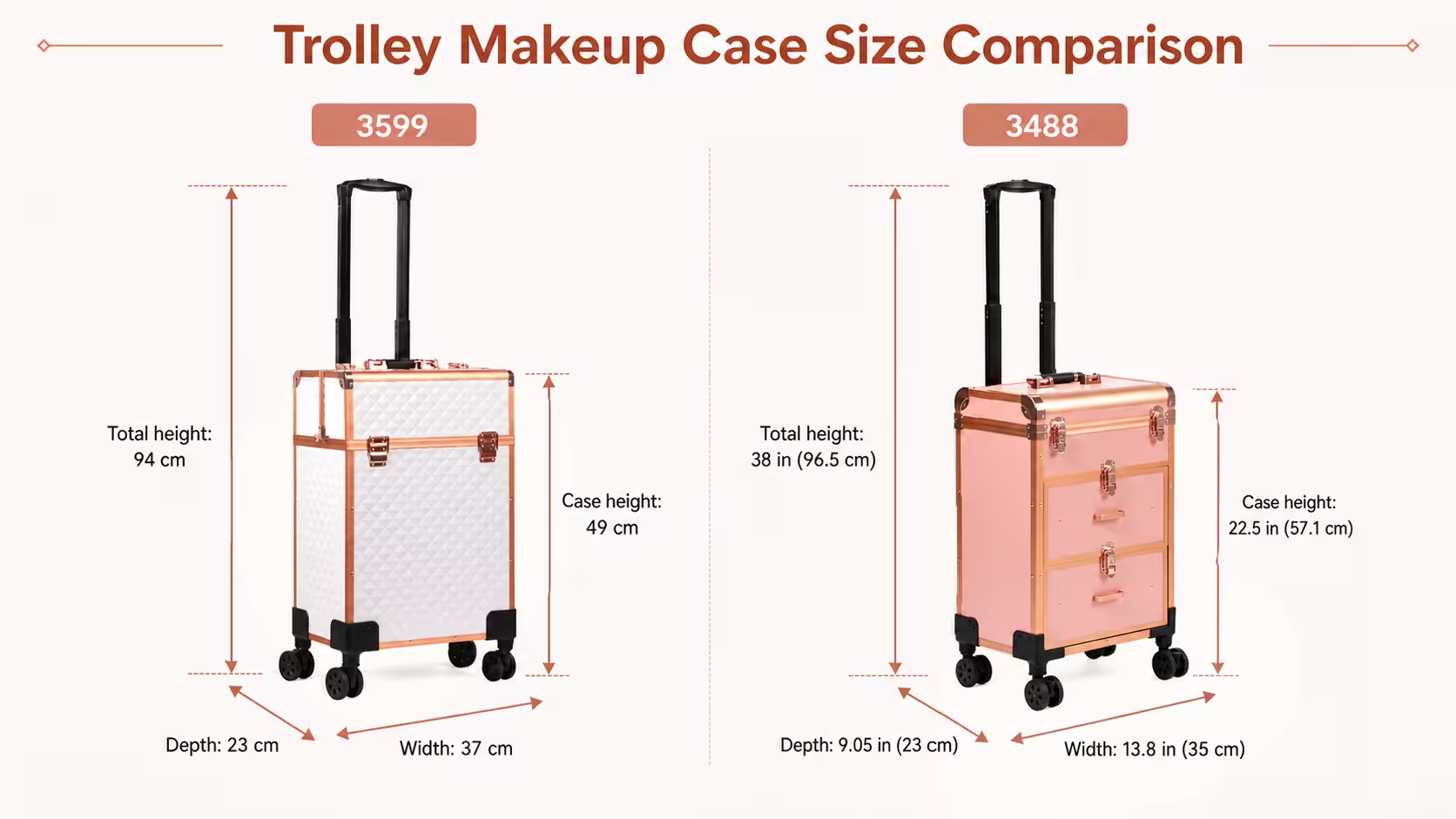
The 3599 is suitable for buyers who need a larger storage format, while the 3488 is more suitable for modular and flexible use.
Compact trolley cases
Compact cases are suitable for artists who carry a controlled kit and travel frequently. They are easier to lift into a car and easier to move through hotels, studios and narrow corridors. The trade-off is limited space for backup products and electrical equipment.
Choose a compact case when the user mainly carries:
– a daily makeup kit;
– a limited number of palettes and bottles;
– brushes and small tools;
– one lighting or charging accessory set.
Multi-section and 3-in-1 cases
A 3-in-1 case combines several sections that can be stacked or separated. It is useful when the user does not need the full kit for every appointment. For example, the 3488 three-in-one rolling makeup case is designed for buyers who need modular storage and professional mobility.
The advantage is flexibility. The disadvantage is that the connection points, locks and wheel system must support the full loaded weight. A sample should always be tested with realistic contents rather than being judged empty.
Large-capacity trolley cases
Large cases are suitable for bridal teams, backstage crews, schools and distributors serving professional users. More capacity is helpful only when the internal layout prevents products from shifting. One large empty cavity often performs worse than several well-planned compartments.
For large models, confirm:
1. maximum recommended loaded weight;
2. case weight before products are added;
3. wheel diameter and wheel spacing;
4. handle length and extension height;
5. whether the case tips when the top tray is open;
6. whether the carton can be handled safely during shipping.
As an internal test reference, a supplier may simulate a fully loaded case in the 15–25 kg range and check rolling, turning, handle flex and wheel alignment. A practical benchmark is to keep the measured load transferred to the front wheel assembly at or below 25 kg during a turning test. This is a test-planning recommendation, not a universal rated capacity: the final safe load must be confirmed for the exact case design and wheel system.
Wheel systems: what should a buyer inspect?
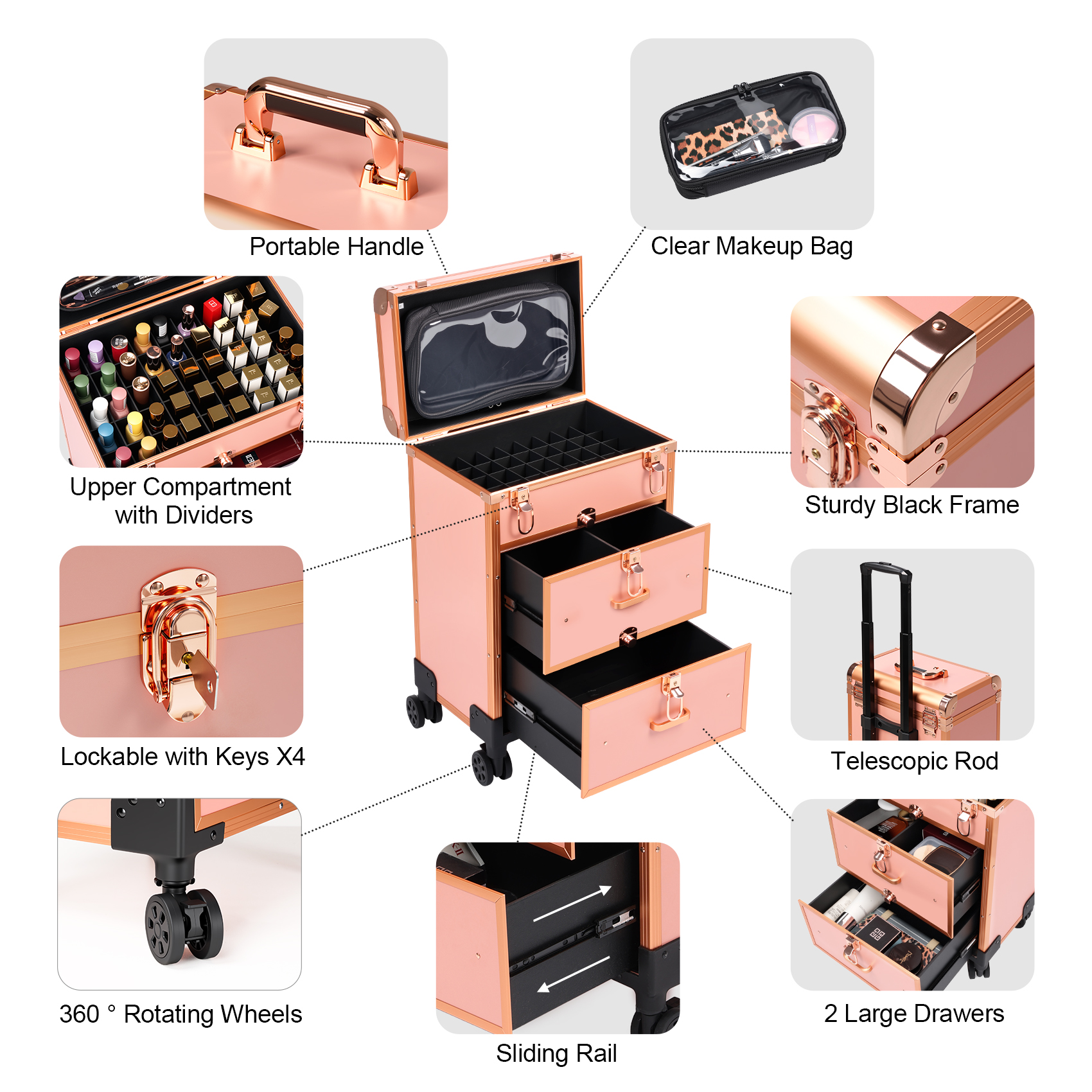
Wheels and handles are the first components to show weakness because they carry the load and absorb impact. Do not evaluate wheels only by asking whether they roll on a showroom floor.
Wheel material and noise
Professional silent wheels can make a difference in hotels, salons, exhibitions and classrooms. Ask what wheel material is used, whether the wheels are replaceable and how they perform on tile, carpet and slightly uneven surfaces.
Turning and tracking
A heavy case should track in a straight line without pulling to one side. Test forward movement, turning, reversing and movement over a small threshold. If the case is intended for mobile professionals, check whether it can be moved with one hand while the other hand carries a second item.
Handle stability
The telescopic handle should extend smoothly and lock at each position. Inspect the connection between the handle housing and the case body. Excessive flex under load may indicate that the handle, housing or reinforcement needs improvement.
Loaded balance
Place heavy products in the lower section and lighter products in the upper section, then test the case again. A case that is stable when empty may tip when bottles, palettes or tools are added.
Shell and frame materials: how should they be compared?
Material names do not tell the complete quality story. The construction around the material is equally important.
ABS
ABS is commonly used for a structured, impact-resistant outer shell. It can be a practical choice for professional cases that need a clean appearance and manageable cost.
PC
PC can offer a balance of toughness and a premium surface finish. Buyers should still inspect the shell thickness, corner design, hinges and frame rather than assuming that a material name guarantees durability.
Aluminum frame
An aluminum frame can add rigidity and a premium visual identity. It is often combined with a hard panel and metal hardware. The buyer should check how the frame joins at corners and whether the surface finish remains consistent across production batches.
Fabric or hybrid construction
Fabric and hybrid cases can reduce weight and create useful exterior pockets. They may be more flexible for travel, but the buyer should pay close attention to stitching, zipper quality, base reinforcement and water-resistance requirements.
For every construction, inspect the parts that experience repeated stress:
– corner protection;
– hinges and lid supports;
– locks and latches;
– handle mounts;
– wheel housings;
– tray supports;
– lining and edge binding.
Plan the interior around the actual products
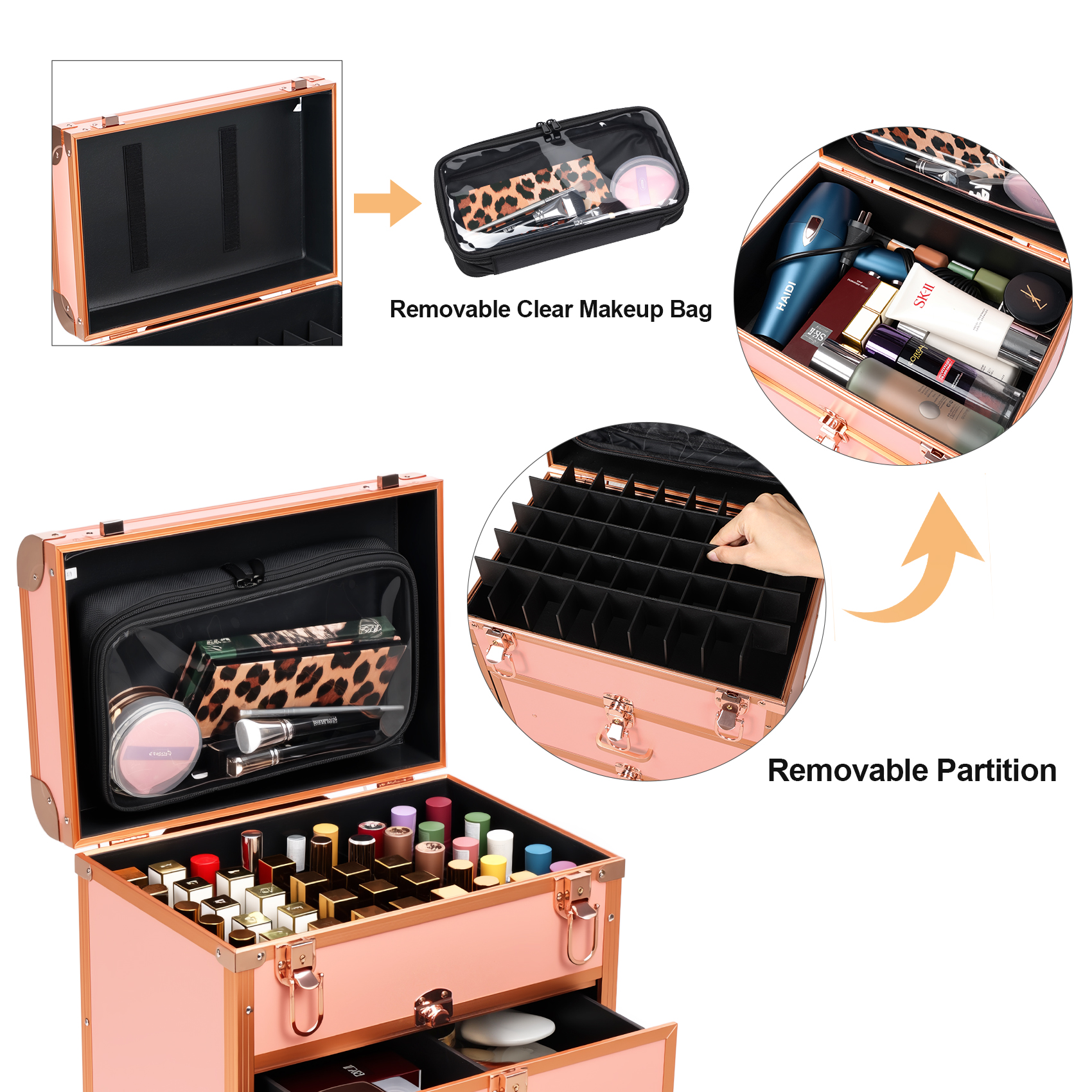
The most common storage mistake is designing compartments from a visual sketch instead of from the customer’s product inventory. Ask the intended user to list the products, tools and accessories that must fit inside.
Adjustable dividers
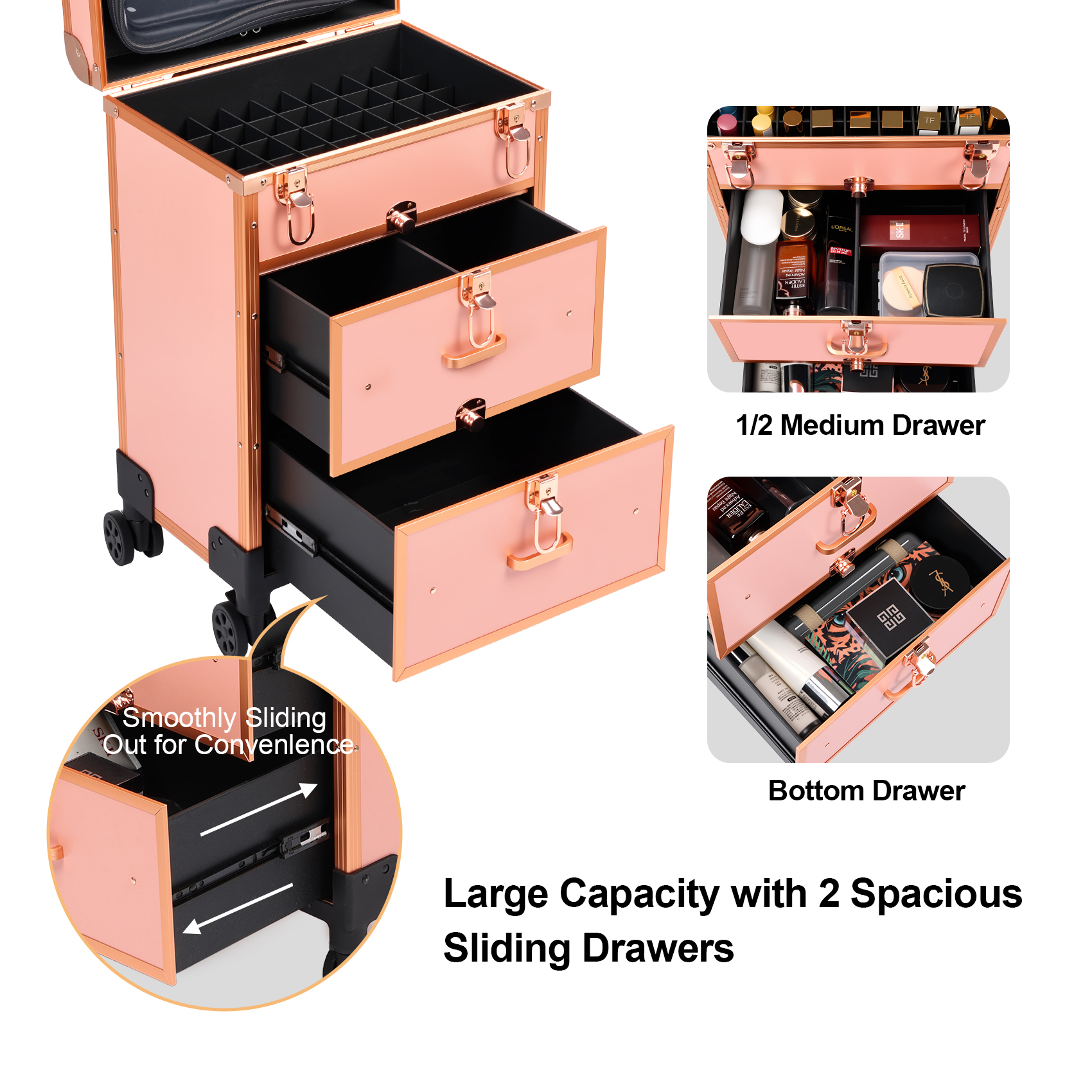
Adjustable dividers are useful when the product mix changes by market or service. They allow bottles, palettes and containers of different sizes to share one case without leaving large unused gaps.
Trays and top-access sections
Shallow trays are suitable for frequently used items. They reduce the need to unpack the entire case during an appointment. Check whether the trays can open fully when the case is placed beside a chair or table.
Brush and tool storage
Brushes should be separated from liquids and protected from crushing. Elastic loops, brush pockets or a removable tool panel can improve organization and hygiene.
Electrical accessories
Chargers, lamps, batteries and cables should have a defined zone. Otherwise, cables can tangle with brushes and pressure can be transferred to fragile products.
Cleaning and hygiene
Cosmetic cases are exposed to powder, liquid and frequent handling. Wipe-clean lining, removable inserts and smooth internal surfaces can reduce cleaning time and improve the product’s professional value.
How to compare trolley makeup cases for different users
For a mobile makeup artist
Prioritize moderate weight, quiet wheels, a stable handle, a removable top section and quick access to the daily kit. A case that is technically larger may be less useful if it forces the artist to carry unnecessary weight.
For a bridal or salon team
Prioritize capacity, duplicate-product storage, strong hardware and an internal layout that can be checked quickly between appointments. Clear labelling or removable modules can make restocking easier.
For a beauty school
Prioritize cleanable surfaces, modular sections and an inventory system that students can follow. The case should survive frequent opening, closing and movement between classrooms.
For a distributor or private-label brand
Prioritize repeatable quality, packaging, product photography, spare parts and a clear customization process. The case must be easy to explain on a product page and easy to reorder when sales grow.
OEM and ODM options
OEM buyers usually begin with a defined specification. ODM buyers start with an existing model and customize the features most relevant to their market.
Common customization areas include:
– shell color and surface finish;
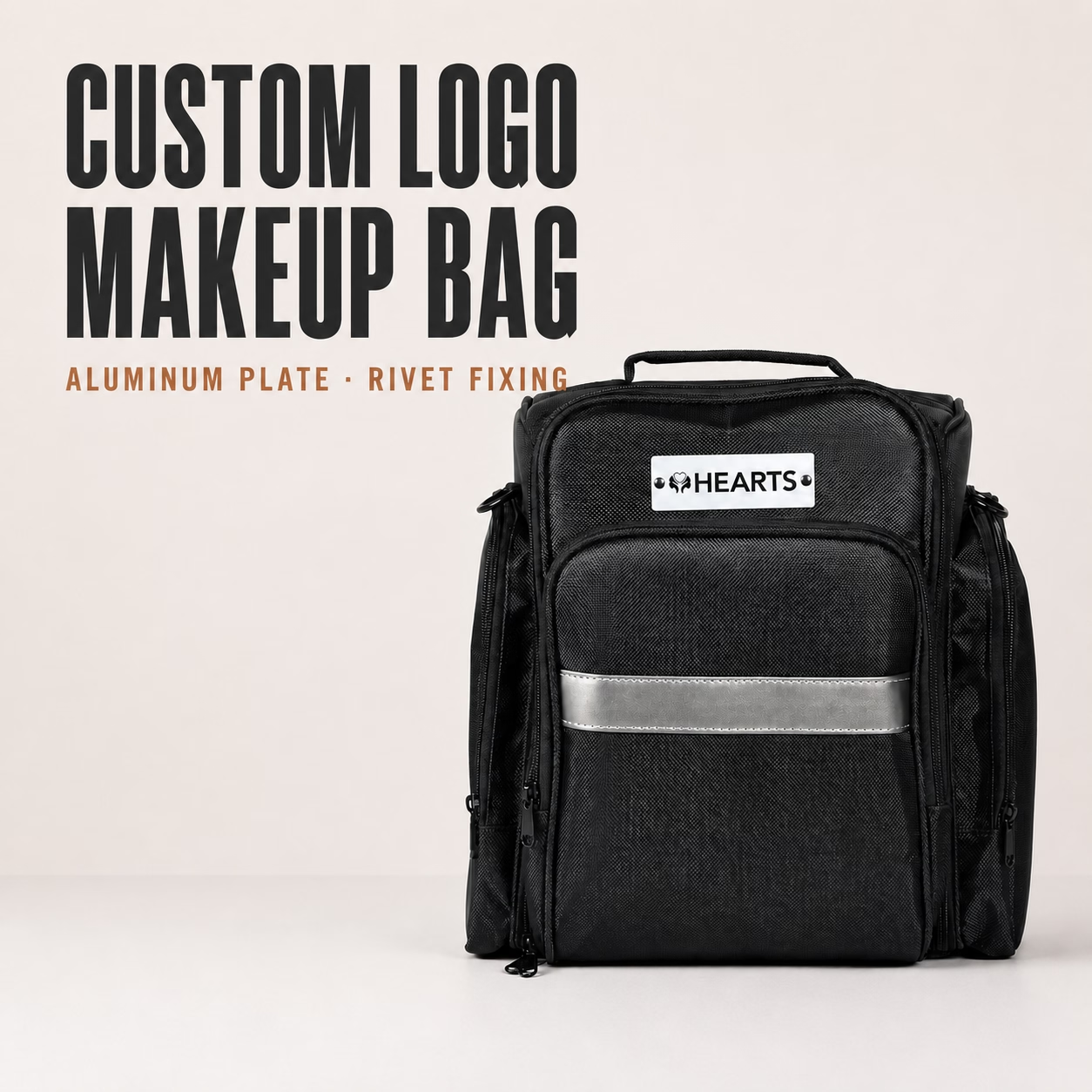
– logo badge, printing or laser marking;
– lining color and material;
– divider, tray and brush-holder layout;
– mirror and LED lighting system;
– battery and charging configuration;
– wheel, handle, lock and corner hardware;
– accessory kit, labels and retail packaging.
Not every change has the same cost or lead time. A logo or lining change may be relatively simple, while changing shell dimensions or internal mechanisms may require engineering work, new tooling or additional testing.
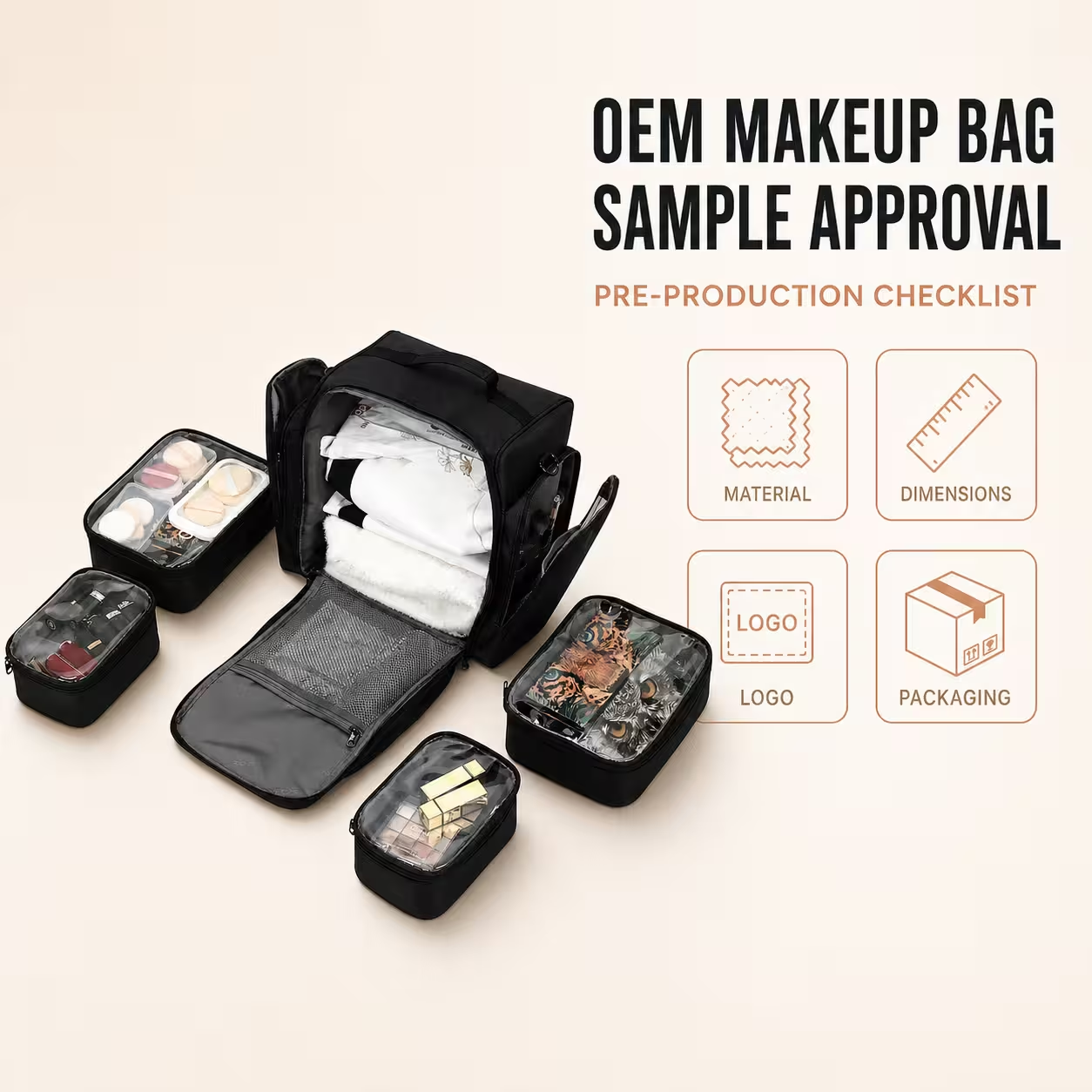
What should be included in the sample approval?
Do not approve a sample only from photographs. Load it with representative products and record the approved specifications.
The sample review should cover:
1. exterior dimensions and empty weight;
2. loaded balance and tipping behaviour;
3. wheel movement on several floor surfaces;
4. handle extension and locking;
5. lock, hinge and tray operation;
6. divider fit and usable storage volume;
7. lining, stitching, bonding and edge finishing;
8. logo position, color and surface consistency;
9. carton protection and accessories.
The approved sample should be supported by a specification sheet with drawings, materials, colors, tolerance requirements, packaging details and inspection points. This document helps prevent the mass-produced item from drifting away from the approved version.
Common buying mistakes
Choosing by appearance alone
A highly polished exterior cannot compensate for weak wheels, poor balance or unusable compartments.
Ignoring the loaded weight
Ask for both empty and recommended loaded weight. The user feels the combined weight during every appointment and every transfer.
Using one layout for every market
A layout designed for a makeup artist may not work for a school, nail technician or retail customer. Match the storage design to the target user’s inventory.
Treating packaging as an afterthought
Large trolley cases can be damaged during shipping if the carton, protective foam and corner protection are not designed together.
Comparing suppliers only by unit price
The lowest quotation may exclude sampling, packaging development, inspection, spare parts or reliable repeat production. Compare the complete supply capability.
Trolley makeup case buyer checklist
Before placing a wholesale or private-label order, confirm:
– target user and working environment;
– case size, empty weight and loaded capacity;
– wheel material, noise, tracking and replacement options;
– handle height, locking and reinforcement;
– shell, frame, lining and hardware construction;
– tray, divider, brush and electrical-accessory layout;
– logo, color, lining and packaging requirements;
– sample approval and inspection standards;
– carton dimensions, loading quantity and lead time;
– warranty, spare parts and after-sales process.
Frequently asked questions
Can a trolley makeup case be taken as carry-on luggage?
Sometimes, but it cannot be guaranteed. Carry-on rules depend on the airline, route, aircraft and the case’s packed dimensions and weight. Buyers should compare the case’s external dimensions with the airline’s current cabin-bag limit and confirm the policy before travel. A compact rolling makeup case is more likely to fit than a large-capacity model, but the final decision belongs to the airline.
How much weight can a professional makeup trolley hold?
The safe load depends on the shell, frame, wheel assembly, handle and internal structure. Do not use a generic number for every model. For product development and quality testing, a supplier can test a representative 15–25 kg load and record wheel tracking, turning, handle flex and tipping behaviour. The approved specification should state the recommended loaded weight for the exact model.
What is the difference between a rolling makeup case and a makeup train case with wheels?
The terms are often used interchangeably. “Rolling makeup case” emphasizes mobility, while “makeup train case with wheels” often describes a compartmentalized case with trays or sections. When comparing suppliers, review the actual dimensions, storage layout, wheel system and loaded balance rather than relying on the name.
Are three-in-one rolling makeup cases better than one large case?
They are better when the user needs modular storage and does not carry the full kit every time. Separate sections can be used for different services or team members. One large case may be simpler for a fixed studio setup. The right choice depends on the inventory, travel frequency, lifting limits and how quickly the user needs to access products.
Can the interior of a trolley makeup case be customized?
Yes. Depending on the supplier and model, buyers can request adjustable dividers, trays, brush holders, removable modules, mirror and LED lighting, lining changes and accessory compartments. Confirm the usable dimensions with a sample loaded with representative products before mass production.
Conclusion
The right trolley makeup case is the one that matches the user’s actual workflow—not simply the largest, lightest or most attractive model. Before placing an order, compare the case’s loaded balance, wheel and handle performance, storage layout, materials, packaging and long-term service requirements.
For distributors and private-label brands, the sample is the most important decision point. Load it with representative products, test it in a realistic working environment and document the approved dimensions, materials, hardware, interior layout and packaging before production begins.
If you are evaluating a rolling makeup case for your market, provide the target users, product inventory, preferred configuration and estimated order quantity. Obeautycase can help match those requirements to a suitable case structure and discuss sampling, customization and packaging options.