Choosing between the 3622 and 3629A makeup cases starts with the items you need to organize and the space available when the case is open. Tray count is part of that decision, but it does not establish total usable capacity or tell you whether your particular kit will fit.
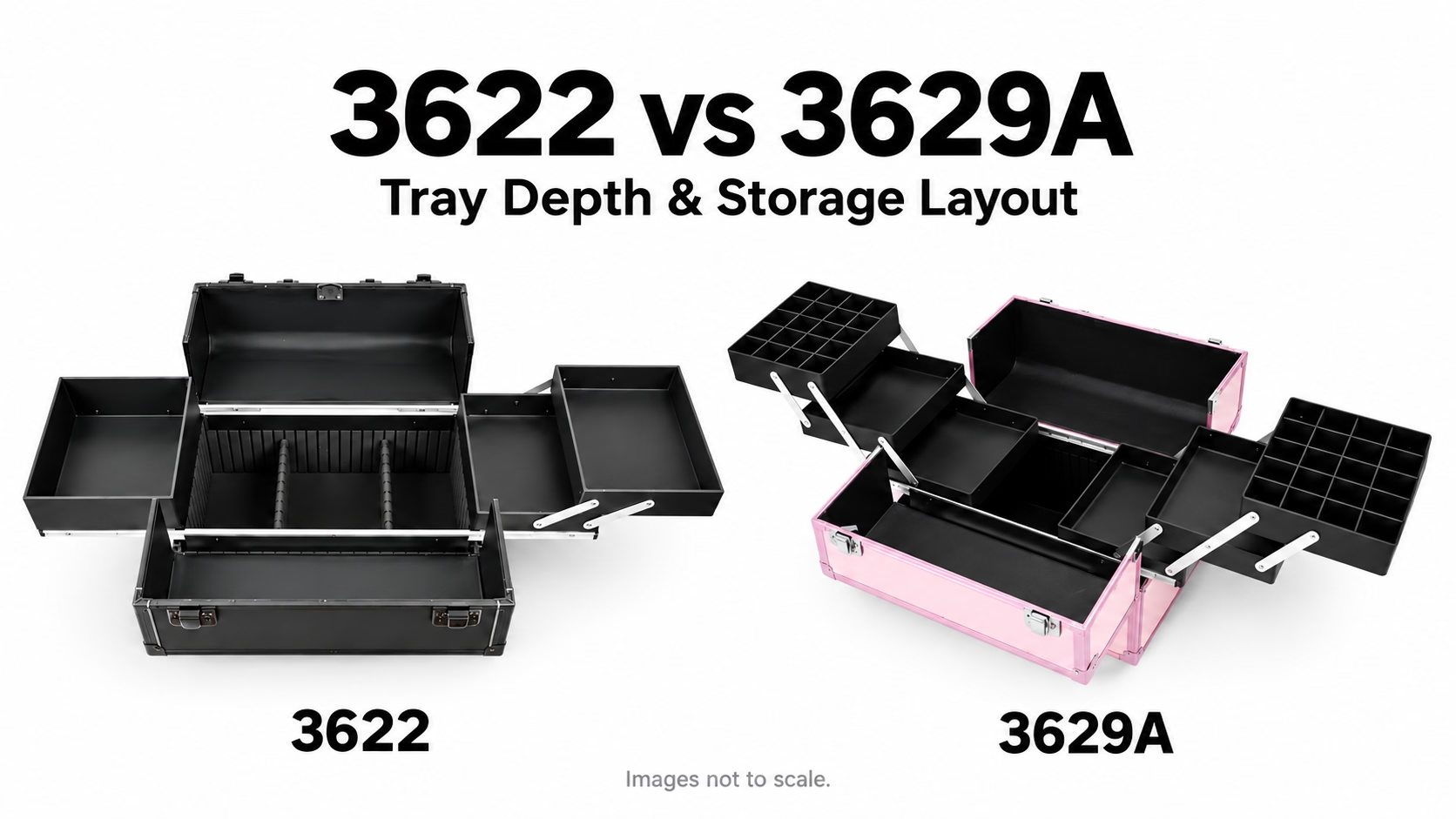
The 3622 has three fold-out trays, including one deeper left tray. The 3629A has six trays arranged across both sides. Their usable main-compartment dimensions and fully opened horizontal spans also differ. For distributors, brands and professional equipment buyers, these measurements provide a basis for comparing layouts against an actual product inventory.
Compare the Measured Storage Layouts
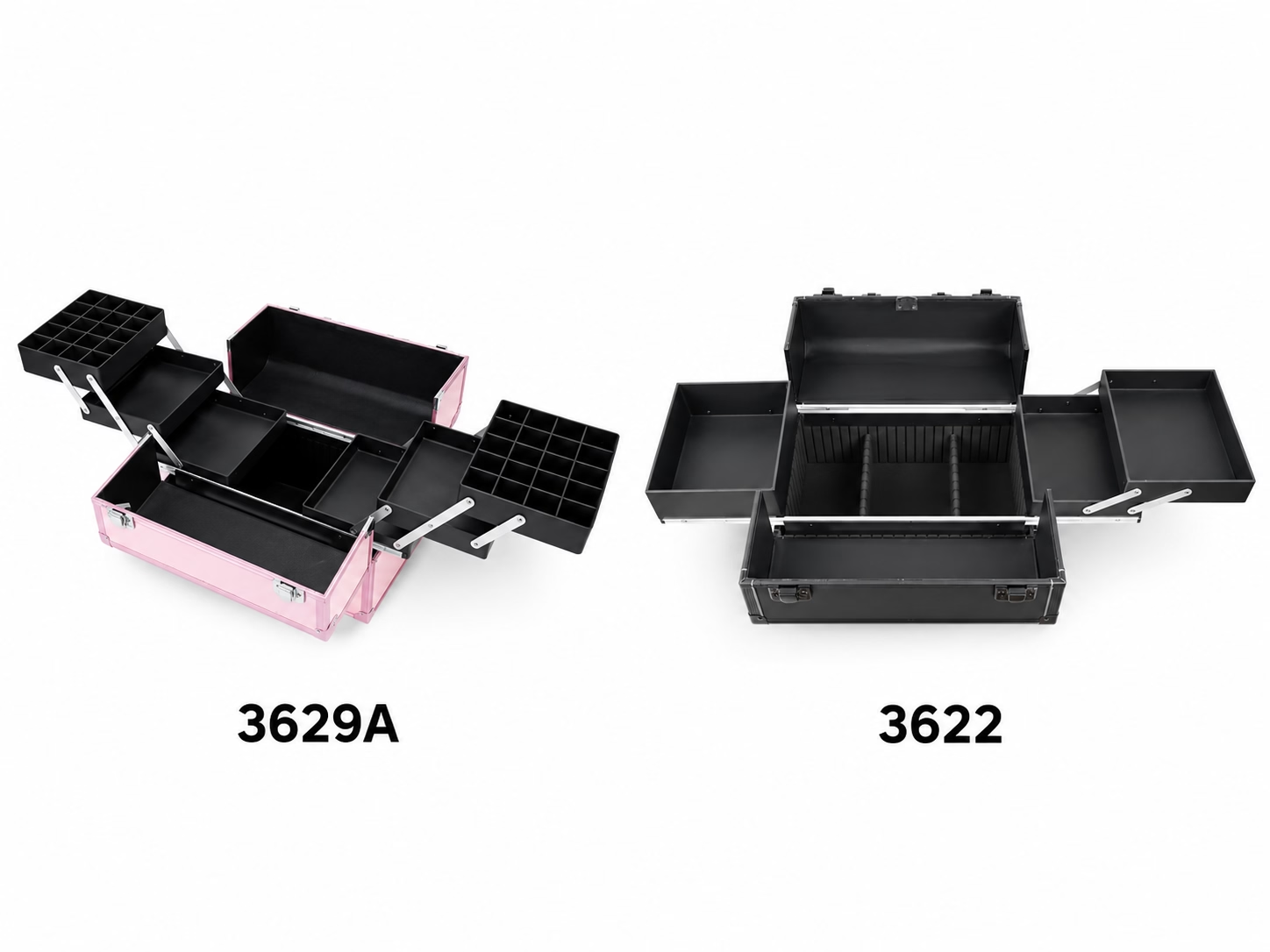
The 3622 makeup case has one tray on the left and two on the right. The 3629A makeup case has three trays on each side.
Measurements in this comparison are based on direct product measurements from Obeautycase. Tray dimensions and usable internal depths are listed separately, and the fully opened span includes the case body.
All three-part dimensions below follow L × W × H.
| Configuration | 3622 | 3629A |
|---|---|---|
| Total trays and arrangement | 3: 1 left, 2 right | 6: 3 left, 3 right |
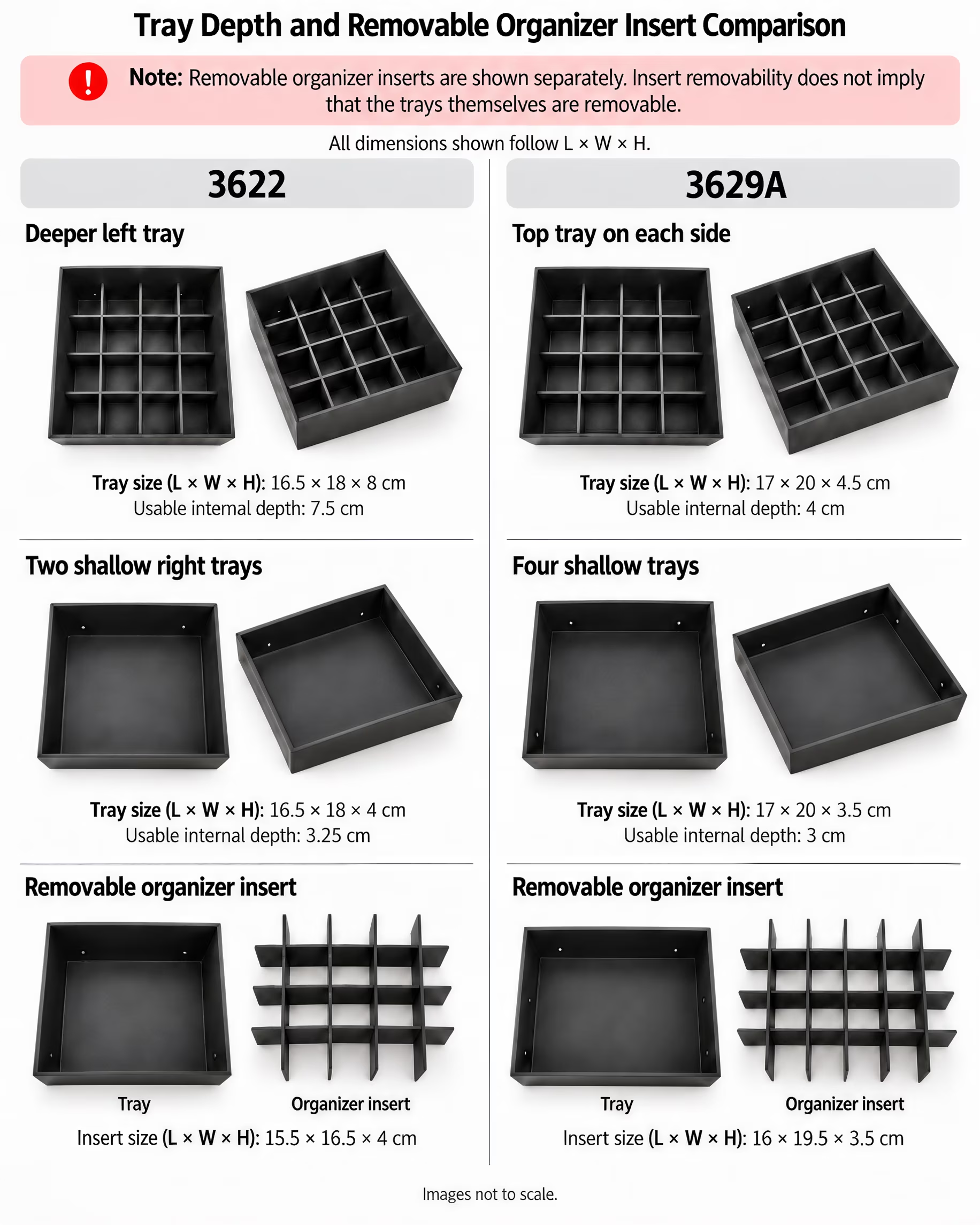
| Deeper tray dimensions | Left tray: 16.5 × 18 × 8 cm | Top tray on each side: 17 × 20 × 4.5 cm |
| Deeper tray usable internal depth | 7.5 cm | 4 cm |
| Removable organizer insert dimensions | Inside left tray: 15.5 × 16.5 × 4 cm | Inside each top tray: 16 × 19.5 × 3.5 cm |
| Other tray dimensions | Two right trays, each: 16.5 × 18 × 4 cm | Remaining four trays, each: 17 × 20 × 3.5 cm |
| Other tray usable internal depth | 3.25 cm | 3 cm |
| Main compartment usable dimensions | 34 × 20 × 11.5 cm | 36 × 22 × 12 cm |
| Fully opened total horizontal span, including case body | 80 cm | 127 cm |
The listed tray dimensions should not be treated as confirmed internal clear dimensions. Organizer insert dimensions describe the insert as a whole, not the dimensions of its individual divider cells.
Tray Depth or More Separate Sections?
The main layout distinction is between a deeper tray and a greater number of separate trays.
The 3622’s left tray has a confirmed usable internal depth of 7.5 cm. Its two right trays each have a usable internal depth of 3.25 cm. This gives buyers different depth options within the same case. When evaluating a group of items for the deeper tray, check their length and width as well as the height they occupy in the intended position.
The 3629A provides six separate tray sections. Its two top trays each have a usable internal depth of 4 cm, while the remaining four trays each provide 3 cm. Buyers who want to distribute their inventory across more trays can assess that arrangement against their preferred grouping.
Removable organizer inserts are confirmed inside the 3622’s left tray and each of the 3629A’s top trays. Insert removability does not mean the trays themselves are removable. If the insert will remain in use, confirm the relevant divider-cell measurements before assigning items to it.
Neither tray count nor depth alone determines how much of a particular kit a case can accommodate.
Check the Usable Main Compartment
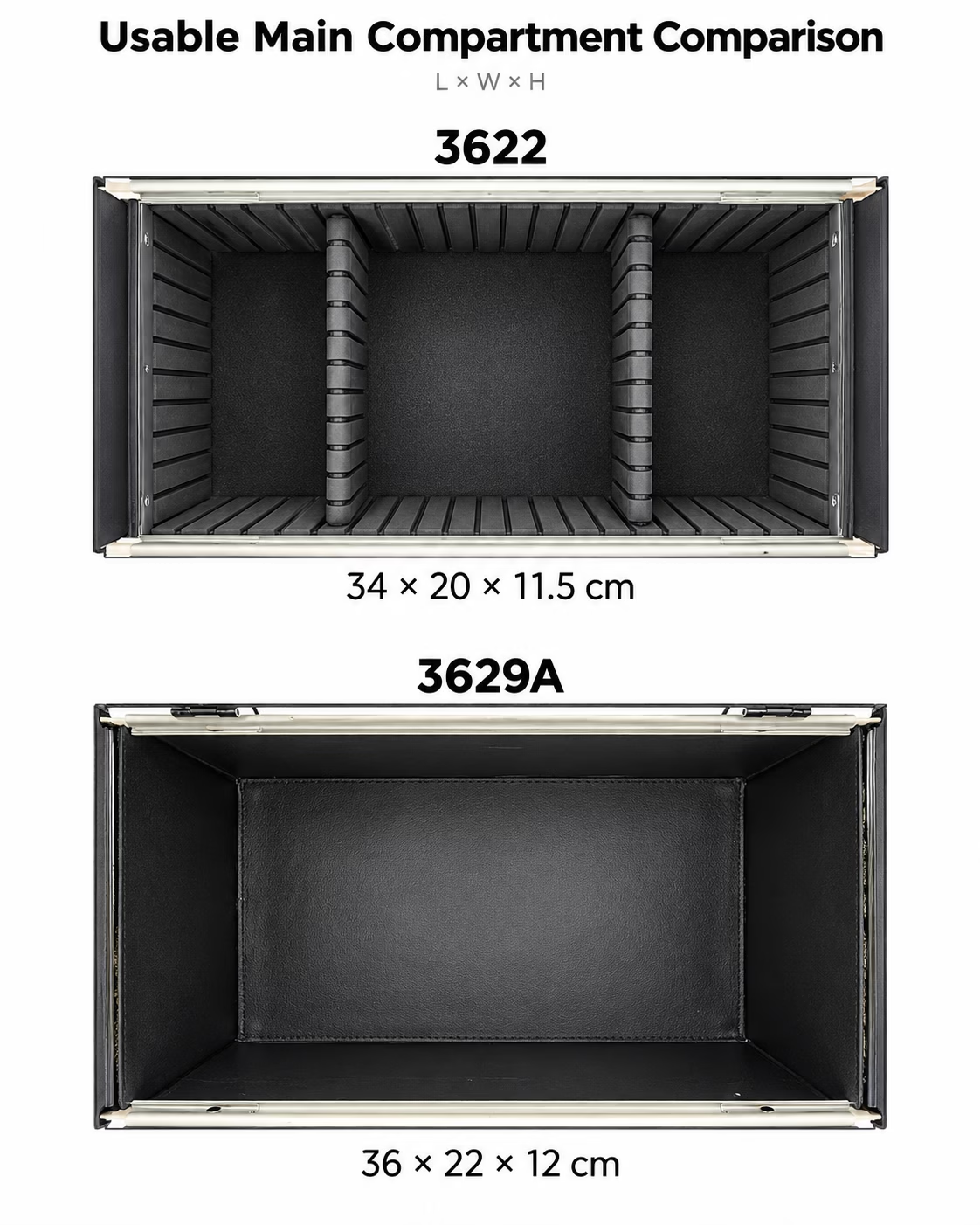
The 3622’s main compartment measures 34 × 20 × 11.5 cm internally. The 3629A’s measures 36 × 22 × 12 cm, giving it a slightly larger measured usable main compartment.
Compare these measurements with the items intended for the main compartment, in their planned orientation. Record the full item dimensions, including caps, handles or other projecting parts, and consider how multiple items will be arranged together.
A larger main compartment does not establish greater total usable capacity across the entire case. The tray arrangement, organizer inserts and the shapes of the actual contents still affect the resulting layout. These measurements are a starting point for a fit check, not a guaranteed item count.
Allow for the Fully Opened Span
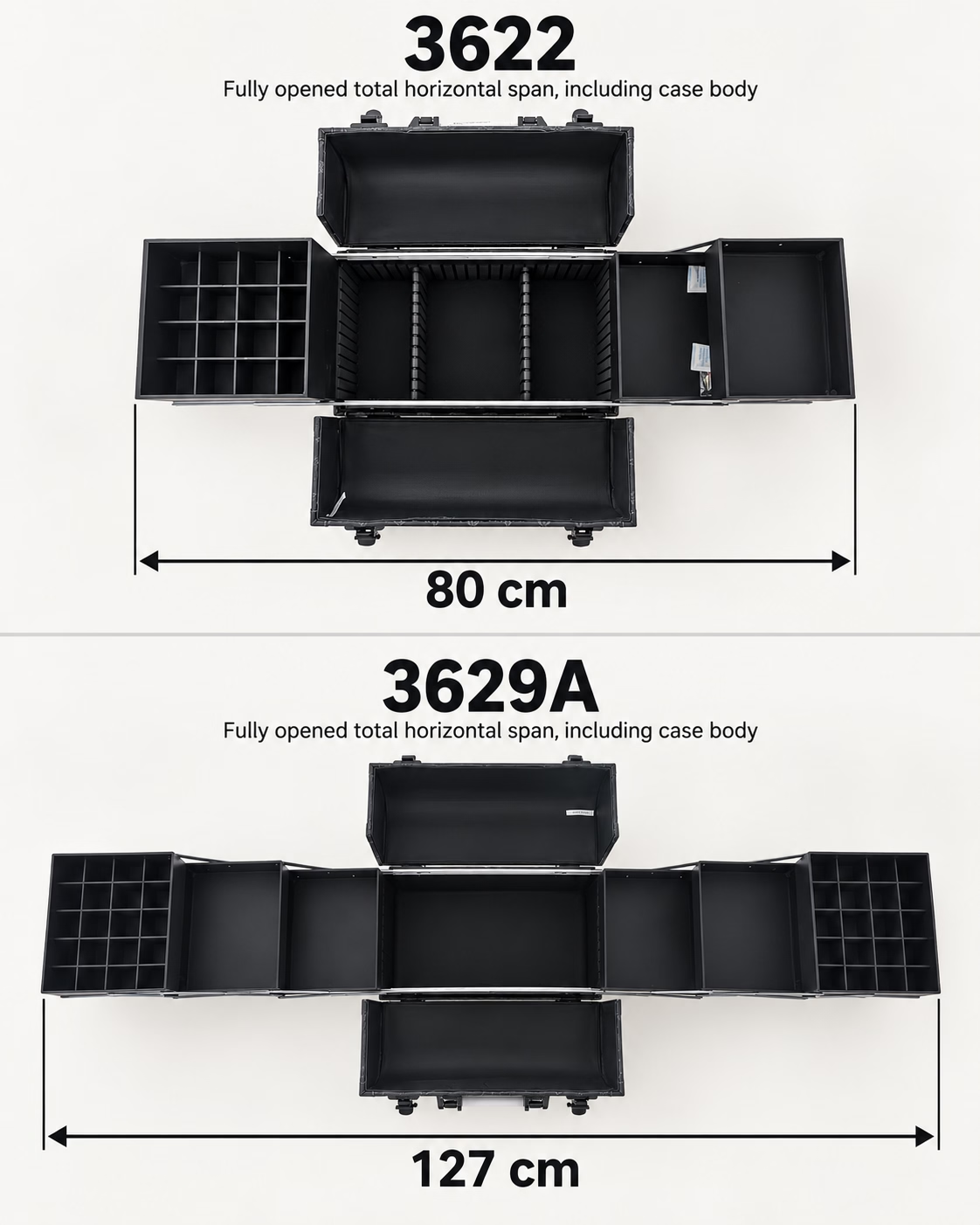
With the trays fully opened, the 3622 has a total horizontal span of 80 cm, including the case body. The corresponding measurement for the 3629A is 127 cm.
This difference matters when choosing where the case will be opened. Measure the available horizontal space at the intended workstation and consider nearby equipment or objects that could obstruct the expanded layout.
These figures describe one horizontal measurement. They do not describe the complete two-dimensional tabletop footprint, specify a minimum safe table width or establish support requirements. Work-surface depth, case positioning and access around the open trays should also be checked with the actual setup.
If the available area is restricted, confirm the expanded arrangement before choosing a model based on its closed appearance.
Match the Case to Your Actual Items and Work Surface
Use the same inventory when comparing both models:
- Record item dimensions and quantities. Measure the items in the orientation you intend to store them.
- Define the groups you want to keep separate. Decide which items should share a tray and which need their own section.
- Check tray depth and any other internal dimensions required for the intended items. Use the confirmed internal depths, then verify internal length, width and any insert-cell dimensions needed for the proposed arrangement.
- Plan the main compartment. Compare the intended contents with its usable dimensions rather than relying on an overall size impression.
- Check the expanded setup. Compare the 80 cm or 127 cm horizontal span with the available area, then confirm placement, tray operation and closure using a sample.
This process keeps the decision tied to your inventory. It avoids assuming that more trays automatically mean more useful storage, or that a deeper tray guarantees compatibility with a particular item.
Discuss Your Layout Requirements
When evaluating options in the Makeup Box range, send your item dimensions and quantities, preferred grouping, available work-surface dimensions and project requirements.